Your Blood Pressure Log Can Look Organized While the Measurement Problem Stays Unsolved
The Result Looks Fine. The Problem Isn’t.
garmin index bpm
A blood pressure monitor can fail without looking broken.
The screen lights up. The numbers appear. The reading syncs. The app stores it neatly. From the outside, everything feels handled. What often stays unresolved is the quieter problem: whether the device actually reduced measurement friction enough to make repeat readings trustworthy over time, and whether the cuff fit is stable enough to keep those readings from drifting when you need them most.
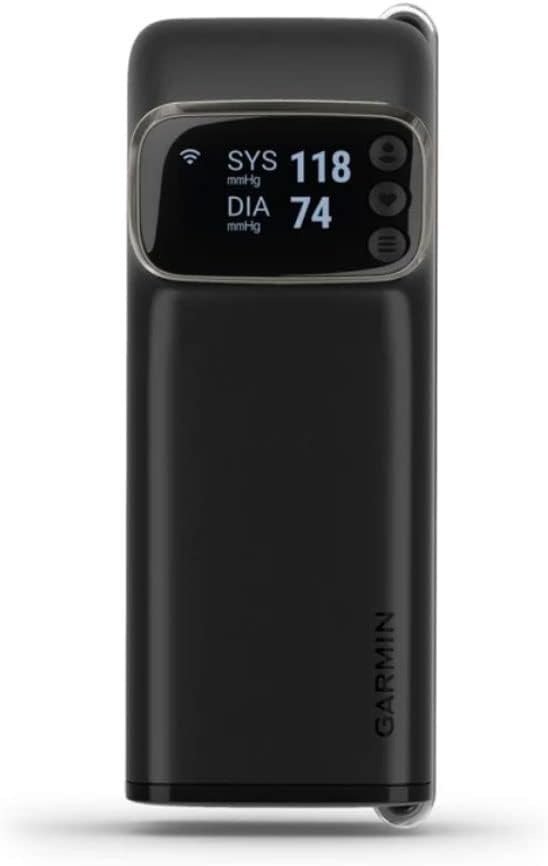
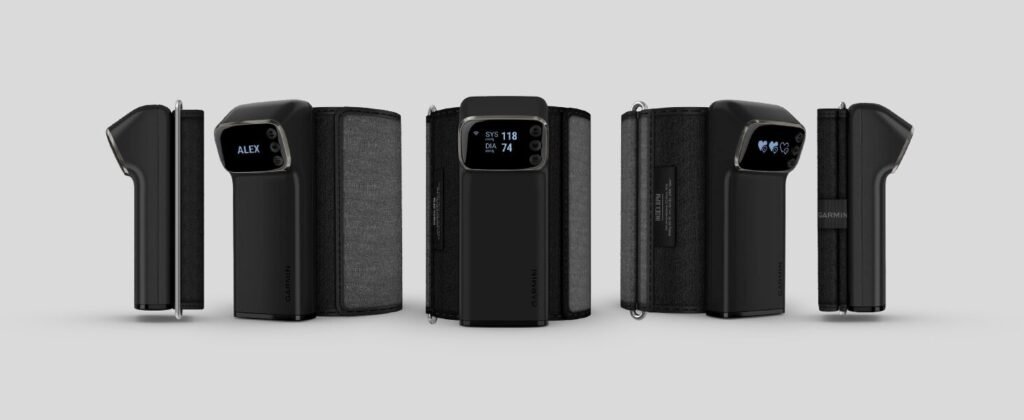
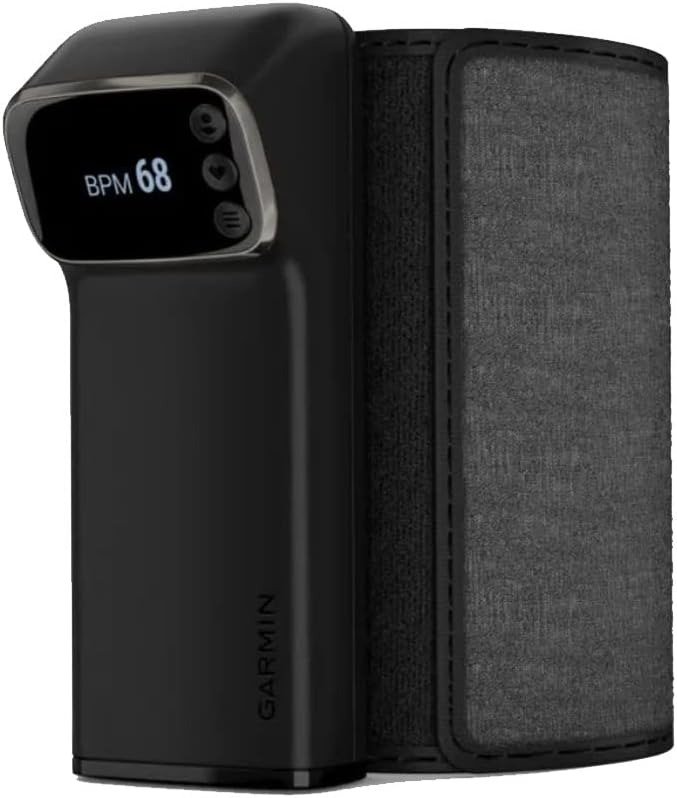
Garmin’s Index BPM is an upper-arm, oscillometric monitor with a stated blood-pressure accuracy of ±3 mmHg or ±2%, support for one-off or three-reading averages, and Garmin Connect syncing for up to 16 users. On paper, that is a strong package. In practice, the decision turns on a narrower threshold.
What pulled me into this product was not the promise of “smart health.” It was the older, more annoying problem: people do not usually fail to buy a blood pressure monitor. They fail to keep measuring in a way that survives real life. They skip readings, forget to log them, rush the setup, or trust one clean-looking number more than a pattern. Garmin clearly understands that part. The Index BPM can work in standalone mode, but its real design intent is long-term logging through Garmin Connect, with notes, reminders, and multiple users. That is not a cosmetic feature. That is the product’s center of gravity.
What You’re Actually Feeling but Not Naming
Most people do not say, “My issue is longitudinal measurement compliance.”
They say something simpler. I do not trust what I am doing enough to keep doing it.
That feeling usually shows up in one of four ways. You take a reading and wonder whether it was a fluke. You compare it to a clinic reading and lose confidence. You know you should track trends, but the routine becomes one more small burden. Or you already live inside a health app ecosystem, and the thought of writing numbers down feels old the moment you imagine doing it for the third straight week. Those are not separate annoyances. They are one operating problem: too much friction between measurement and habit. Garmin’s strongest advantage is that it reduces that friction for people already using Garmin Connect. Its weakest point is that it may introduce a different kind of friction at the cuff itself.
That contrast matters more than the marketing does.
The clean display, Wi-Fi, Bluetooth, compact all-in-one body, and battery life of up to nine months all make the device feel easy before you use it repeatedly. But repeated use is where blood pressure products reveal themselves. A home monitor is not judged by the first reading. It is judged by whether it remains easy, stable, and believable after the novelty is gone. Garmin’s own manual emphasizes good measurement technique, optional three-reading averages, app pairing, and careful setup. That tells you something important: this is not a magic cuff. It is a system that still depends on positioning, consistency, and fit discipline.
The Hidden Mechanism Behind the Miss
The hidden miss is not usually “the device is smart” versus “the device is dumb.”
It is whether the cuff-and-arm relationship stays inside an accuracy-safe zone.
Blood pressure measurement is unusually unforgiving about cuff size and placement. The American Heart Association says upper-arm monitors are preferred for home use and explicitly tells users to measure around the upper arm and choose the correct cuff size. Mayo Clinic says a cuff that is too small or too large can produce inaccurate readings. The American College of Cardiology notes that using a cuff that is too small can overestimate systolic blood pressure by up to 20 mm Hg. That is not a rounding error. That is enough to move a reading from caution to alarm.
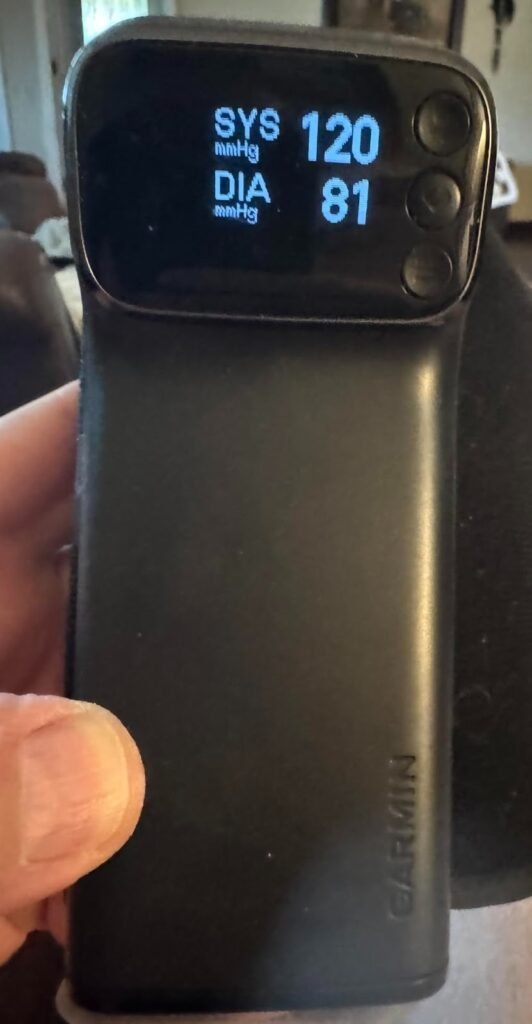
Now place that beside Garmin’s design. The Index BPM covers arm circumferences from 22 to 42 cm, uses a one-piece integrated cuff and display, and supports three consecutive readings with an average. That sounds broad and forgiving. But owner feedback reveals a more delicate reality: some users report good alignment with other monitors, while others report readings that run materially high, often alongside complaints about awkward fit or in-between sizing with the cuff mechanism. Cycling Weekly’s reviewer found no consistent high or low discrepancy versus an Omron monitor during repeated tests and described accuracy as reliable assuming the cuff was fitted correctly. Garmin forum and Reddit posts, by contrast, show a pattern of concern around fit sensitivity and unexpectedly high readings in some users. The device’s real hidden variable, then, is not intelligence. It is cuff geometry under real arms.
That is the point many buyers miss the first time: data integration does not rescue a bad physical interface. It only makes a bad reading easier to store.
The Threshold Where the Outcome Quietly Breaks
The threshold is simple:
The Garmin Index BPM becomes less about “Can it measure?” and more about “Can I get repeatable fit without fighting the cuff?”
Garmin specifies a cuff range of 22 to 42 cm and a measurement cycle of roughly 50 to 60 seconds, with the option to run three consecutive readings and average them. Garmin also uses American Heart Association blood pressure categories in the interface, while cautioning that the chart is not intended to provide medical diagnosis. Those are sensible design decisions.
But the reading only stays useful when three conditions remain true at the same time: the cuff fits your arm comfortably and consistently, your measurement routine is stable enough to repeat, and the value of automatic logging is high enough to change your behavior. If one of those drops out, the product’s logic weakens fast.
I would name that boundary the Fit-to-Logging Threshold.
Below that threshold, the Index BPM is mostly a premium-looking monitor with clever syncing. Above it, it becomes something more valuable: a monitor you are likely to keep using because it removes enough routine drag to preserve the habit. That distinction sounds subtle until you live with blood pressure tracking for months. Then it becomes the whole decision.
| Threshold Variable | Strong | Borderline | Weak |
|---|---|---|---|
| Arm fit inside Garmin cuff range and shape tolerance | Yes | Near edge / in-between feel | No |
| Value of Garmin Connect integration | High | Moderate | Low |
| Willingness to use 3-reading average when needed | Yes | Sometimes | Rarely |
| Need for lowest-cost monitoring | No | Moderate | Yes |
| Need for quick, foolproof cuff setup | No | Moderate | Yes |
| Comfort troubleshooting fit and technique | Yes | Moderate | No |
The product does not quietly break when the numbers are high. It breaks when the trust loop is high-friction.
Why Most Buyers Misread This Too Early
Most buyers misread the product because they shop the wrong category.
They think they are choosing an accuracy device. They are actually choosing a workflow device with medical stakes.
That is why this monitor creates stronger reactions than its spec sheet suggests. Garmin markets familiar strengths: compact build, integrated display, Wi-Fi and Bluetooth, multi-user support, long battery life, and app integration. Those are real advantages.
But those features do not answer the most fragile question in home blood pressure measurement: Will the cuff behave predictably on my arm, over and over, without introducing doubt? The official specification tells you the range. It cannot tell you whether you are the kind of wearer who will fall into the awkward middle zone described by some owners.
There is a second misread.
People often buy a premium smart monitor as if logging convenience and clinical confidence are the same thing. They are not. Garmin itself includes a caution that its blood pressure category chart is not for diagnosis and says you must consult your physician to interpret measurements. That is appropriate. Home monitoring is about pattern quality, not replacing medical judgment.
The right way to think about the Index BPM is not “This will tell me the truth by itself.” It is “This may help me build a cleaner, more sustainable record of measurements, provided the cuff fit is stable and the readings make sense in context.”
That is a calmer sentence. It is also a more useful one.
Who Is Actually Inside This Problem
This product is not for every blood pressure buyer.
It is for a narrower person than the Amazon page first suggests.
It fits the buyer who already uses Garmin Connect, already values trend visibility, and is irritated by fragmented health data. It fits the buyer who is less interested in the cheapest acceptable monitor and more interested in pulling blood pressure into the same system as heart rate, training load, recovery habits, body metrics, or daily wellness logging.
It also fits households that will actually use the multi-user feature; Garmin supports one primary user plus up to 15 secondary users, and automatic syncing can make shared use cleaner than a manual notebook ever will.
It also fits a second type of user: the person whose real enemy is not blood pressure measurement itself but routine collapse. The reading is easy. The repetition is not. For that person, reminders, app history, and immediate syncing matter more than they sound on a feature list. This is where Garmin has an advantage over basic monitors that are technically competent but behaviorally forgettable. Cycling Weekly’s conclusion lands close to this: if you accept the price and usability downsides, the integration can make the device worth it.
Where Wrong-Fit Begins
Wrong-fit begins earlier than most people think.
It does not begin when the device is defective. It begins when your priorities are incompatible with what the device is actually optimizing for.
This is not for you if your first priority is the lowest-cost, least-fussy path to upper-arm readings. It is not for you if you do not care about Garmin Connect. It is not for you if you are likely to resent a cuff that needs a little attention to sit correctly.
It is also not for you if your arm size, arm shape, or experience places you near the edge of comfortable fit; Garmin’s stated 22–42 cm range is broad, but external owner complaints show that theoretical fit and practical fit are not always the same thing.
This is the sharpest exclusion line in the article:
If your confidence depends on “put it on fast and never think about it,” the Garmin Index BPM is a risky choice.
And there is a medical caution underneath that sentence. AHA, ACC, and Mayo all emphasize that cuff size and proper use matter for accuracy. That means a product with even modest fit sensitivity can become the wrong tool for a user who wants zero setup attention. A smooth dashboard cannot compensate for recurring uncertainty at the cuff.
The One Situation Where This Product Becomes Logical
The Garmin Index BPM becomes logical in one very specific situation:
You already live in Garmin, your arm fits the cuff cleanly, and your actual problem is long-term measurement consistency more than bargain pricing.
That is the authorization sentence.
In that situation, the product’s premium starts to make sense. You are not paying only for systolic and diastolic readings. You are paying to reduce the habit-killing gap between “I should measure this regularly” and “I have a usable trend history without manually managing it.”
The ability to take single readings or three-reading averages, sync automatically to Garmin Connect, leave notes, manage reminders, and support multiple users gives the device a real behavioral edge for the right person.
The trade-off is clear.
You gain ecosystem continuity, automatic recordkeeping, and a compact all-in-one form. You trade away some margin for setup forgiveness, and you pay more than you would for simpler upper-arm monitors that many buyers may find perfectly adequate. Cycling Weekly explicitly flags both price and awkward fit as the main reasons to hesitate. User complaints in Garmin forums and Reddit reinforce that the cuff experience can be the difference between trust and rejection.
What It Solves, What It Reduces, and What It Still Leaves to You
What it solves is straightforward.
It solves logging friction better than many basic monitors do. It solves the annoyance of keeping blood pressure separate from the rest of your tracked health data. It solves shared-household organization better than a single-user manual device.
And because it is an upper-arm monitor rather than a wrist model, it aligns with mainstream recommendations that upper-arm devices are generally preferred for home blood pressure monitoring.
What it reduces is smaller but important.
It reduces the chance that you stop tracking simply because the routine feels old-fashioned. It reduces manual transcription. It reduces the disconnect between “I took the measurement” and “I can actually see the pattern.” It may also reduce overreaction to single readings if you use the built-in three-reading average instead of obsessing over one number.
Garmin’s own documentation supports three consecutive readings with averaging, and external review coverage notes that averaging multiple readings is standard good practice.
What it still leaves to you is the hard part.
You still need proper cuff placement. You still need to sit correctly and measure consistently. You still need to notice when a reading does not make sense. You still need to verify concerning or surprising numbers with a clinician, especially because Garmin itself says the category chart is not intended for diagnosis.
And if your arm-cuff relationship is awkward, the product does not remove that burden. It amplifies your awareness of it.
Final Verdict
After studying the official specifications, the owner’s manual, external testing, and user complaints, I do not see the Garmin Index BPM as a general blood pressure recommendation.
I see it as a threshold product.
If your arm fit is clean, your routine benefits from automatic syncing, and Garmin Connect is already where your health data lives, this monitor becomes structurally coherent. It is not buying you a fantasy. It is buying you a tighter habit loop. That is a real benefit. It is just narrower than the product page first makes it feel.
If that is not your situation, the product loses its logic fast. The premium price becomes easier to question. The cuff sensitivity becomes harder to excuse. The “smart” layer starts looking decorative instead of decisive. And once that happens, every small annoyance gains weight.
So the cleanest conclusion is also the least dramatic one:
The Garmin Index BPM is not mainly a better blood pressure monitor. It is a better blood pressure workflow—but only after you cross the fit threshold.
If that is the exact problem you are solving, the product becomes a logical next step.
Transparency Note:
This analysis is not based on quick personal impressions.
It is derived from documented system behavior, verified user patterns, and the physical constraints of storage capacity.
The goal is to translate complex technical behavior into a realistic performance model that helps you make a clear decision