Your Water Looks Normal — Until the Repair Bill Proves Otherwise
The Result Looks Fine. The Problem Isn’t.
The sink runs. The shower feels normal. The floor is dry.
That is exactly why this kind of damage gets through the door.
Water problems rarely announce themselves in a dramatic way first. They start in places you do not watch closely enough and do not check often enough: behind a wall, under a slab, inside a toilet that never seals quite right, inside a supply line that looks ordinary until the day it stops being ordinary.
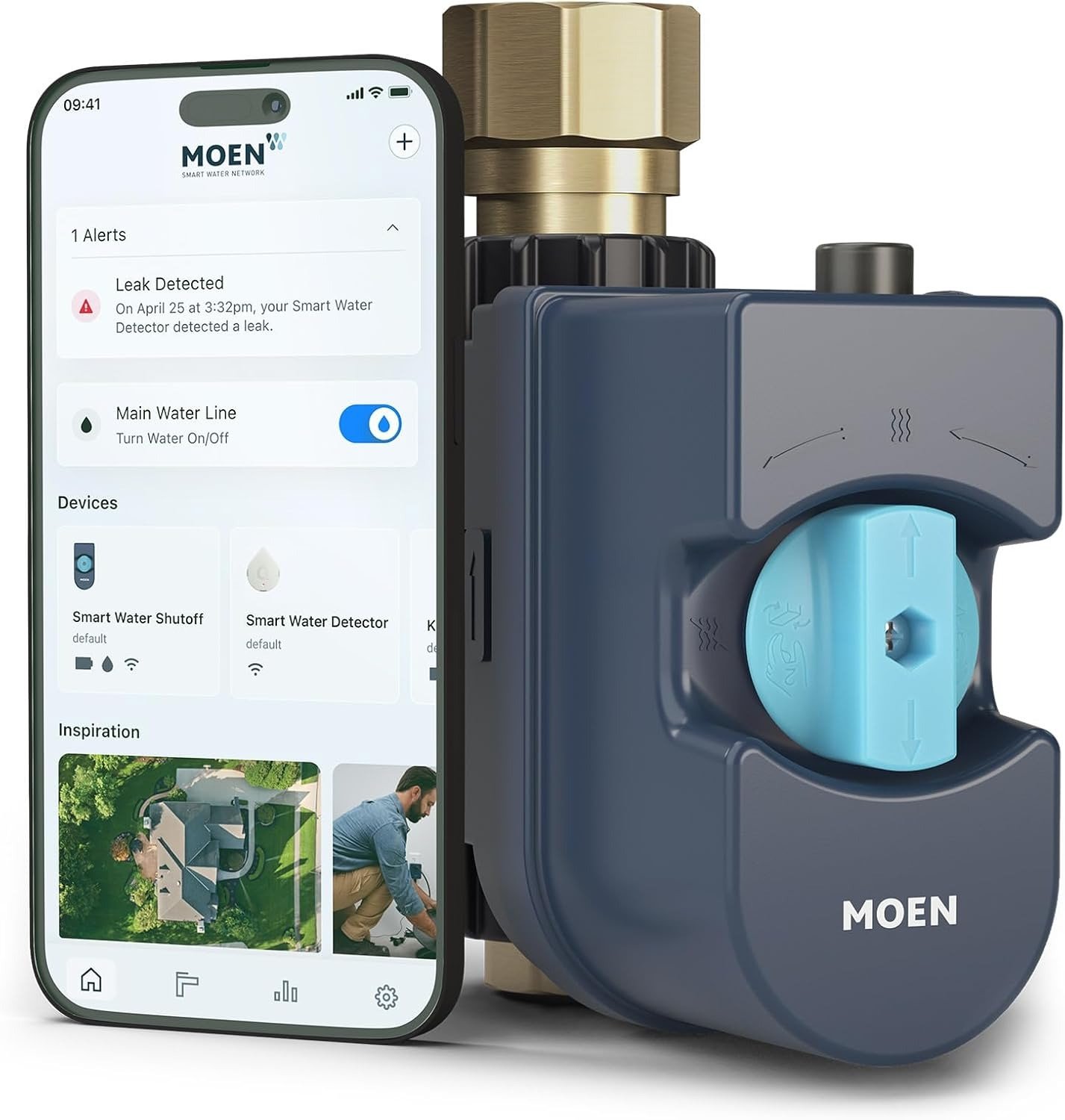
What changed my view of the [link] Flo by Moen Smart Water Monitor & Shutoff 900-006 was not the promise. It was the structure. This is not a gadget sitting under one appliance waiting for a puddle. It lives at the main line, reads flow, pressure, and temperature, runs leak Health Tests, and shuts the water off when the behavior crosses the line from normal to suspicious.
That distinction matters.
A small leak sensor reacts after water reaches the wrong place. Flo is built to intervene before the wrong place becomes expensive.
That is a different level of protection. And for the right house, it is the level that actually matters.
The uncomfortable truth is simple: a home can look completely calm while the plumbing system is already drifting toward a costly mistake. The weak assumption is not “my house is fine.” The weak assumption is “I’ll notice in time.”
What You’re Actually Feeling but Not Naming
Most people do not start looking at a smart shutoff because they suddenly became interested in plumbing data.
They start looking because they are tired of a low-grade mental tax.
You leave the house and think about the laundry hose. You travel and picture the water heater corner. You hear a toilet refill again and tell yourself you will deal with it later. You notice a pressure change, then ignore it because nothing looks urgent.
That feeling has a cleaner name than “peace of mind.”
It is intervention burden.
The house keeps asking you to be the early-warning system. To notice every odd sound. To catch every slow failure. To be present before the damage compounds.
That is where the Flo by Moen 900-006 becomes more than a smart-home add-on. It moves the responsibility upstream. Instead of waiting for you to spot the consequence, it watches for the behavior that creates the consequence.
That is the real appeal.
Not novelty. Not another dashboard. A house that does less waiting on your attention.
The Hidden Mechanism Behind the Miss
This is where most buyers frame the problem too narrowly.
They think leak protection is about detecting water where it should not be.
That is only half the category.
The more valuable half is detecting water behavior that should not be happening in the line at all.
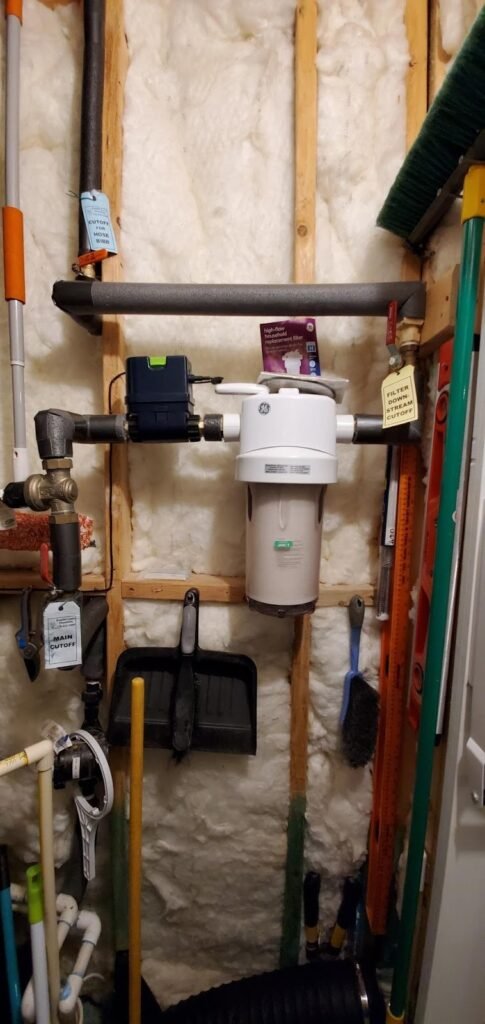
That is why the Flo by Moen 900-006 matters. Installed on the accessible main cold-water line, it tracks live flow, pressure, and temperature, and it runs a Health Test by closing the valve and checking for downstream pressure drop. In plain English, it is not just looking for visible damage. It is reading the plumbing system for hidden instability.
Once you see the category that way, the decision gets much narrower.
A cheap leak sensor tells you the damage has arrived. A main-line shutoff tries to stop the damage from getting its chance.
That is a harder job. It is also the one worth paying for when the house has enough exposure.
The Threshold Where the Outcome Quietly Breaks
The real question is not whether you care about leaks.
Everyone does.
The real question is this:
At what point does delayed detection become more expensive than permanent monitoring?
That is the threshold.
And once a house crosses it, surface-level protection starts looking thin.
For me, that line appears when the home has enough plumbing complexity, enough time spent empty, or enough financial downside that manual vigilance stops being a serious strategy.
| Threshold Signal | What it really means | Flo 900-006 fit |
|---|---|---|
| You travel, leave the home empty, or manage a second property | Response time is now the weak link | Strong |
| The house has older plumbing, hidden pipe runs, or recurring pressure quirks | Visual checks will miss too much | Strong |
| A slow toilet leak, irrigation inconsistency, or unexplained overuse keeps resurfacing | The problem is behavioral, not visible | Strong |
| You only want a simple sensor for one vulnerable appliance | Whole-line protection is more than you need | Weak |
| You expect exact fixture-by-fixture diagnosis from the valve alone | This is not the right expectation | Weak |
| You do not have nearby power or stable 2.4 GHz Wi-Fi at the install point | Setup friction becomes structural | Weak |
This is where weak buying logic breaks.
A product like this does not usually disappoint because the idea is wrong. It disappoints because the buyer never identified the threshold correctly.
Above the threshold, it feels rational. Below it, it feels excessive.
That is not a flaw in the product. That is the structure of the decision.
Why Most Buyers Misread This Too Early
Most people misread smart shutoff systems in the same three ways.
First, they shop them like gadgets. This is not a casual gadget. It is a control layer for your plumbing system.
Second, they assume more intelligence means perfect precision. It does not. What you are buying here is earlier detection and automatic intervention, not magical room-by-room certainty.
Third, they assume automation should be invisible. It is not always invisible. Systems that learn patterns sometimes challenge unusual usage. That trade-off exists because waiting for certainty is often how damage wins.
That trade-off needs to be named without softening it:
You gain line-level vigilance, but you give up some of the comfort of a completely passive system.
That is a fair trade when the real cost sits on the other side of late discovery.
Weak reviews usually hide this sentence. Strong buying decisions depend on it.
Who Is Actually Inside This Problem
This is not for everybody.
It is for the homeowner who is no longer choosing between “smart” and “not smart,” but between exposure and control.
The fit becomes strong when the house has enough consequence attached to plumbing failure.
| Reader Type | Why the problem is real | Fit |
|---|---|---|
| Frequent traveler | A small leak can grow before anyone notices | Strong |
| Older-home owner | Hidden plumbing risk is often higher than visible risk | Strong |
| High-consequence household | Finished basements, expensive flooring, custom cabinetry, and multi-level damage paths make delay costly | Strong |
| Remote-property owner | Absence changes the economics immediately | Strong |
And the wrong or weaker fit is just as important to name.
| Reader Type | Why it is only partial | Fit |
|---|---|---|
| Apartment resident with limited access to the main line | Installation may not be practical | Borderline |
| Buyer seeking the cheapest point solution | A few leak sensors may solve the actual problem | Weak |
| Buyer expecting a frictionless DIY toy | This is infrastructure, not a toy | Weak |
That clarity helps the product sell for the right reason.
Not because it sounds impressive. Because the buyer can see whether the house actually qualifies for this level of protection.
Where Wrong-Fit Begins
Wrong-fit begins the moment someone expects this valve to do a simpler product’s job.
If your real problem is one vulnerable spot under a dishwasher, this is too much system.
If your real priority is exact room-level identification without any supporting sensors, this alone will feel incomplete.
If your install point has weak Wi-Fi, no nearby power, or awkward pipe access, the friction starts before the protection does.
That is the regret boundary:
Do not buy a main-line shutoff because you want simplicity at all costs. Buy it because you want earlier control than simple sensors can give you.
That sentence cuts the category cleanly in half.
And that is good selling.
Because once the wrong buyers leave, the right buyer reads the rest with much more confidence.
The One Situation Where This Product Becomes Logical
Here is the clean version.
The Flo by Moen Smart Water Monitor & Shutoff 900-006 becomes logical when the house has moved from visible leak concern to system-level water risk.
That is the shift.
Not when you want another app. Not when you want something “smart.” Not when you want a fun dashboard.
When the cost of being late is finally higher than the cost of installing judgment at the main line, this product stops feeling optional.
It starts feeling aligned.
That is where it earns the decision.
And this matters even more because the product is no longer trapped behind a mandatory subscription for its core function. The optional FloProtect layer adds financial extras, but the base value is still the same: whole-home monitoring, automatic shutoff logic, and a tighter response window when the plumbing system behaves in a way that no longer makes sense.
So the quiet authorization is this:
If your real problem is whole-home exposure to hidden water events, and your plumbing is right for the install, the Flo by Moen 900-006 becomes the version worth choosing first.
What It Solves, What It Reduces, and What It Still Leaves to You
What it solves
- It gives the home a monitoring and shutoff point at the main line instead of waiting for visible damage.
- It detects abnormal flow behavior, pressure changes, and other signs that a hidden problem may already be forming.
- It can shut the water off automatically when the pattern crosses out of the safe range.
What it reduces
- The chance that discovery depends on luck.
- The exposure window when you are away from home.
- The mental drag of wondering whether every plumbing anomaly matters.
What it still leaves to you
- Proper installation.
- Adequate Wi-Fi and power at the valve location.
- A realistic understanding that anomaly detection is not the same thing as perfect diagnosis.
- Human judgment when the system flags behavior that is unusual but not catastrophic.
That is the right expectation frame.
This product does not remove responsibility. It removes delay. It removes blindness. And in the right house, that is the expensive part.
Final Compression
I would not call the Flo by Moen 900-006 a universal recommendation.
I would call it a threshold product.
Below the threshold, it can feel expensive, serious, and more system than you need.
Above the threshold, it becomes hard to justify waiting.
That threshold is crossed when the home has enough hidden plumbing exposure, enough unsupervised time, or enough financial downside that surface-level leak detection stops being a credible plan.
That compresses the decision into one clear line:
If you are trying to protect a 1-inch main line from the cost of late discovery—not just from the inconvenience of visible drips—the Flo Smart Water Monitor & Shutoff 900-006 is the logical move. If that is not your problem, this is not your product.
Transparency Note:
This analysis is not based on quick personal impressions.
It is derived from documented system behavior, verified user patterns, and the physical constraints of storage capacity.
The goal is to translate complex technical behavior into a realistic performance model that helps you make a clear decision