I Would Only Buy This After One Specific Kind of Frustration
DECISION ANALYSIS
The moment that makes a product like this feel necessary is rarely dramatic. It is repetitive. You are already half awake, you turn the handle, the water is not right, you wait longer than you want, someone else used the bathroom before you, and now the first thirty seconds of the shower feel like negotiating with plumbing.
That quiet daily drag is what this Longriver system is trying to remove. Not all of it. Just the part that steals attention over and over again. That matters, because attention drain is one of the hidden costs people underestimate in home fixtures.
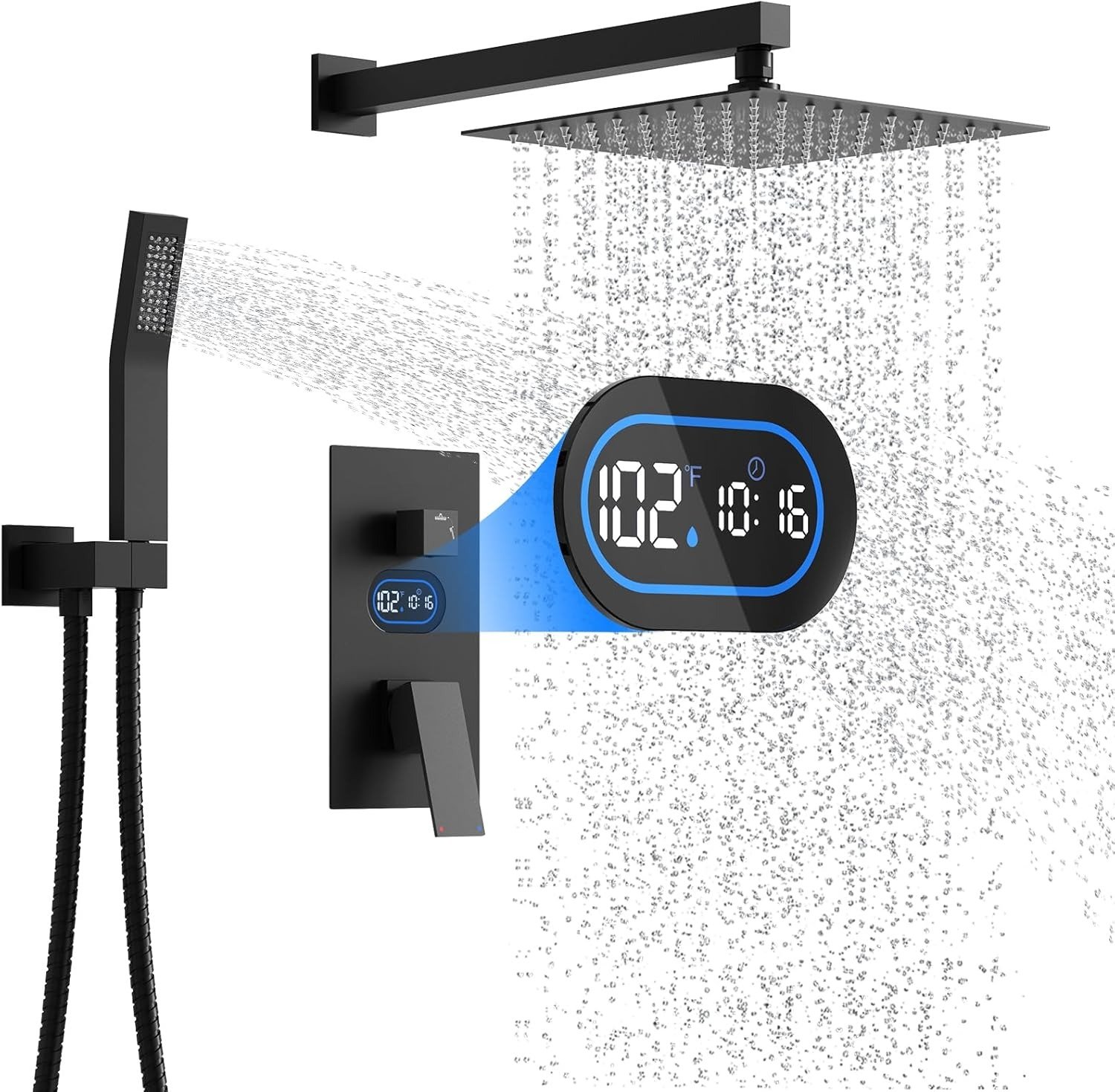
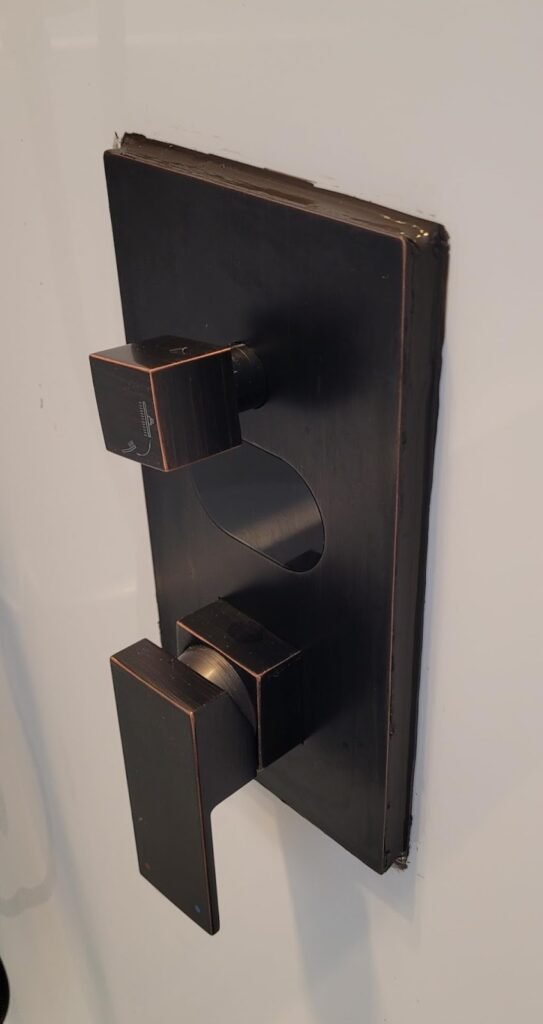
Longriver’s system combines a hydro-powered temperature display, pressure-balance valve, 10-inch rain head, handheld spray, metal construction, and a listed 1.75 GPM flow rate. But none of that matters unless it crosses one clear threshold: it must reduce repeated friction enough to justify being a full system decision rather than a simple hardware upgrade.
My Governing Model — Threshold
Here is the threshold in plain language: if your current shower problem is repeated uncertainty, this product has a reason to exist. If your current shower problem is not uncertainty, it becomes much easier to overbuy. That is the line.
I do not judge this as a “smart shower.” I judge it as a friction-reduction system. The display shows you what is happening. The pressure-balance valve reduces the chance that the situation shifts unexpectedly. Together, they can compress hesitation.
Separately, either one would be less convincing. That is the practical insight. People often shop for visible features and ignore invisible control. The invisible control is usually what decides whether daily use feels better or just looks newer.
The Part Many Buyers Realize Too Late
The first uncomfortable truth is installation. Longriver explicitly says other brands’ valves and trims do not match and that the old valve body should be removed before installation. That means this is not a harmless style experiment. It is a commitment.
The second uncomfortable truth is brand depth. A newer marketplace brand can offer surprisingly good hardware value, but it does not automatically bring the long-tail confidence of a major plumbing name with deeper installer familiarity and a broader service network.
This is the kind of trade-off that does not show up in the glamour photos, but it absolutely shows up later if anything needs replacement or support.
What I Believe Here, and What I Keep at Arm’s Length
I believe the logic of the hydropower display. I believe the usefulness of pressure-balance protection. I believe the practical value of pairing a rain head with a handheld in a family or mixed-use bathroom.
I do not blindly accept inflated seller language around dramatic pressure gains or massive water savings without third-party testing. I also do not turn an early 4.5-star average into proof of long-term durability.
What I can say with confidence is narrower and more useful: the feature stack is coherent, the use case is real, and the biggest decision variable is not whether the shower will “feel luxurious,” but whether your household actually suffers from the exact friction this setup is built to reduce.
The Aha Rule That Clarifies the Fit
A rain shower system should be judged like a routine, not like a showroom moment. That one shift in thinking clears up a lot. If the product makes mornings less stop-start, reduces second-guessing, and lowers how much attention you spend on getting the water right, it is doing real work.
If it only makes the wall prettier, then the logic weakens. This is the rule I would use: buy the system for reduced monitoring, not for enhanced appearance. Once that rule is in place, the fit becomes far easier to see.
Binary Decision Table
| Situation | Fit |
|---|---|
| You share the bathroom and want quick visible temperature feedback | Excellent |
| You are already renovating and opening the wall | Excellent |
| You want app presets, remote start, and voice control | Wrong fit |
| You want the easiest possible replacement with minimal plumbing changes | Wrong fit |
| You want a cleaner routine more than a “smart home” showpiece | Strong |
| You prioritize deep brand-service confidence above all else | Borderline |
| You only want a cheap cosmetic upgrade | Poor |
Compatibility Split
This is for people whose real problem is repeated uncertainty.
This is not for people whose real problem is boredom with the bathroom look.
This is for households where visible temperature awareness lowers stress.
This is not for buyers expecting a full digital control ecosystem.
This is for renovations where system replacement is already on the table.
This is not for anyone hoping to keep the old valve in the wall and simply change the trim.
This is for someone who wants a shower that asks for less attention.
This is not for someone whose highest priority is legacy-brand reassurance over the next decade.
Trade-Off Framing
You gain better routine visibility, but you trade off plug-and-play simplicity.
You gain a cleaner daily control experience, but you trade off some long-term brand certainty.
You gain practical safety and comfort signals, but you do not gain full app-based smart-shower intelligence.
You gain a more premium integrated setup, but only if you accept that this is a system-level decision, not a decorative accessory.
My Final Read
If I were deciding on this today, I would ignore the temptation to treat it like a style purchase.
I would ask only one question: Has temperature guesswork become annoying enough that I want it removed from the routine?
If the answer is yes, this product has a sharp reason to exist. If the answer is no, then even a well-equipped system like this can become unnecessary complexity.
The right buyer will feel relief here, not excitement. And that is exactly why the fit can be stronger than it first appears.
If the problem you are solving is repeated water-checking, minor temperature anxiety, and a shower routine that keeps stealing your attention, this becomes the logical next step.
Retention Loop
There is one piece many buyers still miss even after choosing the right shower system: the shower itself may be stable, but the routine around cleaning, mineral buildup, and long-term spray consistency can still quietly ruin the experience.
That next layer is where the real ownership test begins.
Transparency Note:
This analysis is not based on quick personal impressions.
It is derived from documented system behavior, verified user patterns, and the physical constraints of storage capacity.
The goal is to translate complex technical behavior into a realistic performance model that helps you make a clear decision