When a Smart Toilet Stops Feeling Like a Luxury Toy
ANALYSIS FRAMEWORK
I did not come away from the EPLO U8MAX thinking the headline feature was the headline feature. The 1000g MaP score is what gets attention, but that is not the point that stayed with me.
What stayed with me is the routine threshold: the moment a toilet stops being a porcelain object you ignore and starts removing small, repeated annoyances you usually tolerate without naming them. That is where this product becomes interesting.
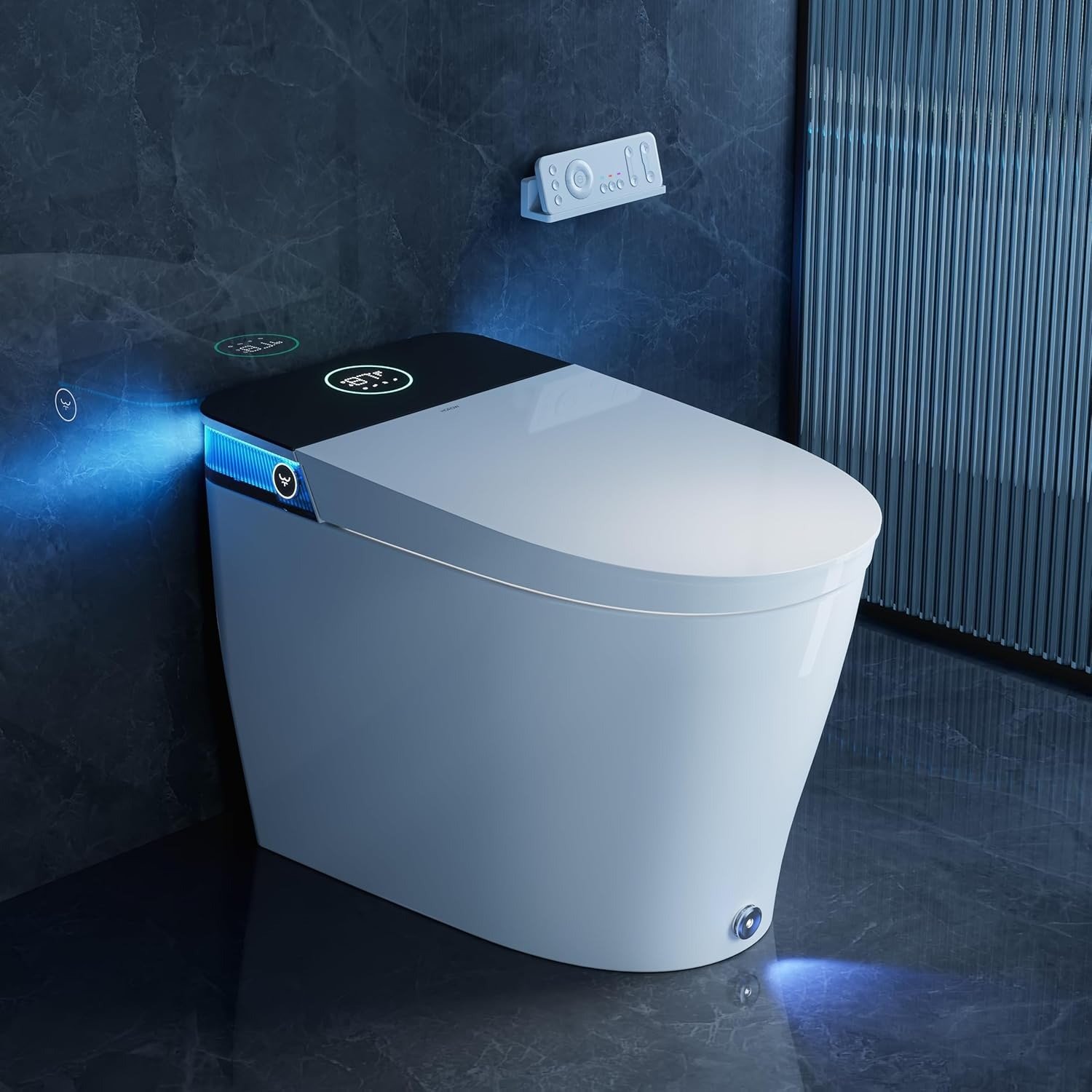
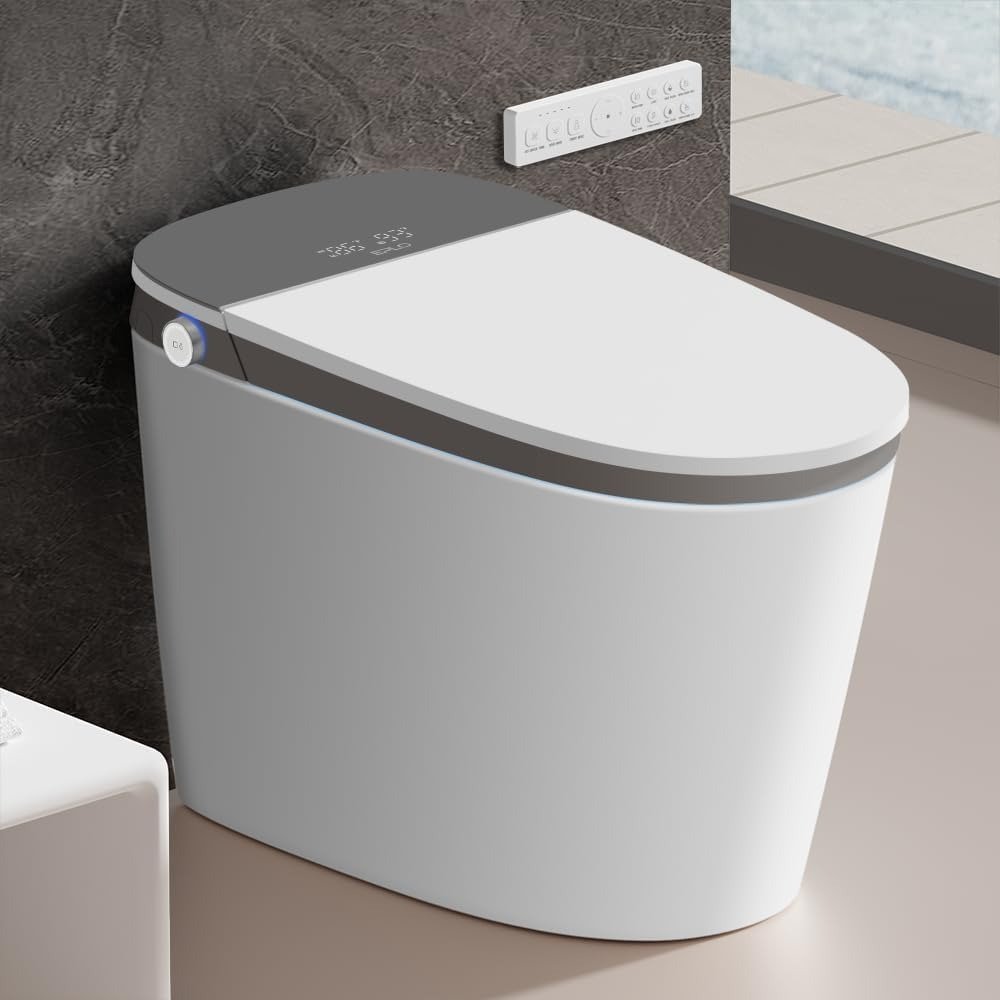
The internet evidence around this model is unusually clear on one thing. EPLO is selling a fully integrated smart toilet with a built-in tank and pump, a claimed 1000g MaP flush score, dual flush at 1.6/1.1 GPF, auto open/close, foot-sensor control, heated seat, warm-water wash, warm-air drying, deodorization, a foam shield, and backup-battery flushing for outages.
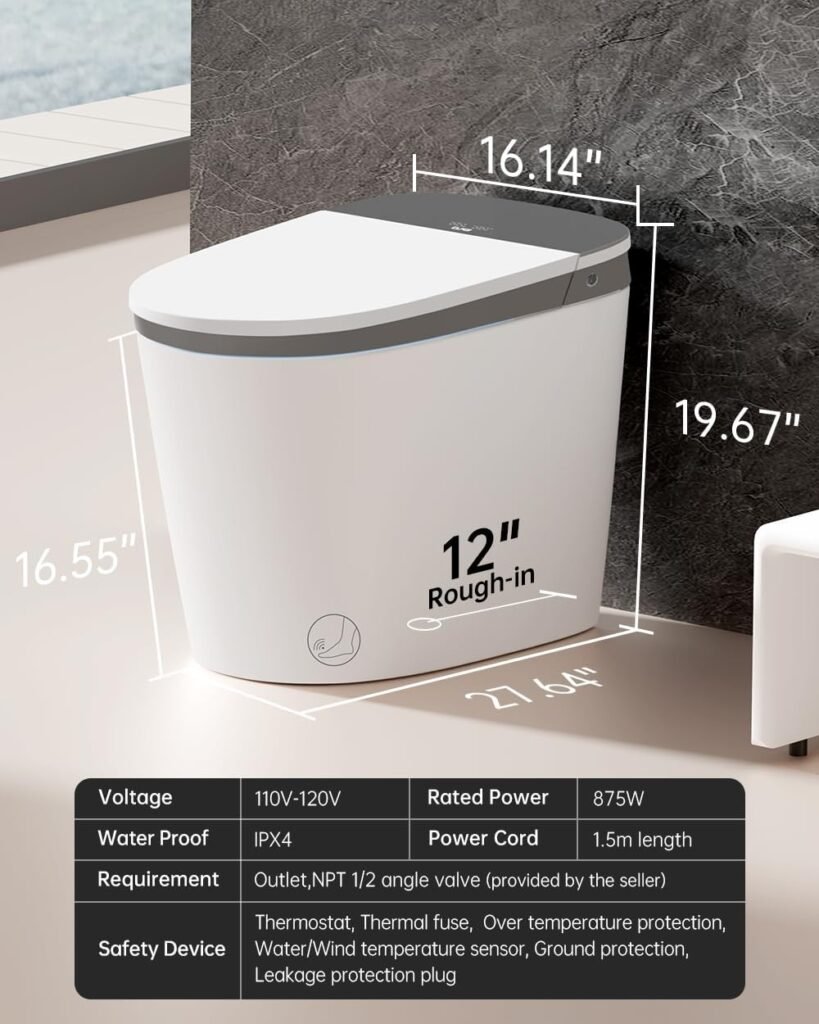
The unit is also ADA comfort height at roughly 17.4 inches from floor to seat, and the listed body is 27.63 by 16.14 by 19.68 inches at 116 pounds.
That spec sheet sounds like overkill until you read what independent plumbing performance guidance says about toilet flushing in the first place. MaP’s own FAQ says 350 grams meets the EPA WaterSense performance level and that 500 grams or more is already exceptional.
In other words, 1000 grams is not just “good.” It sits at the top of the published test ceiling.
So the meaningful question is no longer, “Will this flush?” The meaningful question becomes, “What happens after the flush, and how does it change the rhythm of using the bathroom every day?”
The Threshold Is Not Power. It Is Repetition.
Most bathroom frustration is not dramatic. It is repetitive. Splashback. Odor that hangs longer than it should. Bowl mess that makes cleanup more frequent than you want. Needing to touch the lid, the seat, or the flush more often than you notice until you stop doing it.
EPLO’s design language keeps circling those repeat annoyances: foam shield for splash control and odor containment, auto open/close, foot sensor operation, self-cleaning nozzle logic, deodorization, and warm wash and drying features. Taken together, this is not a “wow feature” stack. It is a friction-reduction stack.
[Image Placeholder]
The foam shield is the most unusual part of the package, and it matters more than it looks. EPLO describes it as a dense foam layer that reduces splashback, helps keep odors trapped, reduces sticking, and can help the bowl stay cleaner.
Owner chatter outside the brand page tracks with that idea: one Reddit user who installed the U8MAX said the feature genuinely helped with splashback and made the bowl easier to clean, though they wished it reapplied automatically after every flush instead of only as they sat down.
That is the exact kind of small, real-world detail I look for, because it tells me the feature is not empty theater. It is useful, but it has a routine condition.
What the Product Gets Right Before You Even Talk About Comfort
The built-in tank and pump deserve more attention than the marketing copy usually gives them. EPLO says the flush is not limited by water pressure, and that matters in homes where pressure inconsistency quietly makes bathroom fixtures feel worse over time.
Add the backup battery for blackout flushing, and I start to see the U8MAX less as a “smart bathroom indulgence” and more as a bathroom appliance designed to stay operational under imperfect conditions. That is a stronger argument than mood lighting or a remote control.
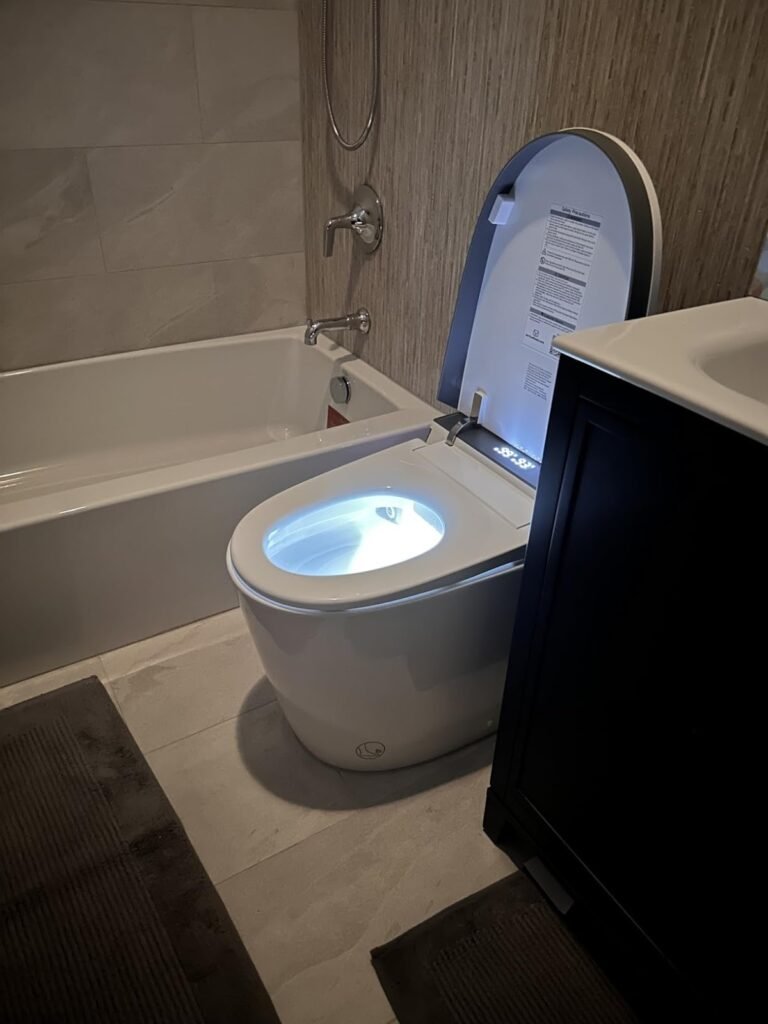
The other part I would not underrate is seat height. At 17.41 inches, EPLO positions this as ADA comfort height, which is not just an accessibility bullet point.
It changes the sitting and standing effort for taller users, older adults, and anyone with knee or back sensitivity. In bathroom products, comfort often gets marketed as “heated seat luxury.” Real comfort is often just less strain. This model appears to understand that.
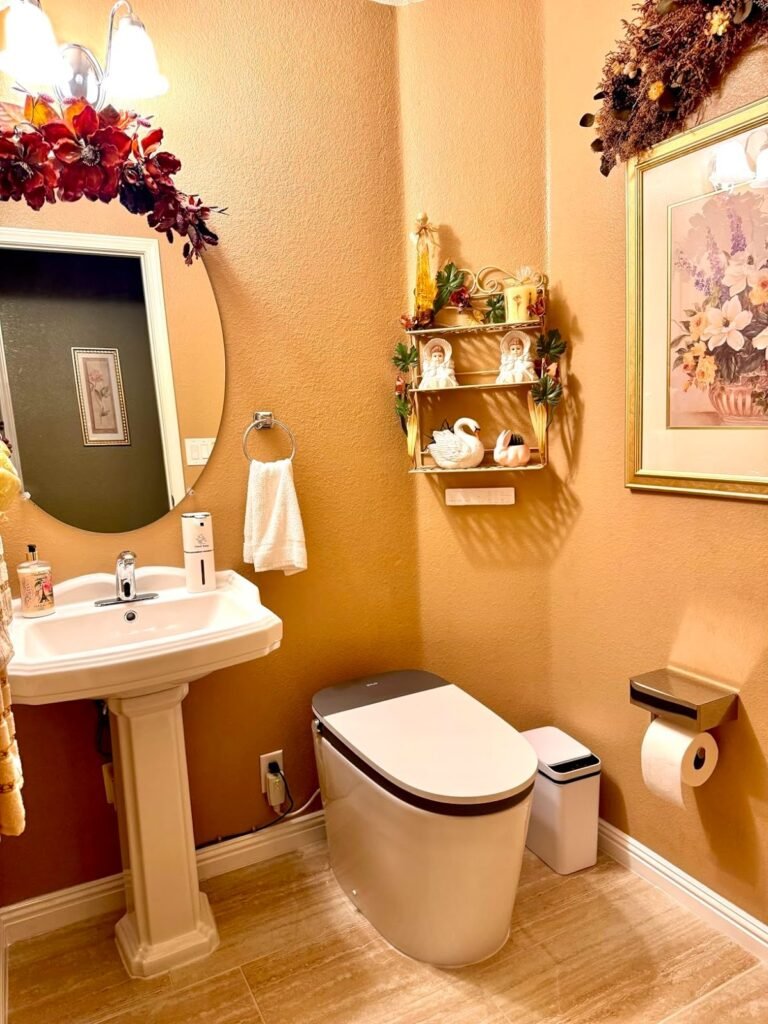
The Point Where the Promise Becomes Real
Here is the threshold as I see it.
If your current bathroom problem is only that your toilet flushes normally and you want something that looks futuristic, the U8MAX is more machine than you need.
If your actual problem is that bathroom use has too many small interruptions—touchpoints, splash, odor, sticking waste, pressure inconsistency, cold-seat discomfort, or cleanup fatigue—this starts to look less decorative and more rational.
That is the line. That is where the product crosses from novelty to utility.
What I Would Treat as the Real Trade-Off
The strongest products usually create their own new friction. This one does too.
The U8MAX gives you automation, but automation means sensors. One owner review on EPLO’s own product page described the lid/flush sensor as overly sensitive for a user who leans right during cleanup, causing unwanted closing and flush behavior.
The same review described the dryer as too weak to fully replace manual wiping in a practical amount of time. Another review on the same page liked the auto-lid feature overall but still found it occasionally annoying while moving around the unit, adding that it was easy to disable.
This is exactly the trade-off I would want stated clearly: you gain hands-free behavior, but you accept a higher chance that sensor logic becomes part of the experience instead of disappearing entirely.
That does not kill the product. It defines its boundary.
Fast Fit Table
| Need | Fit |
|---|---|
| Strong flush performance on paper and in positioning | Strong |
| Homes with inconsistent water pressure | Strong |
| Hands-free lid/flush routine | Strong |
| Less splashback and easier bowl cleanup | Strong |
| Comfort-height seating | Strong |
| Power-outage flush backup | Strong |
| Expecting dryer to replace wiping completely | Weak |
| Zero-tolerance for sensitive motion/sensor behavior | Weak |
| Buyers who want the simplest possible toilet | Poor |
Who This Is For, and Who It Is Not For
This is for people whose bathroom friction is operational.
This is for the user who notices repeated cleanup, repeated reaching, repeated cold-seat discomfort, repeated odor, repeated splash, repeated little interruptions that add up over months.
This is not for someone chasing a luxury label while ignoring maintenance rhythm, learning curve, sensor behavior, and the fact that integrated smart fixtures are still appliances, not magic.
A plumber in a public discussion about smart toilets also warned that fully integrated toilet/bidet combos can complicate installation and sometimes cost more labor than buyers expect, especially around skirted bodies, shutoff placement, and flange issues. I would take that seriously before treating any integrated model as plug-and-play.
What Stayed With Me
What impressed me here was not the sheer number of features. Plenty of smart toilets can turn a bathroom into a checklist.
What impressed me is that the U8MAX appears to understand that bathroom satisfaction is cumulative. A better flush alone does not change much once you are above the normal performance threshold. A better routine does.
That is why the foam shield, comfort height, auto operation, built-in tank and pump, and outage-ready flush matter more to me than the glossy category language. They are all aimed at repeated-life use, not first-day excitement.
If this is the problem you are actually solving, the next step is not another broad search. It is a tighter fit check in the decision layer. [link — Decision Article: EPLO U8MAX fit, boundaries, and the point where it becomes the logical buy]
Transparency Note:
This analysis is not based on quick personal impressions.
It is derived from documented system behavior, verified user patterns, and the physical constraints of storage capacity.
The goal is to translate complex technical behavior into a realistic performance model that helps you make a clear decision