When a Smart Towel Warmer Stops Feeling Optional
ANALYSIS FRAMEWORK
You do not notice the problem when you step into the shower. You notice it eight seconds after the water stops. The room cools faster than your skin does, the towel feels late, and a small part of the routine turns irritating again.
That is the real entry point for this category. Not luxury. Not spa language. Not aesthetics. A repeated post-shower interruption that sounds minor until you live it every day.
The surprising part is that most towel warmers do not fail because they cannot make fabric warm. They fail because the warmth arrives at the wrong moment. That timing gap is where the category either becomes useful or becomes clutter.
The Secret Most Listings Hide
The heat is not the threshold. The routine is.
That sounds backwards at first, because product pages train people to look at capacity, wattage, and temperature range. Those matter.
But the category keeps exposing the same quiet truth: once a towel warmer asks for too much remembering, it starts losing value even if the towel itself feels good.
Tests of bucket-style warmers consistently focus on ease of use, heat-up behavior, and safety, while real user discussions keep circling one human variable that spec sheets do not solve on their own: forgetting to preload the towel before the shower.
That is why “smart” only matters when it removes the memory tax. Otherwise it is decoration with an app attached.
Where the Category Usually Breaks
Most people buy the wrong promise.
They think they are buying constant warmth. What they are often buying is a narrow window of well-timed comfort.
Miss that window, overpack the bucket, or assume two large towels will heat like one, and the experience changes.
Review testing of towel warmers has already shown what many buyers discover late: canister and bucket formats can heat unevenly depending on towel placement and load density, with some models warming the top faster than the lower sections until enough time passes.
That is the counter-intuitive truth that makes this category feel magical for some people and underwhelming for others.
The product is not only heating fabric. It is negotiating timing, folding, space, and patience.
The Pain-Relief Hook in Real Life
I look at towel warmers the same way I look at kitchen gadgets: if they save effort only when I babysit them, they are not saving effort.
That is why the useful threshold is brutally simple.
A towel warmer earns its place only when it removes a repeated annoyance without creating a new repeated task.
Once I frame it that way, the category gets easier to read.
A smart bucket warmer is not there to impress me with connected features. It is there to make sure I stop stepping out of a hot shower into a cold, badly timed towel because I forgot the one step that makes the machine worth owning.
If it does that consistently, it starts feeling less like an indulgence and more like a quiet correction to the routine.
The Technical Clue That Actually Matters
A detail that looks small on the page can completely change the lived result: time control plus temperature control.
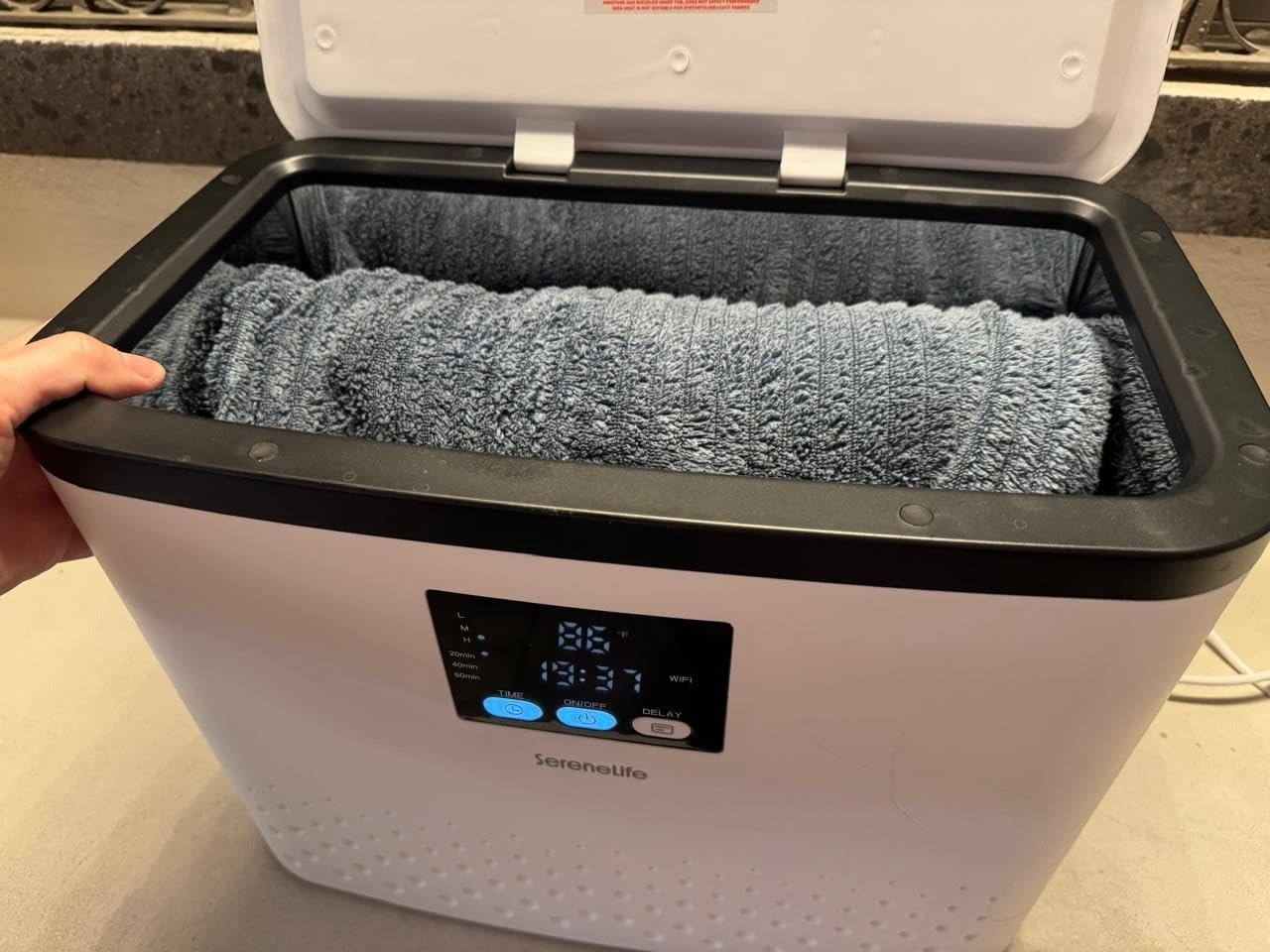
On the SereneLife WiFi-enabled model, the relevant technical signals are not hard to spot: app-based control, adjustable temperature from 90°F to 140°F, and timer options of 20, 40, or 60 minutes.
That combination matters because it tackles the category’s biggest behavioral weakness from two sides.
First, it lets me decide how warm I want the towel to feel. Second, it lets me decide when that warmth should be ready.
That is much more important than the word “WiFi” makes it sound. In this category, smart control is only valuable when it turns warm towels into a scheduled outcome rather than a remembered chore.
The Uncomfortable Truth About Capacity
Here is the part many buyers do not want to hear: “fits two large bath towels” is not the same as “heats two large bath towels equally well under real-life loading.”
That is not a criticism of one brand. It is a category law.
People’s testing notes on bucket-style warmers already show that larger loads can affect how evenly warmth spreads, and other testing has shown top-versus-bottom variation before enough time passes.
So when a 20L bucket says it can hold two large towels or a throw, I read that as flexibility, not as a guarantee of identical warmth across every fold.
That single mindset shift prevents a lot of disappointment. It also gives the smarter buyer a quiet edge: judge these products by timing discipline and load realism, not by optimistic packing claims.
The Aha Rule I Would Use
My rule is this:
A smart towel warmer becomes worth it when it beats forgetfulness more reliably than it asks for attention.
That is the whole decision algorithm.
If your showers happen on a pattern, if the irritation is real enough to repeat in your mind before you even buy, and if preheating can be automated instead of remembered, the category starts making practical sense.
If your routine is random, if you want instant heat with no lead time, or if you expect a full bucket to behave like a perfectly even heated cabinet, you are walking past the category’s real boundary.
The trick is not to ask whether warm towels sound nice. The trick is to ask whether the warmer can enter your life without becoming another thing you have to manage.
Binary Fit Table
| Need | Fit |
|---|---|
| Warm towel ready before a scheduled shower | Strong |
| Remote preheat from a phone | Strong |
| Minimal installation | Strong |
| One-towel comfort with low setup friction | Strong |
| Perfectly even full-load heating every time | Borderline |
| Fast heat with no planning | Weak |
| Drying damp towels after use | Weak |
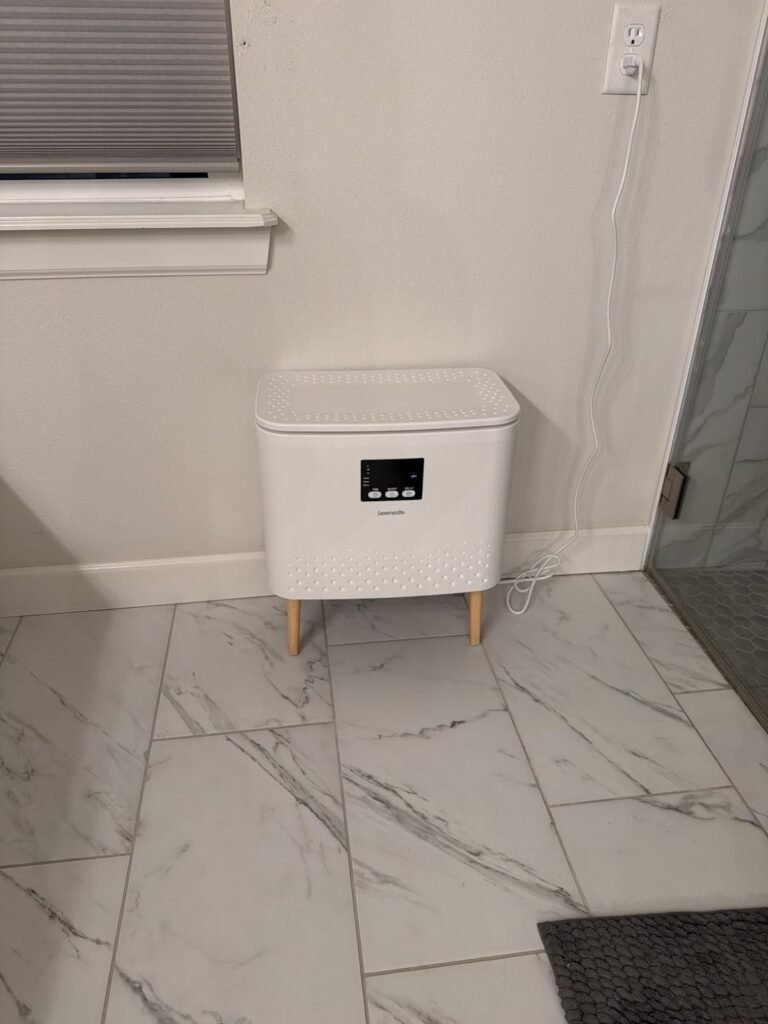
| Small-bathroom luxury without wall mounting | Strong |
Who This Category Is Really For
This is for the person whose irritation is steady, not dramatic.
The person who is tired of tiny routine failures.
The person who does not need another product to admire, but does need one less cold interruption.
The person who knows comfort is not always about intensity. Sometimes it is about removing the one badly timed moment that keeps repeating.
If that sounds familiar, the missing piece is not another broad roundup. It is the decision article that answers the harder question: whether the SereneLife WiFi-enabled 20L towel warmer crosses that threshold better than a standard single-touch bucket warmer in actual use.
Transparency Note:
This analysis is not based on quick personal impressions.
It is derived from documented system behavior, verified user patterns, and the physical constraints of storage capacity.
The goal is to translate complex technical behavior into a realistic performance model that helps you make a clear decision