LEVOIT Vital 200S-P: I Would Only Buy It for One Kind of Room Problem
DECISION ANALYSIS
I would not buy this because the air looks dirty. I would buy it because the room keeps slipping backward.
That is the pain point. You clean once, and the room slowly leans back into the same low-level mess: more dust on the dresser than there should be, pet smell sitting in the curtains, a bedroom that feels heavier by morning, or a living area that never quite feels reset after normal use.
That pattern matters more than any isolated “bad air” moment. It tells me the room is losing the recovery battle. The LEVOIT Vital 200S-P makes sense when the problem is not a single event but a repeated slide backward.
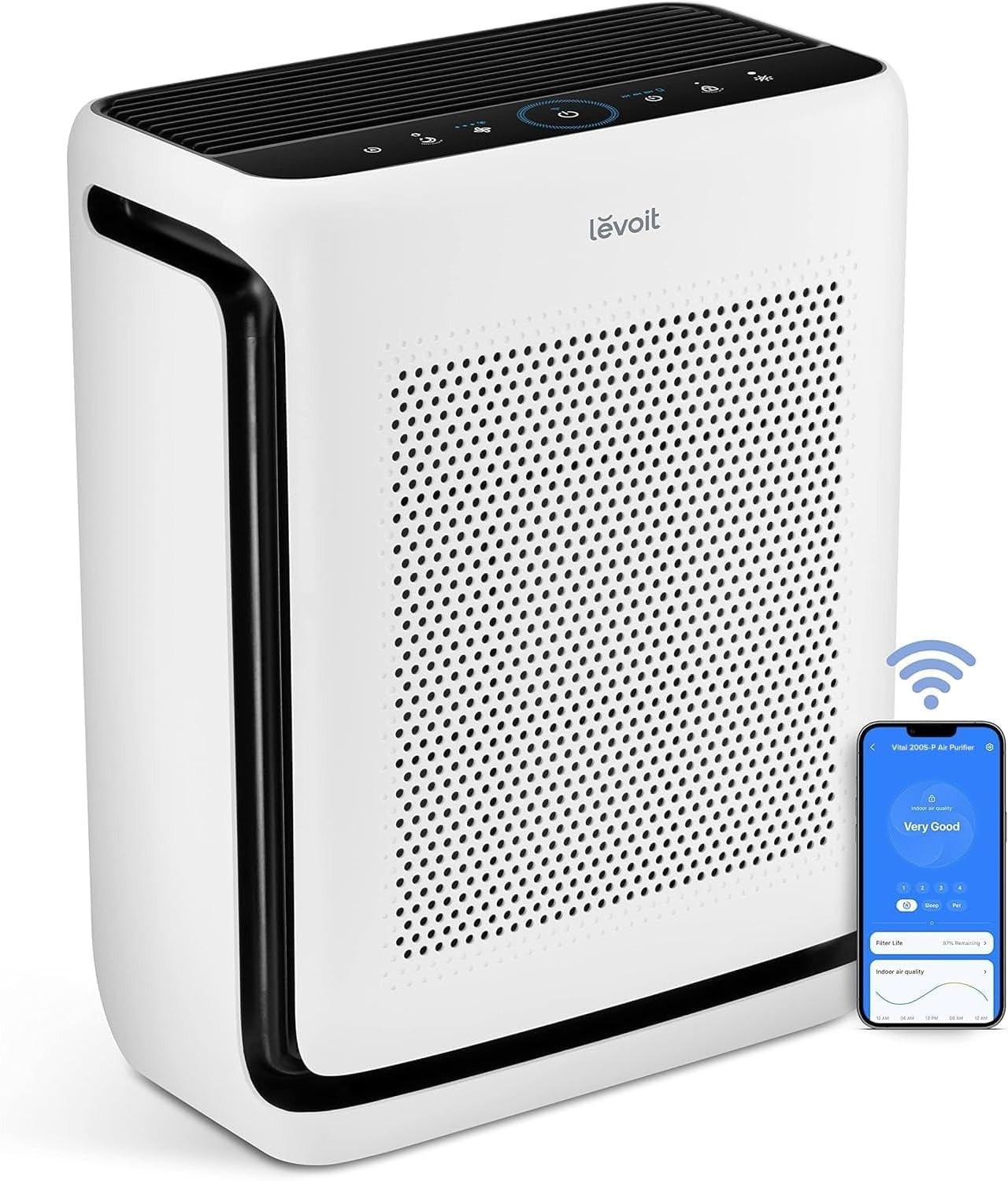
On its official page, LEVOIT positions it for up to 388 sq ft at 4.8 ACH, with 250 CFM CADR, a washable pre-filter, and a 23–54 dB noise range. Amazon’s current listing similarly frames it as a large-room purifier and highlights the dual inlet design for pet hair and odors.
The secret is not “strong filtration.” It is usable strength.
This is where the category becomes less honest than it should be. A purifier can be strong on paper and still become weak in real life if the noise gets irritating, the filter clogs too easily, or the controls demand more attention than the owner will consistently give.
What pulled me toward the Vital 200S-P in the research is that the best public evaluations keep landing on the same pattern: good cleaning, livable operation, and sensible everyday behavior.
RTINGS says it delivers great overall filtration performance with relatively quiet operation. HouseFresh goes further and calls it the best-performing air purifier under $200 in its current testing, with a 23-minute PM1 clearance result at top speed.
That alignment matters because the real winner in this category is often the machine that people keep running correctly, not the one with the loudest bragging rights.
The counter-intuitive truth: pet-friendly design is really anti-friction design
Most people read “best for pets” and think the value is emotional. It is not. It is mechanical.
LEVOIT’s U-shaped inlet is meant to trap airborne fur before hair buildup interferes with operation, and RTINGS notes that this model is specifically marketed toward heavy-shedding pet owners.
That design choice matters even if you are not drowning in fur, because it speaks to something more important: flow preservation over time. Smaller or less thoughtful purifiers can feel fine early on and gradually feel less effective as routine buildup interferes with performance.
This model appears designed to delay that type of slowdown. That is not glamorous marketing. It is quiet competence.
The decision algorithm I would actually use
Here is the simplest rule I can give you.
If the room gets contaminated faster than your current setup can normalize it, and you want a purifier that can recover the space without becoming obnoxious to live with, the Vital 200S-P enters the serious zone.
If your room is tiny, your air issues are light, or you mainly want a symbolic purifier rather than a meaningful one, it is probably more machine than you need.
That is the threshold model in plain language.
And once you see it that way, the choice becomes cleaner.
Binary fit table
| What you actually need | Fit |
|---|---|
| Bedroom allergy relief with recurring dust | Strong |
| Pet hair and dander control in a lived-in room | Strong |
| Better everyday odor handling in normal home conditions | Strong |
| App scheduling and auto-adjustment | Strong |
| Minimal footprint in a compact room | Borderline |
| Heavy VOC-focused use case | Weak |
| Zero-maintenance ownership expectation | Weak |
| Silent operation at maximum airflow | Weak |
This table is more honest than most “pros and cons” lists because it maps need to fit directly.
AirPurifierFirst’s review places the unit around 245 CFM and reports nearly identical performance to the Core 400S, which supports the same general conclusion: strong household coverage, not miracle-machine territory. Best Buy’s listing also shows the 245 CFM CADR figure, reinforcing the same performance class.
The weaknesses are real, but they are the cost of its strengths
You gain stronger room recovery, but you trade away some compactness.
You gain better tolerance for pet-heavy conditions, but you still inherit filter maintenance.
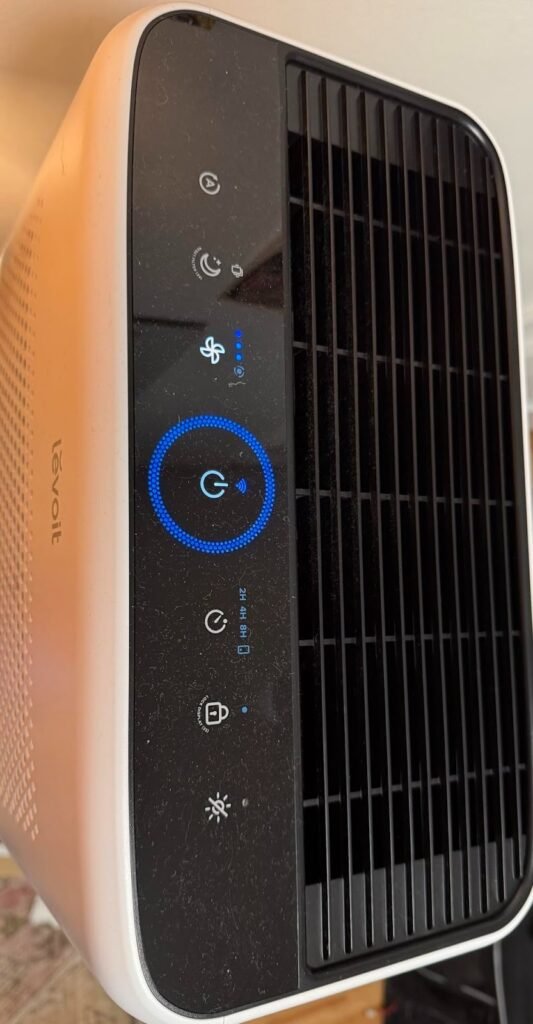
You gain automation, but you also add reliance on a sensor that works best when kept clean.
HouseFresh is especially useful here because it does not stop at praise. It notes the bonded filter structure, which can raise replacement-cost annoyance because you replace the whole filter assembly when one layer becomes the limiting factor.
It also recommends cleaning the optical sensor about every two months to keep Auto Mode dependable. This is the kind of friction people often discover too late. I would rather see it early and price it into the decision honestly.
Trust does not come from claims alone. It comes from surviving scrutiny.
There is one brand-level nuance worth taking seriously. In 2023, BBB National Programs said VeSync voluntarily discontinued certain HEPA claims for some Levoit models after a challenge from Dyson.
That does not automatically disqualify this purifier, but it changes how I weigh trust. I lean more heavily on AHAM verification, published CADR, and independent review testing than on broad marketing language alone.
The Vital 200S-P still presents strongly under that standard because its official specifications, Amazon listing, RTINGS review, and HouseFresh testing all point in roughly the same practical direction: a strong-performing, smart, mid-priced purifier with clear limits rather than hidden ones.
Compatibility Split 3.0
- Excellent fit
Your room keeps sliding back into dust, fur, stale air, or allergy load, and you want faster recovery without constant manual control. - Good fit
You want one purifier that balances cleaning speed, smart controls, and livable everyday use for a bedroom, living room, or pet zone. - Acceptable fit
You want a stronger all-round purifier and have enough floor space to tolerate a physically larger unit. - Borderline fit
You are outfitting a small room where the physical footprint may bother you more than the air problem itself. - Wrong fit
You expect serious gas remediation, zero upkeep, or near-silent maximum-speed performance. That is outside this machine’s clean boundary.
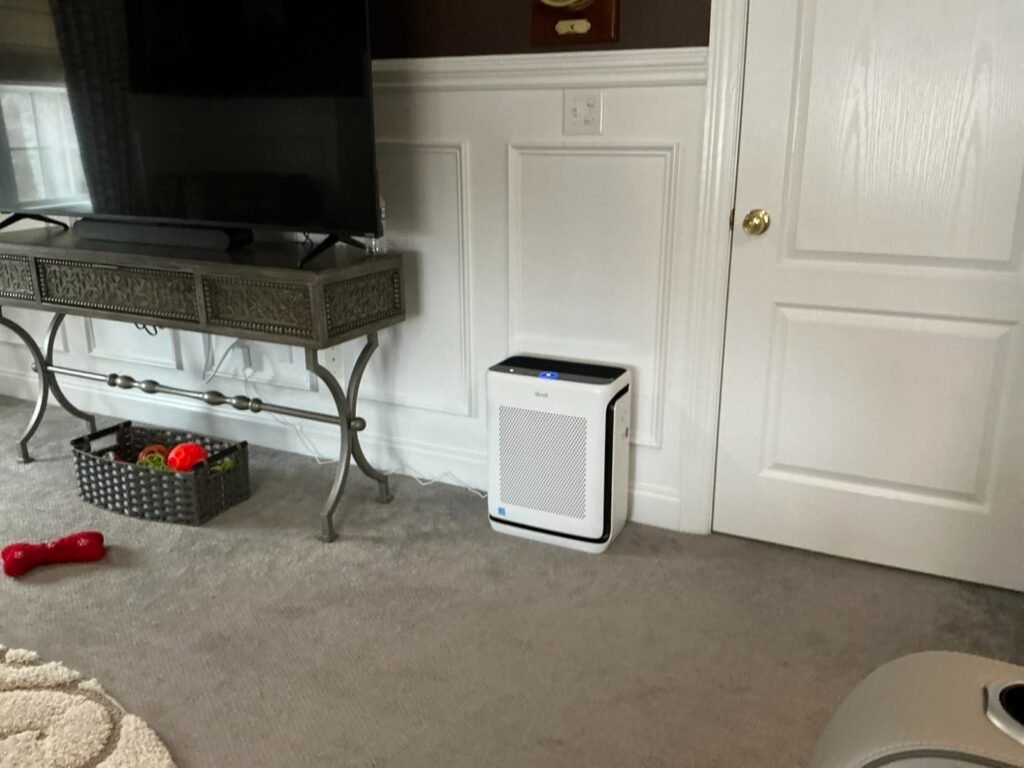
My conclusion is simple: this is a strong buy when the room has already crossed the threshold
I would not frame the LEVOIT Vital 200S-P as a lifestyle upgrade. I would frame it as a room-recovery tool for spaces that keep getting pulled off balance by daily life.
That is why the model works so well in the research: the official hardware design, AHAM/CADR framing, RTINGS performance view, HouseFresh testing, and broader review pattern all converge on the same practical identity.
It is strong where repeated household friction lives. It is weaker where expectations drift into chemistry-heavy purification, ultra-small-room minimalism, or maintenance-free fantasy.
If this is the exact problem you are solving, the logical next move is not more abstract research. It is checking the current product page, filter cost, and room fit while the threshold is still clear in your head:
And once that part is settled, the next challenge becomes even more important than choosing the purifier itself: understanding when recovery speed improves a room and when the room’s layout quietly cancels the purifier’s advantage. That is the piece most buyers miss until later.
Transparency Note:
This analysis is not based on quick personal impressions.
It is derived from documented system behavior, verified user patterns, and the physical constraints of storage capacity.
The goal is to translate complex technical behavior into a realistic performance model that helps you make a clear decision