When a Portable 4K Projector Starts Feeling Like a Real Upgrade
ANALYSIS FRAMEWORK
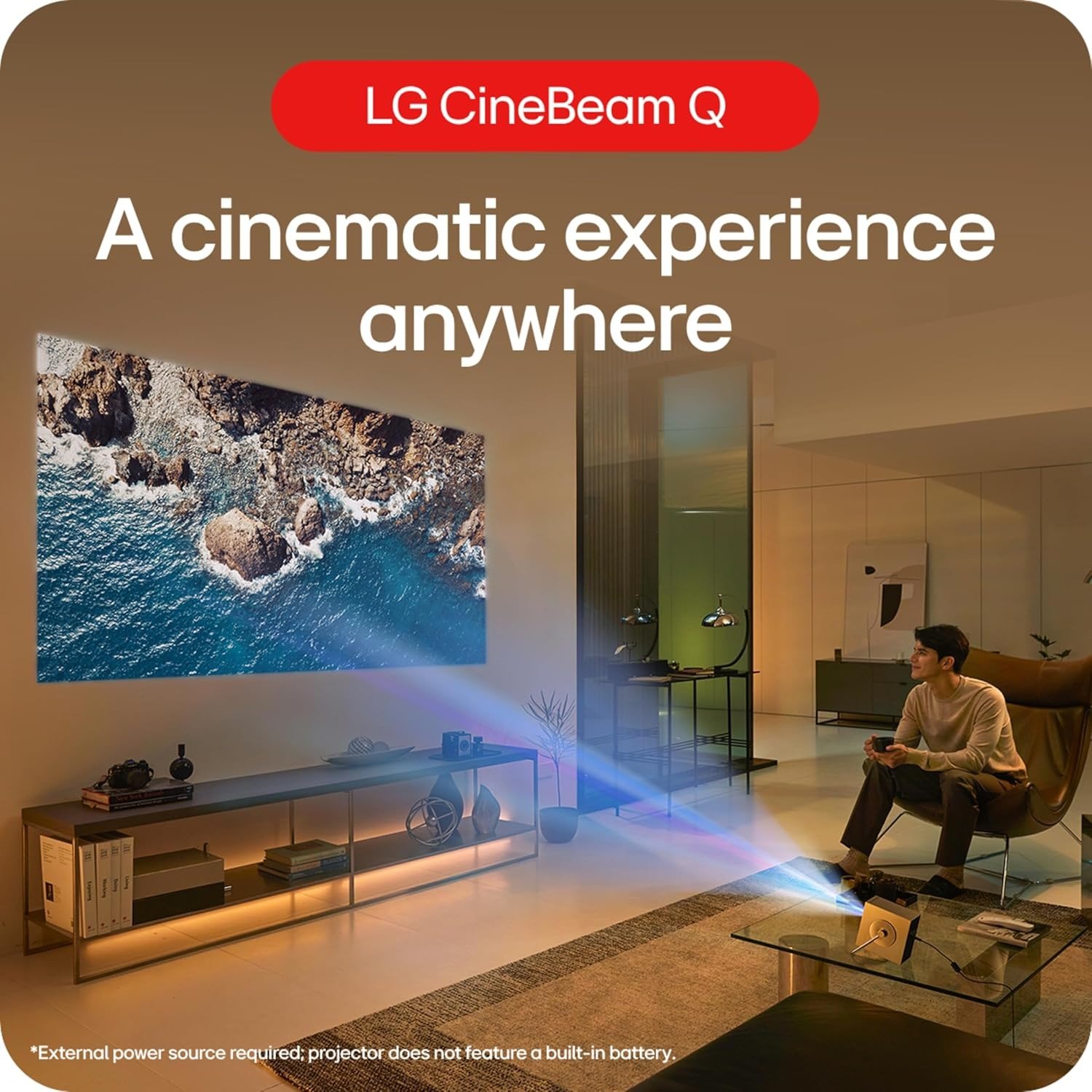
There is a point where a portable projector stops being a stylish gadget I want to show off for ten minutes and starts becoming something I would actually carry from room to room without regretting it. That point is not 4K on the box. It is not laser branding. It is not even portability by itself. The real threshold is simpler: the projector has to create a clearly better movie routine than a laptop, a TV in the other room, or a cheaper portable model that is easier to excuse but harder to live with. That is the threshold I kept coming back to while analyzing the LG CineBeam Q and the wider discussion around premium portable projectors.
The Threshold Is Not Brightness Alone. It Is Dark-Room Credibility.
What separates a genuinely satisfying portable projector from a disappointing one is not whether it can survive daylight marketing claims. It is whether, once the room is dim and expectations become realistic, the image has enough contrast, color depth, and sharpness to feel deliberate rather than compromised. That is why the CineBeam Q keeps getting praised for contrast, black depth, color richness, and overall picture quality for its size, even by reviewers who also criticize its limited brightness. In other words, this category does not become convincing when it looks acceptable at noon. It becomes convincing when it looks cinematic at night without feeling flimsy or fussy.
What I Learned the Hard Way About Portable Projectors in This Class
The mistake I see people make with products like this is expecting one device to behave like three different things at once: a travel projector, a bright living-room TV replacement, and a gaming-friendly display. That is where disappointment starts. Review data and owner feedback point in the same direction: this class works best when the user values compactness, simple setup, strong perceived contrast, and streaming convenience more than raw brightness or high-refresh gaming. Once I frame it that way, the product category makes much more sense.
The Real Friction Usually Appears After the First Week
The first night with a projector is almost always flattering. The real test starts later. I ask different questions then. Do I still want to move it? Does setup stay fast, or do I start avoiding it? Do the built-in speakers annoy me enough to add external audio every time? Does the image still feel worth the ritual when the room is not perfectly dark? With this category, those repeated-life questions matter more than the launch-day wow effect. That is why the CineBeam Q’s rotating handle, auto focus, auto screen adjustment, compact 3.3 lb body, webOS streaming, and USB-C power support matter so much. They reduce routine friction. But the same repeated-life view also exposes the weak points: no integrated battery, a mono speaker, and brightness that falls apart when ambient light stops cooperating.
Portable 4K Stops Feeling Clever and Starts Feeling Useful When These Five Conditions Hold
| Condition | What I look for in real use | Why it matters |
|---|---|---|
| Image confidence in the dark | Deep enough blacks and convincing contrast | This is what makes movies feel intentional instead of washed out |
| Fast placement recovery | Auto focus and screen alignment that save time | A portable unit fails if every move becomes a setup chore |
| Compactness without apology | Easy to carry, small enough to relocate often | Portability only matters if I actually use it |
| Streaming independence | Built-in smart platform with major apps | Fewer add-ons means less routine resistance |
| Tolerable compromises | Weaknesses that stay predictable, not irritating | A flaw I can anticipate is easier to live with than a flaw that ambushes me |
The CineBeam Q checks these conditions unevenly but meaningfully. It is strong where portability-focused movie users care most and weak where living-room brightness hunters and gamers care most. That split is what defines the threshold in this category.
What Usually Fails First Is Not Resolution. It Is Fit.
I do not think most people regret these projectors because they are not technically sharp enough. They regret them because they bought the wrong fit. A portable projector like this fails first when someone needs daytime punch, stronger built-in audio, battery-powered freedom, or low-lag gaming. It succeeds when the user wants a small premium projector for dark-room films, casual streaming, bedroom ceiling projection, or moving between compact spaces without dragging along a bulky chassis. That is why so many comments and reviews sound contradictory on the surface while actually describing different use cases.
The Hidden Cost Is Not the Price. It Is the Lighting Discipline.
The hidden cost with a projector like this is not just the purchase price. It is the behavioral adjustment it asks from me. I have to accept that the image wants darkness or near-darkness to look like the product I thought I bought. If I keep asking it to fight windows, overhead lights, and daytime spill, I am not discovering a weakness late. I am violating the category boundary from the start. That is the line that decides whether this kind of projector becomes a favorite object or an expensive compromise.
Where the Threshold Finally Lands
For me, a portable 4K projector becomes worth serious attention when it can do four things at once: look genuinely cinematic in a dark room, move easily without becoming fragile or awkward, stream without extra clutter, and maintain enough setup intelligence that I do not dread relocating it. That is exactly where the LG CineBeam Q becomes interesting. It does not clear every threshold. It clears the right one for a specific kind of buyer: someone who wants premium compact cinema more than brute-force brightness.
Link — Decision Article: Is the LG CineBeam Q a Smart Buy or a Beautiful Misfit?
Transparency Note:
This analysis is not based on quick personal impressions.
It is derived from documented system behavior, verified user patterns, and the physical constraints of storage capacity.
The goal is to translate complex technical behavior into a realistic performance model that helps you make a clear decision