LG CineBeam Q Review: The Threshold Where Portability Finally Feels Premium
DECISION ANALYSIS
The moment I understood the LG CineBeam Q, I stopped judging it like a tiny TV replacement and started judging it like a precision object for a very specific routine. That changed everything.
If I expect bright-room dominance, strong built-in sound, and console-friendly responsiveness, this projector starts shrinking fast. But if I judge it by what a premium ultra-compact movie projector should actually do—look refined, set up quickly, disappear into small spaces, and produce a genuinely cinematic picture at night—it becomes much easier to respect. The entire buying decision rests on that threshold.
The Single Governing Model: Threshold
The LG CineBeam Q becomes the right buy only after one threshold is crossed:
You care more about dark-room picture quality and compact elegance than you care about brightness, speaker power, battery freedom, or gaming speed.
If that sentence feels obviously true for you, the projector starts making sense. If it does not, the compromises become hard to forgive.
What the Hardware Really Gives Me
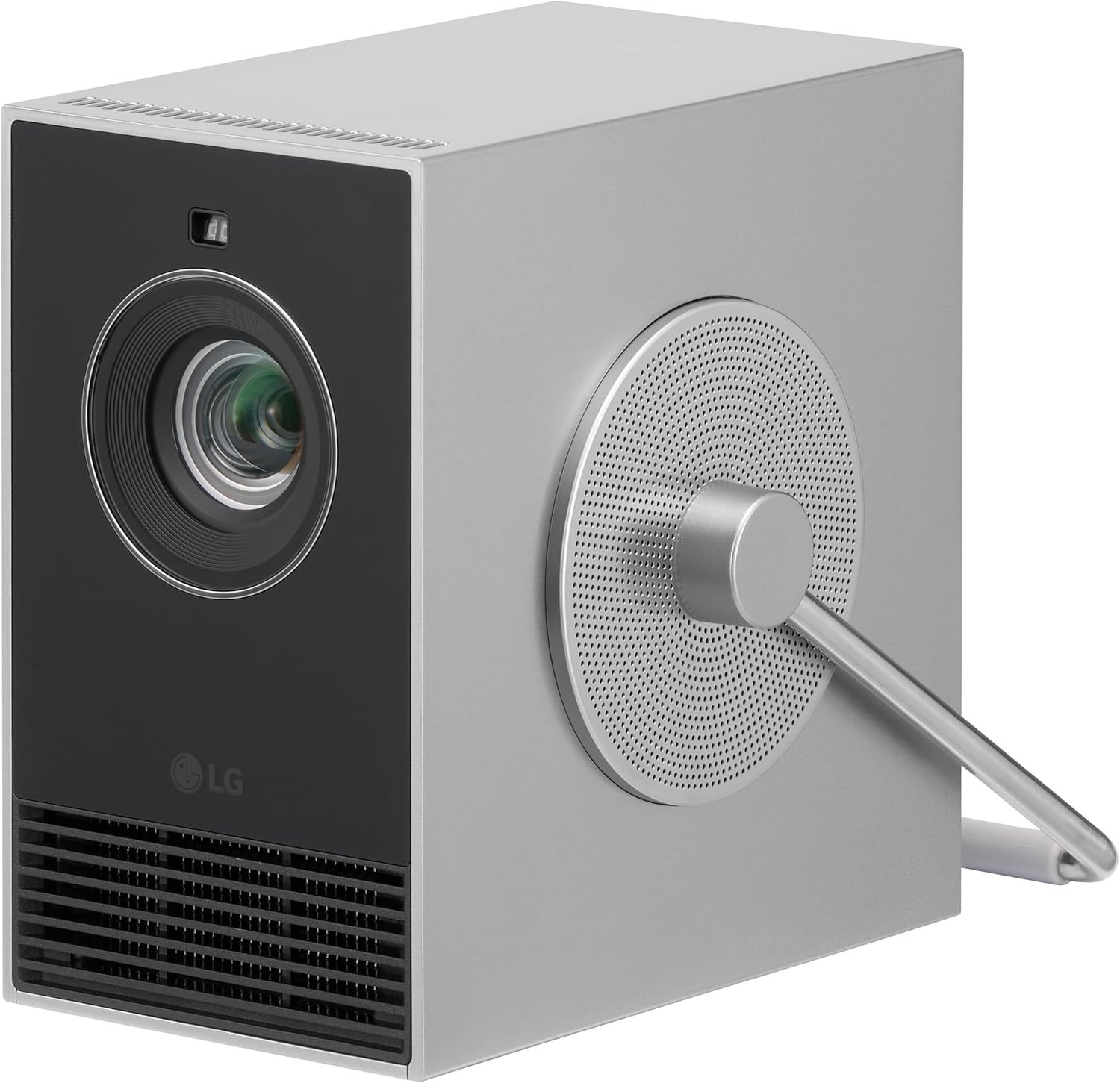
On paper, the hardware story is attractive for this size. The CineBeam Q is a 4K UHD DLP portable laser projector with a 3-channel RGB laser light source, rated at 500 ANSI lumens, supporting HDR10 and HLG, with LG webOS built in, auto focus, screen adjustment, HDMI, USB-C display and charging support, Bluetooth audio options, and a compact 3.3 lb body with a rotating handle that doubles as a stand.
LG also lists a 50- to 120-inch screen range, a 1.2 throw ratio, and 25 to 29 dB noise depending on mode. That specification set is the reason this projector keeps attracting attention from people who want something smaller and more design-conscious than a typical home theater box.
What It Feels Like in Actual Use
What impressed me most in the review consensus was not a single flashy number. It was the consistency of the same pattern: reviewers kept coming back to contrast, color, compactness, and overall polish.
RTINGS called it a solid portable option with excellent contrast and a wide color gamut, ProjectorCentral highlighted the RGB laser engine and strong feature set for small spaces, and both Tom’s Guide and TechRadar praised the picture quality while warning that brightness remains the central limitation. That tells me the product’s strengths are real, not isolated.
Where It Looks Best—and Why
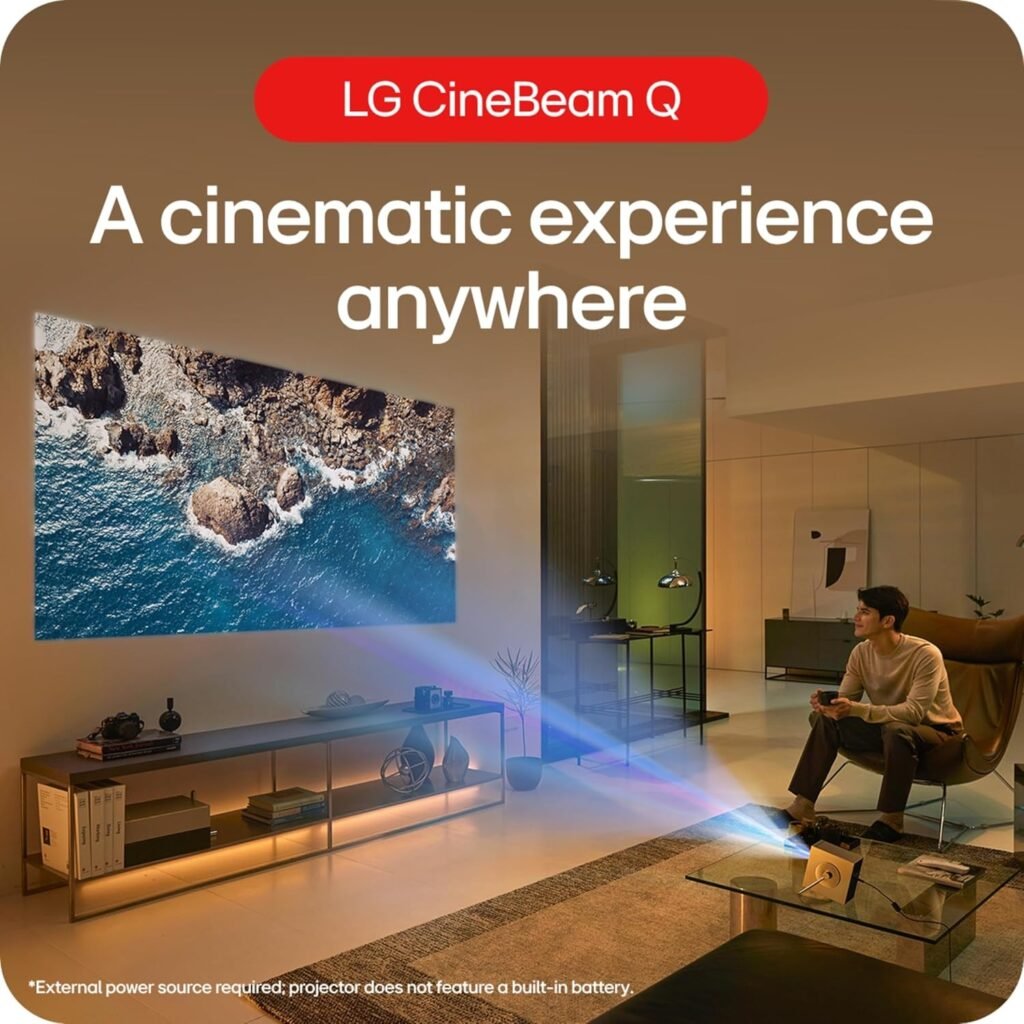
This projector is at its best when I let contrast carry the experience. In a dark or very dim room, that formula works. Reviewers repeatedly note that blacks look unusually deep for a unit this small, colors are rich, and the image remains crisp even at large sizes, especially for films and streaming.
That is the part of the CineBeam Q that feels premium rather than merely portable. It is not brute-force bright. It is visually composed.
Where It Starts to Break
The weak points are not subtle, and I would rather state them cleanly than decorate them.
| Area | What happens | Why it matters |
|---|---|---|
| Brightness | The image washes out with ambient light | This is the biggest practical boundary |
| Built-in audio | The mono speaker is serviceable at best | Many users will want external sound |
| Gaming | 60Hz ceiling and high input lag | Poor fit for people who expect responsive play |
| Battery freedom | No integrated battery | Portability depends on a power source or compatible USB-C PD setup |
| SDR accuracy out of the box | Usable, but not ideal until adjusted | Best results come after setup tweaks |
This is not a projector that hides its limits. The value comes from whether those limits touch my real routine or stay outside it.
The Psychological Split I See in Buyer Reactions
The feedback pattern around this model is easy to read once I separate buyers into groups.
| Buyer type | Likely reaction |
|---|---|
| Design-led movie watcher | “This is exactly the kind of object I wanted in my room.” |
| Dark-room streaming user | “The picture looks far better than I expected for the size.” |
| Portable-use realist | “The handle, setup features, and compact body make it easy to live with.” |
| Bright-room buyer | “Why does this disappear the moment the room gets harder?” |
| Audio-sensitive buyer | “The built-in sound is not enough.” |
| Gamer | “This is not the one.” |
That split matches both the professional reviews and the owner conversations. People who buy it for night viewing, compact spaces, or bedroom-style use often sound pleased. People who buy it as an all-purpose display sound much less forgiving.
The Hidden Benefit Most Specs Do Not Explain Well
The most underrated benefit here is behavioral simplicity. The CineBeam Q is not just small. It is small in a way that reduces resistance.
Auto focus, automatic screen alignment, the rotating handle-stand, built-in streaming apps, casting support, and compact dimensions all reduce the little annoyances that make many projectors feel like equipment instead of entertainment.
That matters because repeated use is where expensive gadgets usually fail. This one seems engineered to survive repeated casual use better than most premium-looking portable products do.
The Hidden Cost Most Buyers Feel Later
The hidden cost is that the projector quietly imposes environmental discipline.
I need darkness. I need external audio if I care about immersion. I need to be honest about gaming. And I need to accept that portability here means small enough to move easily, not fully cordless freedom out of the box.
None of that ruins the product. But each of those points can ruin the fit if I ignore them early.
Who I Think Should Buy It
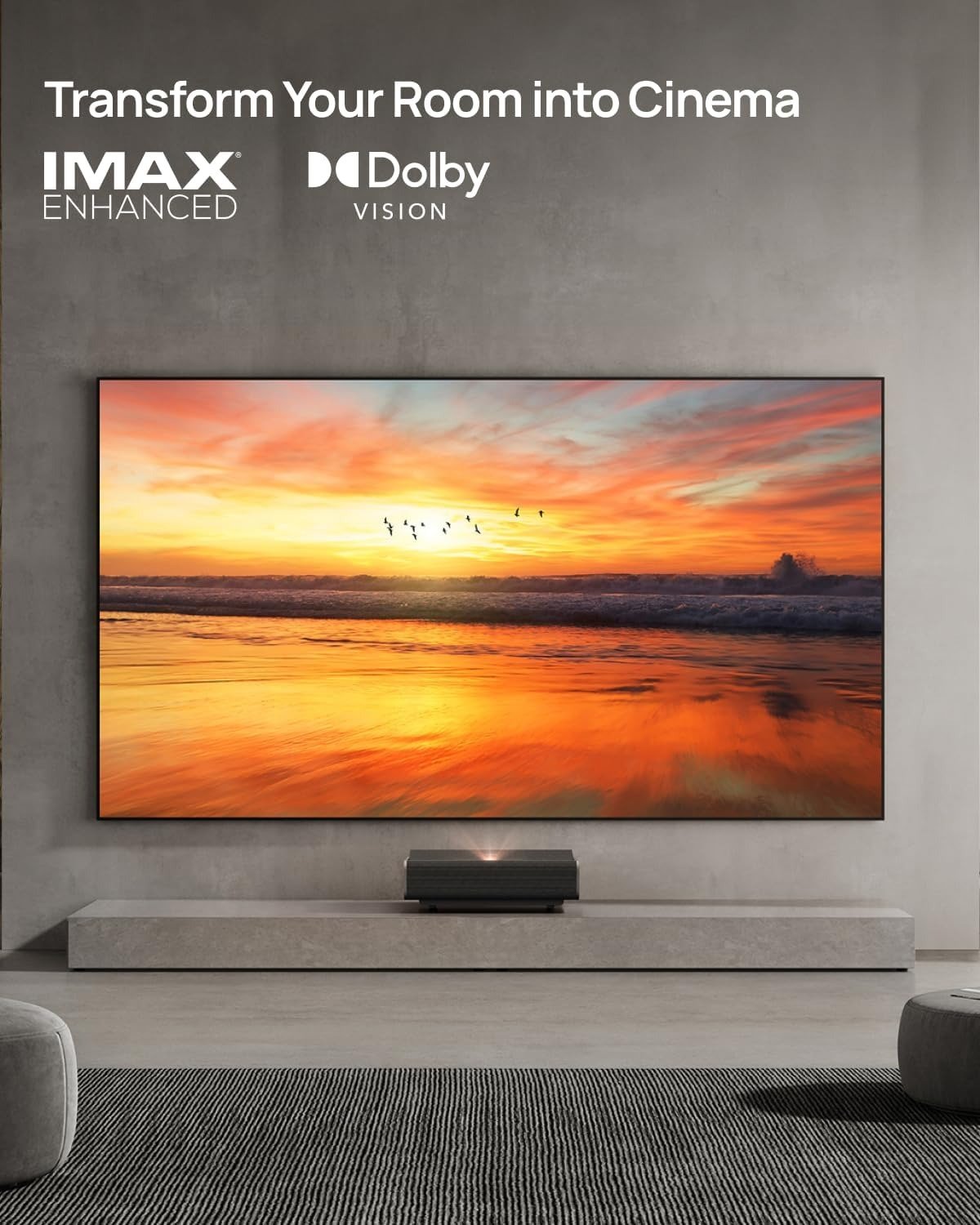
I would put the LG CineBeam Q in the “excellent fit” zone for someone who wants a premium-looking compact projector for movies and streaming in dark rooms, bedrooms, smaller apartments, flexible corners of the house, or occasional travel with power available.
I would call it a “good fit” for someone who values picture quality and design enough to accept weaker sound and limited brightness.
I would move it to “borderline fit” for mixed-light living rooms. And I would call it a “wrong fit” for gamers, daylight-heavy viewing, or anyone expecting the built-in audio to carry the experience alone.
Final Decision
I do not see the LG CineBeam Q as a universal recommendation, and that is exactly why it works.
It is a narrow, premium, highly intentional projector. In the right conditions, it gives me the parts that matter most: rich color, strong perceived contrast, sharp 4K presentation, quick setup, elegant portability, and a streaming-ready experience that feels much more complete than most ultra-compact rivals.
In the wrong conditions, it becomes an expensive reminder that no amount of industrial design can overpower ambient light, weak onboard audio, or gaming limitations.
If my habits are night-first, movie-first, and portability-with-style first, this is a smart buy. If not, it is a beautiful misfit.
Transparency Note:
This analysis is not based on quick personal impressions.
It is derived from documented system behavior, verified user patterns, and the physical constraints of storage capacity.
The goal is to translate complex technical behavior into a realistic performance model that helps you make a clear decision