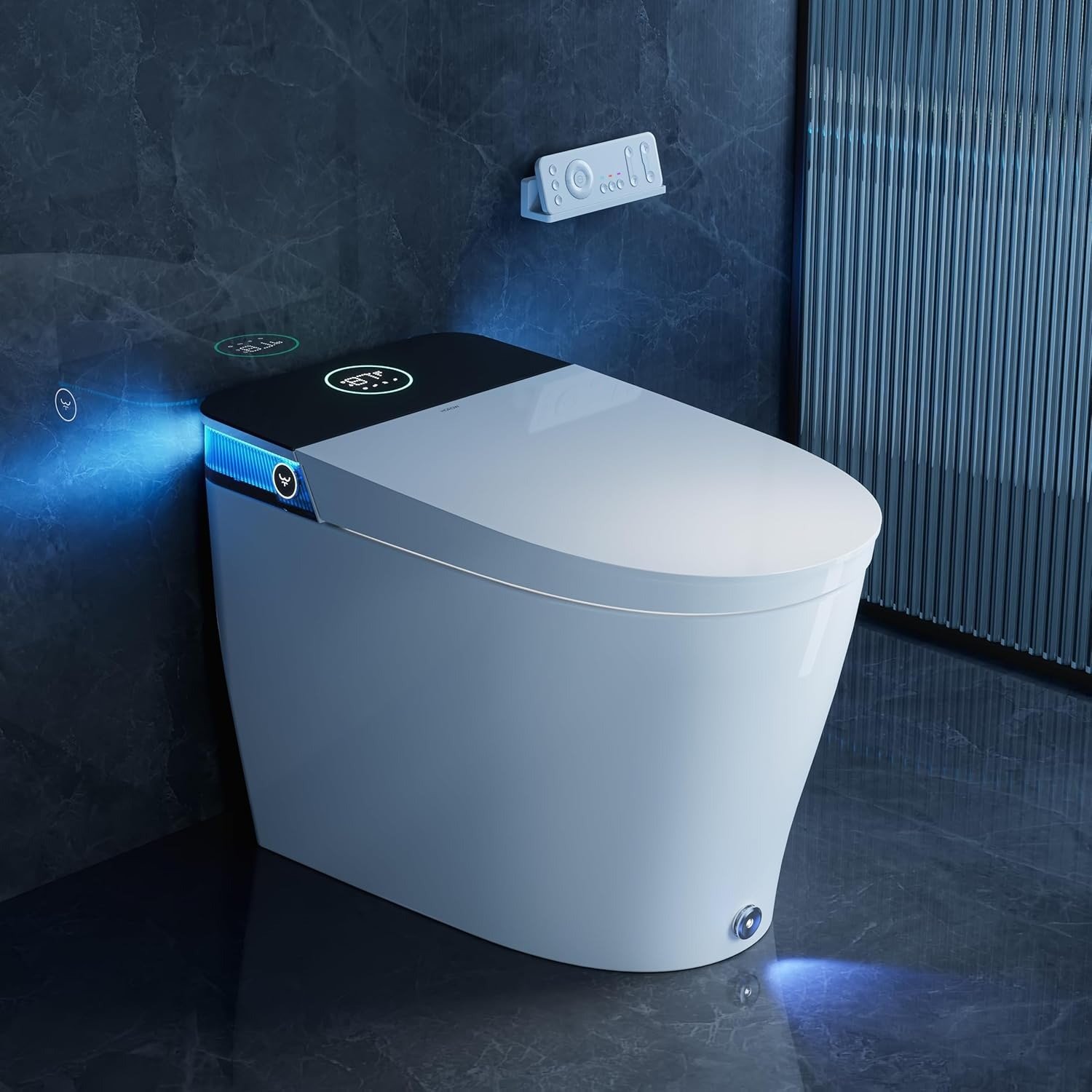
HOROW T38 Review: The Point Where a Smart Toilet Becomes Worth Living With
DECISION ANALYSIS
The more I examined the HOROW T38, the clearer the real question became: is this one of those smart toilets that looks advanced for a month and then quietly becomes a fussy appliance, or is it the kind that actually reduces the number of small annoyances you deal with every day?
I could not find dedicated RTINGS or Wirecutter testing on this exact integrated HOROW model, so I based this judgment on the official spec sheet and manual, Amazon and retailer data, installer videos, owner feedback, and broader smart-toilet testing benchmarks from major review outlets.
That matters, because with a product like this, the difference between “impressive” and “worth it” is usually hidden in the routine rather than the feature list.
The One Model Governing This Review
The governing model is Threshold.
For me, the HOROW T38 becomes worth living with only if it clears this line:
- the flush stays credible in ordinary homes,
- the cleansing system is strong enough to matter,
- the seat and water comfort settings feel repeatable,
- the automation reduces effort instead of adding ritual,
- and the long-term friction does not quietly return through installation headaches, support worries, or daily annoyance.
On paper, the T38 is built to try to cross exactly that line. Its spec sheet and manual point to a built-in tank with pump-assisted flushing, single flush at 1.06 GPF, 12-inch rough-in, elongated bowl, 16-9/16-inch seat height, instant water heating, adjustable warm water, adjustable warm air dryer, auto lid functions, auto flush, deodorization, UV sterilization, pre-wet, memory mode, and blackout flush capability with a separately purchased battery pack.
Amazon’s listing also shows a 440-pound maximum weight capacity, 120V / 1050W electrical requirement, and WaterSense-recognized efficiency language on the page.
What the T38 Gets Right First
What moved me toward a positive verdict is that the T38 appears to solve the first failure point that kills a lot of “smart” bathroom products: core toilet credibility.
HOROW’s own documentation centers the model around a built-in water tank and pump-assisted system, specifically to reduce dependence on strong household water pressure, and the product manual lists a minimum pressure threshold of 11.6 psi with at least 3.65 GPM flow.
That is important because a premium toilet cannot feel clever but weak. If the flush is the part you doubt, the rest of the experience collapses immediately. The T38 also layers pre-wet, auto flush, self-cleaning nozzle behavior, deodorization, and multiple wash controls in a way that is at least mechanically coherent rather than randomly decorative.
Where the Everyday Value Really Comes From
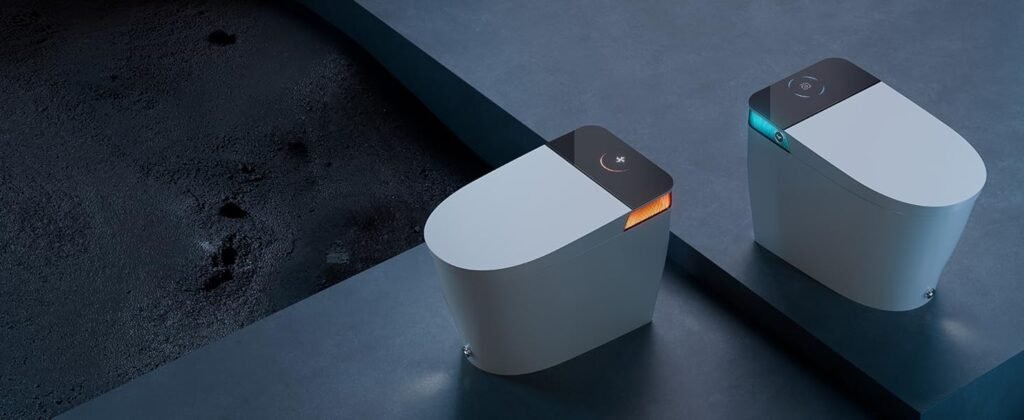
I do not think the T38’s strongest value is the artistic lighting, even though that is the visual hook.
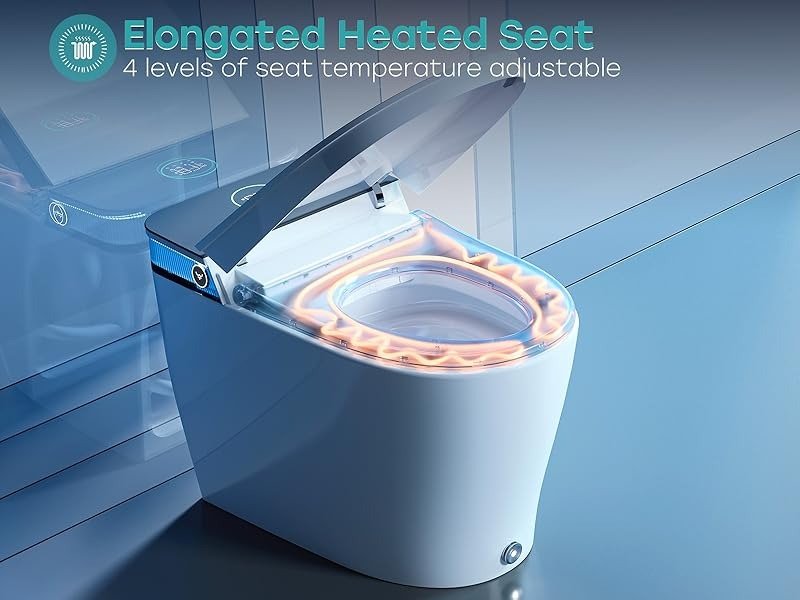
The real value is the cluster of repeated-use comforts: four-level seat heat, four-level warm-water adjustment, adjustable dryer temperature, nozzle-position control, stored preferences, and automatic energy-saving behavior when the seat is unoccupied.
In the manual, HOROW also describes a kick-control flow that can trigger a posterior wash, auto flush, and warm-air drying sequence, with a full cycle of about 5.5 minutes.
That tells me this product is trying to become a routine appliance rather than a one-button novelty. In the wider bidet market, that kind of consistency matters more than brand theater.
Business Insider’s testing of premium bidet seats emphasized exactly those same practical traits — steady tankless warm water, usable pressure range, intuitive daily comfort, and whether the remote-controlled conveniences actually improve the experience.
The Drift Risk I Would Not Ignore
This is where the judgment gets more serious.
The T38 does have drift risk over time, and it is not mainly about the bidet spray. It is about ownership confidence.
The manual gives the unit a one-year limited warranty, while the Amazon marketing language also talks about lifetime troubleshooting guidance and fast customer-service response.
That is not the same thing as broad long-term coverage. On top of that, the unit requires proper space, a 12-inch rough-in, a grounded 120V outlet, and enough clearance for the lid and body.
Real-world feedback around the brand is mixed in a very familiar mid-priced smart-toilet way: some users report smooth installation, reliable operation, and strong satisfaction even after extended ownership, while others complain about support quality, installation mismatch issues, or company trust.
That does not automatically disqualify the product, but it does keep the T38 from feeling as low-risk as a mature premium ecosystem from Kohler or Toto.
The Compatibility Split 3.0
This is where I think the HOROW T38 becomes much easier to judge honestly.
| Fit level | Who it fits |
|---|---|
| Excellent fit | A homeowner who wants an integrated smart toilet under the four-figure luxury tier, has a 12-inch rough-in, nearby power, and cares more about daily hygiene convenience than brand prestige |
| Good fit | Someone upgrading from a standard toilet or basic bidet seat who wants stronger routine comfort, auto functions, and low-pressure flush reassurance |
| Acceptable fit | A buyer who is mainly attracted by the futuristic look but is still willing to manage installation details and live with a one-year formal warranty |
| Wrong fit | Anyone who wants zero-risk long-term brand confidence, ADA comfort height, a certified 1000g MAP flush score on this exact model, or a very conservative no-electronics bathroom setup |
That split is supported by the numbers around it. The T38 sits at a listed $999 on HOROW’s own site, while Good Housekeeping’s 2025 smart-toilet context places serious category competitors anywhere from about $600 for value-oriented models to $3,800 for premium Kohler units.
The T38 is therefore not cheap; it is positioned as an affordable integrated smart toilet relative to the upper market, not relative to an ordinary toilet. And unlike the T38P sibling, the T38 is shown in HOROW’s own comparison chart without the 1000-gram MAP rating or ADA-height seat.
What I Think People Are Actually Responding To
The positive reaction pattern around this model is not hard to read.
Owners and reviewers tend to praise the same things: the clean one-piece look, the feeling of a more hygienic routine, the convenience of auto functions, the usefulness of the night light, and the sense that the toilet delivers a premium bathroom feel at a much lower price than the luxury brands.
On HOROW’s own store page, the T38 shows 156 reviews with 92% of ratings at five stars; retailer snippets and forum discussions also include praise for smooth operation, good cleaning, and elegant design, with some users reporting more than a year of trouble-free ownership.
The criticism pattern is narrower but important: some people dislike the more theatrical styling, some run into installation or compatibility friction, and some simply do not trust the company enough for a product this central to daily life.
My Final Verdict
I would not describe the HOROW T38 as the smartest choice for everyone.
I would describe it as a product that does cross the threshold for the right buyer.
It crosses that line because the underlying stack is not superficial: pressure-aware flushing logic, pre-wet support, real bidet adjustment, dryer, deodorization, memory, auto-lid behavior, and night-use convenience all contribute to reducing friction instead of merely decorating the room.
Where it falls short is not basic functionality. It falls short in certainty. The one-year formal warranty, the installation demands, and the mixed support reputation mean this is still a mid-tier calculated buy rather than a pure peace-of-mind purchase.
But if your main goal is to bring integrated smart-toilet comfort into a real home without jumping straight to Kohler-level pricing, the T38 looks like one of the more convincing sub-$1,000 threshold-crossers in the category.
Transparency Note:
This analysis is not based on quick personal impressions.
It is derived from documented system behavior, verified user patterns, and the physical constraints of storage capacity.
The goal is to translate complex technical behavior into a realistic performance model that helps you make a clear decision