Ambient Weather WS-4000 Review: The Point Where It Feels Worth Owning
DECISION ANALYSIS
I’ve seen plenty of products that impress in screenshots and disappoint in real life. The WS-4000 is not one of them. But it also is not the kind of station I would recommend blindly to everyone.
The decision became clear for me the moment I stopped judging it as a generic “best weather station” and started judging it by one narrower question: at what point does this station become reliable enough to deserve a place on my home, in my dashboard, and in my daily routine?
My Decision Threshold
I would buy the Ambient Weather WS-4000 when my priority stack looks like this:
- I want strong wind, temperature, and humidity data.
- I want a real indoor console, not just an app.
- I want remote monitoring and smart-home connectivity.
- I prefer a compact, low-maintenance sensor array.
- I can tolerate rainfall data that may need calibration and more interpretation than a traditional collector-style setup.
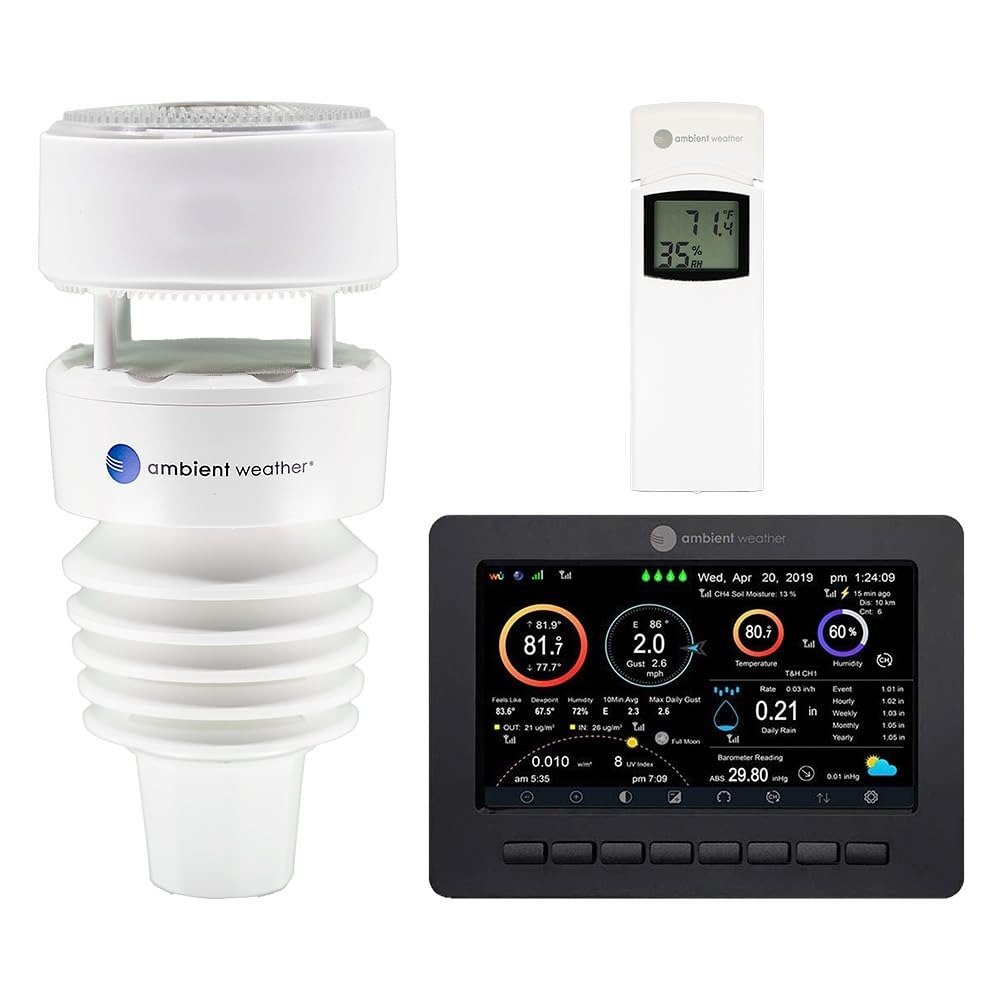
That profile fits the WS-4000 extremely well. It gives me ultrasonic wind sensing, haptic rainfall, UV, solar, temperature, humidity, barometric pressure, a color TFT console, the separate WH32B indoor sensor, two AA backup batteries for the outdoor array, and a large list of optional add-on sensors through Ambient’s ecosystem. Officially, it mounts on a 1-inch pole, uses a solar panel as primary outdoor power, and updates outdoor sensor data every 4.9 seconds.
Those are not just feature bullets. They describe the kind of ownership experience this station is built for: low friction, strong visibility, and a system that becomes more useful the more connected your home becomes.
The Technical Reality That Drove My Verdict
Once I stripped away the marketing language and focused on what actually changes the ownership experience, the technical picture became clean.
| Area | What the Evidence Says | My Verdict |
|---|---|---|
| Wind | Official specs are solid, and reviewer testing praised the sonic anemometer | Strong buy point |
| Temperature / Humidity | Official tolerances are respectable; reviewer feedback is consistently positive | Strong buy point |
| Platform / ecosystem | Console, AWN, optional sensors, and Home Assistant support add real daily value | Strong buy point |
| Rainfall | Manual calibration exists for a reason; expert review and owner chatter both flag light-rain and leveling issues | Main weakness |
| Value | Strong product, but not the cheapest route to this hardware style | Depends on platform preference |
That table tells the whole truth without drama. The WS-4000 is not hard to understand. It is a very attractive buy when wind behavior, indoor visibility, ecosystem quality, and low-maintenance design sit at the top of your list. It becomes harder to defend when rain precision is the single metric that decides everything for you.
What the Product Feels Like to Live With
This is where the station earns its appeal.
The compact design matters. The console matters. The no-moving-parts approach matters. All of that reduces the sense that you are maintaining a hobby project and increases the sense that you are installing a useful layer of home intelligence.
For the right buyer, that difference is huge.
The psychology is easy to read. Most people considering the WS-4000 are not only buying numbers. They are buying reassurance. They want to feel that what is happening in their yard is visible, stable, and worth trusting. Or they want weather data to become part of a broader smart-home rhythm instead of living in an isolated app they open once a week and forget.
The WS-4000 is especially good at delivering that feeling when its strengths match your priorities. Wind feels like one of the strongest reasons to own it. Temperature and humidity tracking support that confidence. The console gives the data a daily presence. The ecosystem makes the product feel expandable instead of disposable.
Rain is where the emotional split begins. If a buyer expects “no moving parts” to mean “no compromise,” disappointment can creep in. Not because the station fails everywhere, but because this is the one area where trust may require more patience than the product’s clean design suggests.
The Compatibility Split That Actually Matters
This is the part I would read twice if I were close to buying.
| If this sounds like you… | My read |
|---|---|
| “I want the best balance of weather data, dashboard visibility, and home integration.” | Buy |
| “I already like Ambient’s platform and want to stay inside it.” | Buy |
| “I care more about wind behavior than perfect rainfall totals.” | Buy |
| “I need the best rainfall confidence for garden, drainage, or storm logging.” | Be careful |
| “I only care about hardware value per dollar.” | Compare closely with Ecowitt Wittboy Pro |
| “I want lightning detection built in.” | Tempest is the more logical direction |
There is also a straightforward price reality here. As of March 2026, the WS-4000 is listed at about $374.99, Tempest is around $349, and Ecowitt’s Wittboy Pro is around $299.99.
That spread is close enough that the wrong way to shop is by pretending they are interchangeable. They are not. If I specifically want Ambient’s console-and-ecosystem experience, the WS-4000’s premium makes sense. If I am buying purely on hardware economics, it gets much harder to call it the obvious winner.
My Verdict
I would not buy the Ambient Weather WS-4000 because it wins every metric. I would buy it because it wins the metrics that shape daily satisfaction for the right person.
If I want credible wind data, strong temperature and humidity tracking, a genuinely useful indoor console, expansion into a larger sensor ecosystem, and smart-home visibility that keeps the station relevant after the novelty fades, this product clears the line.
If I need rain to be the one number I trust most, it does not clear that line with the same confidence.
That is why my conclusion is simple. The WS-4000 is not the universal weather-station answer. It is the right answer for the buyer who wants a connected, low-maintenance, high-visibility station that feels serious every day, not just impressive on paper.
The evidence is strong enough to make that feel less like a gamble and more like a clean fit.
If that sounds like your setup, check the current product page here: [PRODUCT_LINK].
| ### Final Decision Category | Verdict |
|---|---|
| Wind / climate focused home user | Yes |
| Ambient ecosystem loyalist | Yes |
| Smart-home automation user | Yes |
| Rainfall-accuracy-first buyer | No |
| Best raw value shopper | Maybe not |
| Most balanced “live with it every day” buyer | Yes, with clear expectations |
Final verdict: Buy.
Short Product-Page Summary
The Ambient Weather WS-4000 becomes an easy recommendation once your priorities are clear. I would buy it for strong wind behavior, dependable temperature and humidity tracking, a genuinely useful indoor console, and an ecosystem that makes the station feel like part of the home rather than a standalone gadget.
Its hardware package is strong: ultrasonic wind sensing, haptic rainfall, UV, solar, temperature, humidity, barometric pressure, a color TFT console, the separate WH32B indoor sensor, two AA backup batteries for the outdoor array, and broad expansion through Ambient’s sensor lineup. Officially, it mounts on a 1-inch pole, uses a solar panel as primary outdoor power, and updates outdoor sensor data every 4.9 seconds.
The caution point is clear too. Rainfall is the main weakness. If you need the best rainfall confidence for garden, drainage, or storm logging, this
Transparency Note:
This analysis is not based on quick personal impressions.
It is derived from documented system behavior, verified user patterns, and the physical constraints of storage capacity.
The goal is to translate complex technical behavior into a realistic performance model that helps you make a clear decision