Ambient Weather WS-5000 Review: Where the Measurement Confidence Threshold Is Won or Lost
DECISION ANALYSIS
The first time a weather station earns my trust, it is never dramatic. It usually happens quietly—after a messy storm, after a rough wind shift, after a week of checking it almost out of suspicion and realizing the numbers keep holding up.
That is exactly how I see the Ambient Weather WS-5000.
After working through the technical specifications, behavior patterns, owner impressions, setup realities, and the practical limits of real-world placement, I came away with one clear conclusion: this is not the best weather station for everyone, but it is one of the clearest examples of a product that can feel meaningfully more serious than mainstream home units when the buyer actually understands what they are buying.
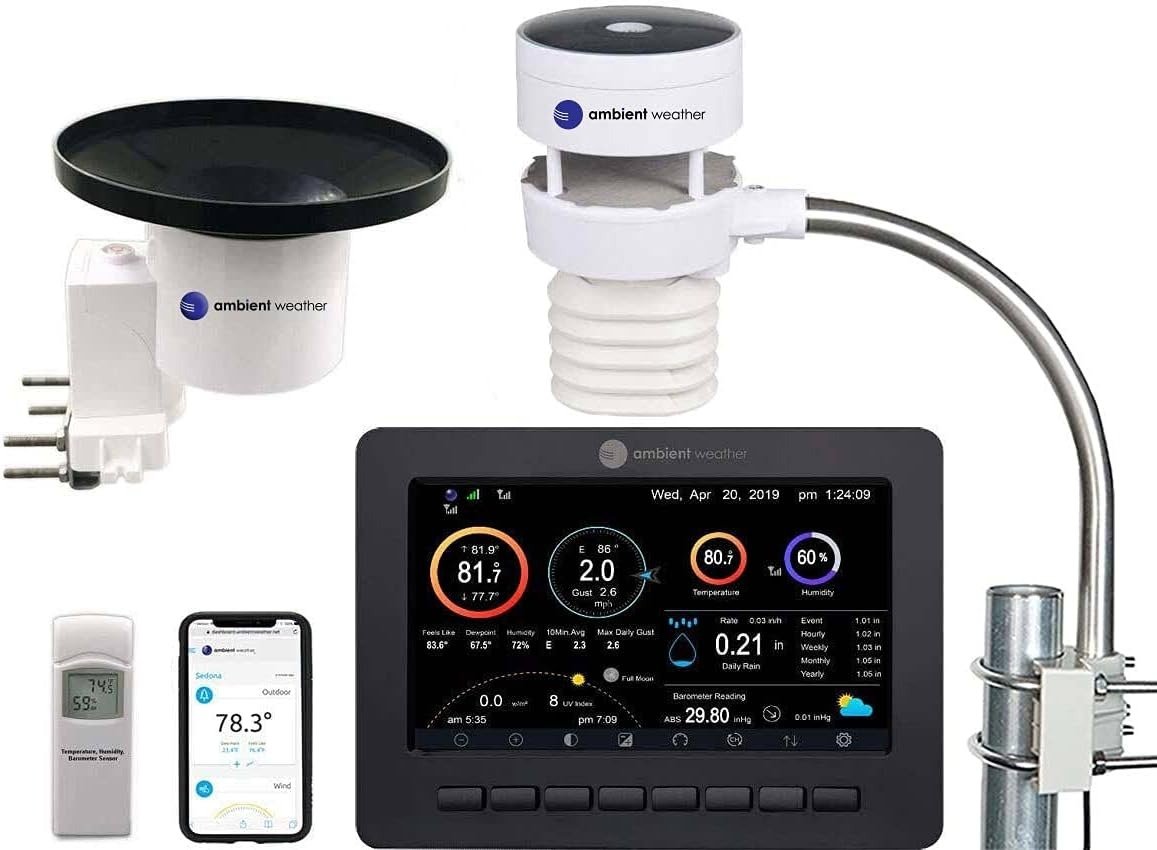
On paper, the WS-5000 centers on an ultrasonic wind sensor with no moving parts, a separate rain gauge, a separate indoor sensor, 4.9-second outdoor updates, and a connected ecosystem that extends far beyond a simple desktop display. Those features matter, but only if they improve trust. That is the only frame that matters to me.
My Core Verdict
I would not describe the WS-5000 as a luxury weather gadget. I would describe it as a property-grade backyard weather system with hobbyist DNA.
That distinction matters because it explains both its strengths and its friction.
A casual gadget wins early and fades fast. A more serious system becomes more useful the longer it runs because the data starts building memory. You begin to notice how your property behaves instead of just watching numbers update. You spot the wind pattern near the house. You see the rainfall your region-wide forecast missed. You notice how temperature and humidity behave differently in your space than they do on a generic app.
That is where the WS-5000 becomes persuasive. It is not really selling excitement. It is selling confidence in your own local conditions.
The Single Model I Used
I evaluated the WS-5000 with one model only:
Measurement Confidence Threshold
A weather station crosses this threshold when it performs well enough in four areas that I start treating it like a local reference instead of a novelty display.
| Threshold Test | Pass Condition | WS-5000 Read |
|---|---|---|
| Wind credibility | Fast, believable wind behavior without obvious lag | Strong |
| Rain credibility | Rain totals feel physically plausible over time | Strong |
| Setup survivability | Installation friction does not poison ownership | Moderate |
| Long-term dashboard utility | Remote data stays useful after setup week | Strong |
That table explains the whole product better than a page of generic praise ever could.
Why the Technical Design Matters
The best technical case for the WS-5000 is that its design lines up with the actual weak spots of cheaper weather stations.
Instead of relying on a conventional cup-and-vane setup, it uses ultrasonic wind sensing, which immediately lowers concern around wear points and helps the system feel more responsive in changing conditions. Instead of forcing rainfall into the same compromise location as every other sensor, it gives rain its own physical collector. And instead of treating connectivity like an afterthought, it makes remote monitoring and ecosystem use part of the ownership experience.
Here are the numbers that matter most:
| Category | Key Number / Capability | Why it matters |
|---|---|---|
| Outdoor reporting | 4.9 sec | Feels alive during changing conditions |
| Wind system | Ultrasonic, no moving parts | Reduces wear anxiety and improves responsiveness |
| Rain | ±5%, 0.004 in resolution | Better chance of believable event totals |
| Transmission | 1,000 ft LOS / ~300 ft typical | Good, but placement still matters |
| Ecosystem | AWN, Alexa, Google Home, IFTTT, add-on sensors | Extends use beyond raw weather curiosity |
| Console | Full-color TFT | Useful, but not elegant |
That combination is what gives the WS-5000 its stronger identity. It does not just look advanced. It is built around the parts of weather monitoring that tend to break trust first.
Where the Value Becomes Real
The value becomes real when the specs stop being abstract.
4.9-second updates mean the station feels alive when conditions start changing quickly. An ultrasonic wind sensor means fewer mental questions about moving parts aging their way into softer performance. A separate rain gauge means rainfall is being treated as something worth measuring properly rather than something bundled in for convenience. And the connected ecosystem means the station can evolve from backyard curiosity into property intelligence.
That is the hidden shift here. The WS-5000 works best when you want your local weather data to become operational, not decorative.
The Hidden Cost Buyers Miss
The hidden cost is not just the purchase price. It is placement discipline.
This category punishes bad siting more than many buyers expect. Temperature wants to be around 4 to 6.5 feet above natural ground. Rain wants to be level and around 4 to 6 feet. Wind wants much higher placement—ideally around 33 feet above ground or above the roofline. Those requirements do not disappear because a station is good. And if you cannot install the sensors in a reasonably honest way, you may end up blaming the product for a compromise created by your mounting situation.
That is one of the most important decision points in this entire category. The WS-5000 can deliver stronger confidence, but it still needs a buyer who respects the physics.
Where It Feels Better Than Simpler Alternatives
The WS-5000 does not feel better because it shouts louder. It feels better because it reduces the kind of doubt that tends to accumulate with cheaper stations.
The rain side feels more grounded. The wind side feels more believable. The remote monitoring side has real staying power. And the larger sensor ecosystem gives the product room to grow with your use rather than becoming obsolete the moment curiosity fades.
That kind of value compounds over time. The more seriously you use it, the more reasonable the price starts to feel.
Where the Friction Is Real
This is where the decision gets honest.
The WS-5000 is not an effortless consumer toy. The console is useful but busy. The setup is more involved than plug-it-in simplicity. Calibration and updates belong to the ownership experience. Signal behavior still depends on placement. And if you dislike dense screens, firmware tasks, or any form of tuning, those things will matter more to you than the strengths.
None of that ruins the product. It simply draws the boundary around who should buy it.
Compatibility Split 3.0
| Buyer Profile | Recommendation | Why |
|---|---|---|
| Serious hobbyist who wants high-frequency local data | Yes | The WS-5000’s architecture and ecosystem are built for you |
| Gardener, homesteader, acreage owner, greenhouse or property watcher | Yes | Rain, humidity, alerts, and optional add-on sensors create compounding value |
| Smart-home user who wants weather to trigger routines | Yes, if tolerant of setup | It is unusually strong here for the category |
| Casual buyer who mainly wants tomorrow’s forecast | No | A forecast app is cheaper and simpler |
| Perfectionist seeking near-professional siting without compromise | Maybe | Strong product, but your site limitations may cap the benefit |
| Buyer who hates firmware, calibration, or dense screens | No | Ownership friction will feel bigger than the gains |
This is the decision table in plain English: if you want real local weather intelligence and are willing to own a more serious system, the WS-5000 makes sense. If you want simplicity above all else, it probably does not.
Where the Decision Is Won
The decision is won when you stop looking at the WS-5000 like an appliance and start looking at it like a measuring system.
That changes everything.
You are no longer paying only for a console or an app. You are paying for stronger local trust. You are paying for data that can build pattern recognition over time. You are paying for a setup that, when done properly, reduces uncertainty in a way a generic weather app simply cannot.
That is what makes the price easier to justify for the right buyer.
Where the Decision Is Lost
The decision is lost when the buyer expects the WS-5000 to behave like a frictionless mass-market gadget.
It is not one.
If your main goal is a clean screen, effortless setup, and a quick answer to tomorrow’s forecast, you can spend less and be happier. But if your real goal is to understand what is happening on your property with more confidence, the WS-5000 starts to look much more compelling.
And that is why the final moment before purchase matters so much. This product makes the most sense when your need is real enough that trustworthy local data feels valuable, not merely interesting.
That is the final emotional and practical line here: the WS-5000 is worth it when uncertainty has started to cost you more than the station does. [PRODUCT_LINK]
Final Verdict
After weighing the design, the specs, the ownership friction, the placement demands, and the type of buyer this product truly serves, my conclusion is simple:
The Ambient Weather WS-5000 clears the Measurement Confidence Threshold for buyers who want believable hyper-local weather data and are willing to earn that reliability through smarter installation and slightly more involved ownership.
I would buy it if I wanted stronger confidence in rain, wind, and local pattern tracking—and if I knew I would actually use that information. I would hesitate only if I wanted something more casual, more elegant, or more effortless.
Final verdict: Buy.
Final Score Area
| My Read |
|---|
| Technical design |
| Rain and wind credibility |
| Setup smoothness |
| Display clarity |
| Expandability |
| Casual-user fit |
| Serious-user fit |
| Overall decision quality at its price |
Short Product-Page Summary
The Ambient Weather WS-5000 is the kind of weather station that starts making sense the moment you stop treating it like a gadget and start treating it like a local measurement system. Its biggest strength is not just the long feature list. It is the way the hardware design supports more believable results.
You get an ultrasonic wind sensor, a separate rain gauge, a separate indoor sensor, 4.9-second outdoor updates, and support for AWN, Alexa, Google Home, IFTTT, and add-on sensors. That combination gives the WS-5000 a more serious feel than many consumer-grade stations, especially if you care about rain accuracy, wind behavior, and remote property monitoring.
The key is the Measurement Confidence Threshold. This station works when the buyer wants trustworthy local data badly enough to accept a little more setup effort. Wind feels more believable, rain totals feel more grounded, and the overall system has room to grow into something more useful than a standard forecast display.
It is not the best choice for everyone. The console is busy, setup takes care, and placement matters a lot. But for the right person—especially a serious hobbyist, gardener, acreage owner, or anyone who wants real hyper-local weather intelligence—the value is easy to understand.
Final verdict: Buy.
- The hardware design reduces the compromises that weaken trust.
- Fast updates and local data make it feel genuinely useful.
- Best for buyers who want operational weather insight, not casual novelty.
If trustworthy backyard weather matters more to you than convenience, start here: [PRODUCT_LINK]
Transparency Note:
This analysis is not based on quick personal impressions.
It is derived from documented system behavior, verified user patterns, and the physical constraints of storage capacity.
The goal is to translate complex technical behavior into a realistic performance model that helps you make a clear decision