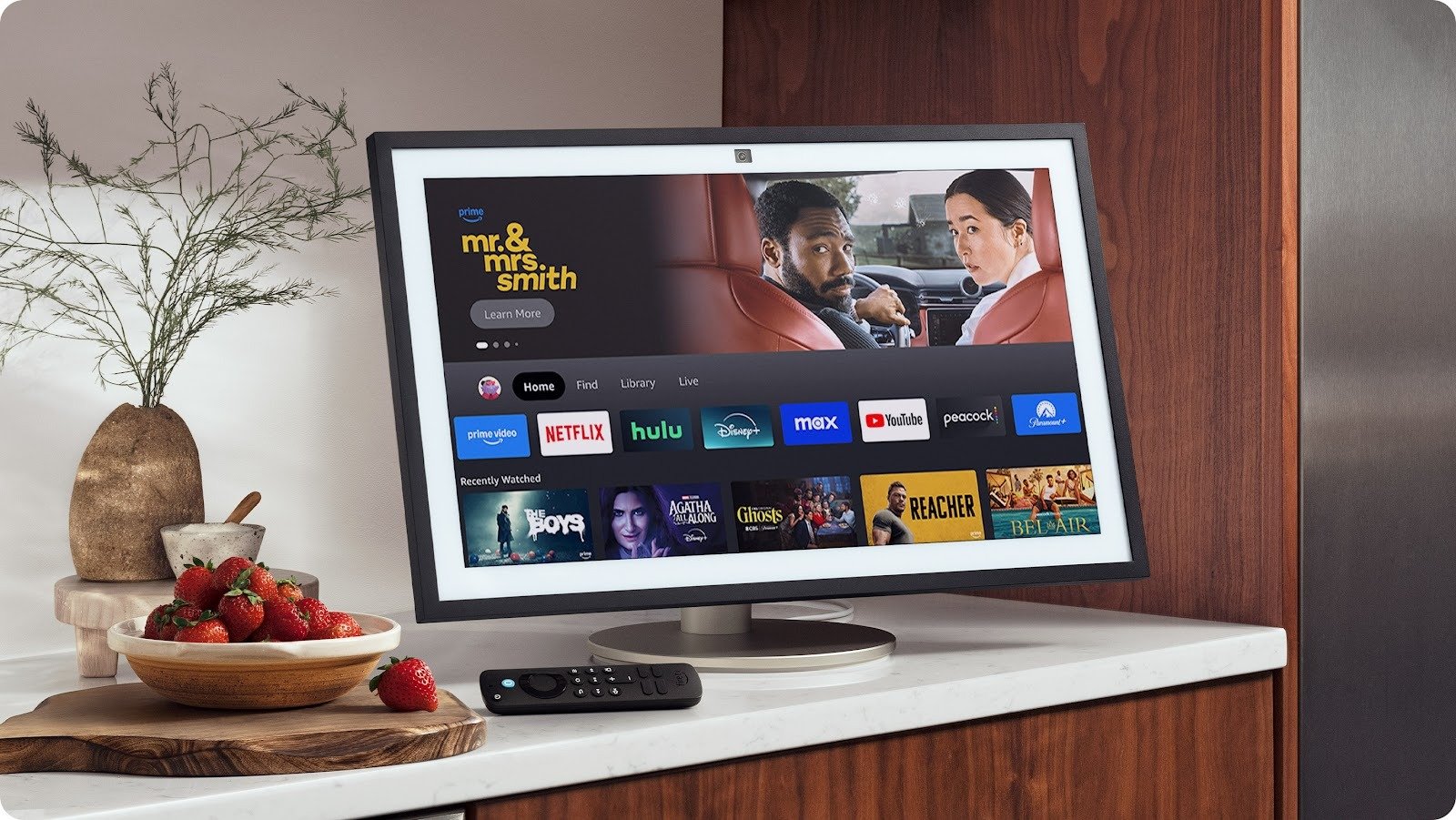
Amazon Echo Show 15 Smart Display Explained
ANALYSIS FRAMEWORK
What the Amazon Echo Show 15 Actually Is
The Amazon Echo Show 15 is not simply a smart speaker with a screen.
It is positioned as a centralized smart home hub designed for shared spaces such as kitchens, hallways, or family rooms.
Unlike smaller Echo devices, this model focuses on visibility and organization.
Its 15.6-inch Full HD display transforms Alexa from a voice assistant into a visual command center.
Amazon describes it as a device for organization, entertainment, and smart home control (External Link: Amazon official product page).
However, understanding what it is not is equally important.
It is not a tablet replacement.
It is not a television alternative.
And it is not primarily an audio-focused device.
This distinction defines user satisfaction.
Technical Structure and Performance Reality
From a hardware perspective, the Echo Show 15 includes:
- 15.6-inch 1080p display
- Integrated Alexa voice assistant
- Smart home dashboard support
- Streaming capability through built-in Fire TV interface
- Front-facing camera for video calls
On paper, these specifications appear strong for a smart display.
In real-world usage, the large screen changes how information is consumed.
Widgets such as calendars, reminders, shopping lists, and smart home panels become immediately glanceable.
Users often report that the size makes shared scheduling easier compared to smaller displays .
However, performance perception varies.
Some users note occasional interface lag or responsiveness delays, particularly when switching between widgets or streaming apps .
This creates a gap between expected fluidity and actual interaction smoothness.
Hidden Decision Factors Most Buyers Overlook
Many purchase decisions are not driven by specifications.
They are driven by visual presence.
The Echo Show 15 resembles a framed digital display.
Mounted on a wall, it appears premium and integrated into home decor.
This visual identity strongly influences purchasing psychology.
Buyers often imagine:
- A centralized family board
- Seamless smart home control
- A modern digital household centerpiece
However, long-term satisfaction depends on daily utility.
If the device becomes primarily a digital photo frame with occasional Alexa use, perceived value declines over time.
Another overlooked factor is advertising presence.
Some users report promotional content appearing within rotating home screen panels .
For users expecting a purely personal dashboard, this can feel intrusive.
The emotional response here is not technical — it is psychological.
Expectation shapes satisfaction.
Market Reality — What Users Actually Say
User sentiment can be divided into three behavioral groups.
Positive users emphasize:
- Clear visibility of shared calendars
- Convenient smart home control panel
- Effective video calling
- Clean wall-mounted aesthetic
Neutral users describe it as useful but not essential.
Negative feedback often focuses on:
- Occasional interface lag
- Limited app ecosystem compared to tablets
- On-screen promotional content
The important insight is this:
Satisfaction correlates strongly with intended use case.
Users who buy it specifically as a family command center report higher long-term satisfaction.
Users who expect a hybrid between a television and a tablet report lower satisfaction.
This aligns directly with search behavior.
Informational queries such as:
- “What is Amazon Echo Show 15 used for”
- “Is Echo Show 15 worth it for kitchen”
- “Echo Show 15 review problems”
reflect uncertainty about category fit rather than technical capability.
Smart Home Hub vs Entertainment Device
The Echo Show 15 occupies a hybrid category.
As a smart home dashboard, it performs well.
Devices connected to Alexa can be visually controlled.
Routines are easier to monitor.
As an entertainment device, it is functional but not immersive.
Audio output is adequate but not theater-level. Streaming works, yet the experience does not replace a dedicated TV.
This duality explains why some reviews appear contradictory.
The product is optimized for visibility and organization — not cinematic immersion.
Understanding this category boundary prevents expectation mismatch.
Who This Category Is Designed For
The Echo Show 15 category works best for:
- Multi-person households
- Families coordinating schedules
- Smart home environments with multiple connected devices
- Users who value glanceable information
It is less suited for:
- Users seeking premium audio performance
- Those wanting a tablet-style interactive experience
- Individuals uncomfortable with rotating informational panels
These decision-focused analyses explore purchase scenarios more directly.
Structural Decision Framework for Smart Displays
Before choosing a device in this category, evaluate:
- Is the primary goal organization or entertainment?
- Will the display be wall-mounted or placed on a stand?
- How frequently will smart home controls be used visually rather than by voice?
- Is shared visibility important within the household?
If visual coordination is central, the Echo Show 15 category becomes rational.
If portability or immersive media is central, alternative device classes may offer better alignment.
Conclusion
The Amazon Echo Show 15 represents a distinct class within smart home devices.
It is best understood as a visual coordination hub, not a media tablet or audio system.
User satisfaction is highly dependent on expectation alignment.
When purchased as a shared household dashboard, it delivers structured daily value.
When purchased as a multifunction entertainment device, it can feel limited.
Understanding the category correctly is the foundation of making an informed decision.
We analyze technical data and user experiences to give you insights you might not find in official manuals.