When a Security NVR Starts Feeling Reliable Instead of Complicated
ANALYSIS FRAMEWORK
I have tested enough security gear to know that the most expensive mistake is not buying the wrong camera. It is building your whole system around a recorder that looks capable on paper, then slowly turns everyday surveillance into friction.
That was the question I kept coming back to with the Reolink RLN16-410: at what point does a 16-channel NVR stop feeling like equipment and start feeling dependable?
The Threshold That Actually Matters
I do not judge an NVR by channel count first. I judge it by whether it crosses what I think of as the Surveillance Stability Threshold: the point where the recorder removes uncertainty instead of simply collecting it in one box.
For me, that threshold comes down to four things:
| Threshold Variable | What I looked for | Why it matters |
|---|---|---|
| Recording continuity | Real 24/7 local recording with meaningful storage headroom | A recorder that weakens confidence is worse than one that lacks features |
| Wiring stability | PoE simplicity and predictable transmission | Security systems become fragile quickly when power and data are split |
| Compatibility durability | Whether newer cameras and newer features remain usable over time | Expansion pain is one of the most expensive hidden costs in surveillance |
| Playback and management friction | How easy the system feels when I actually need evidence | Most people buy a camera for the moment after the event, not before it |
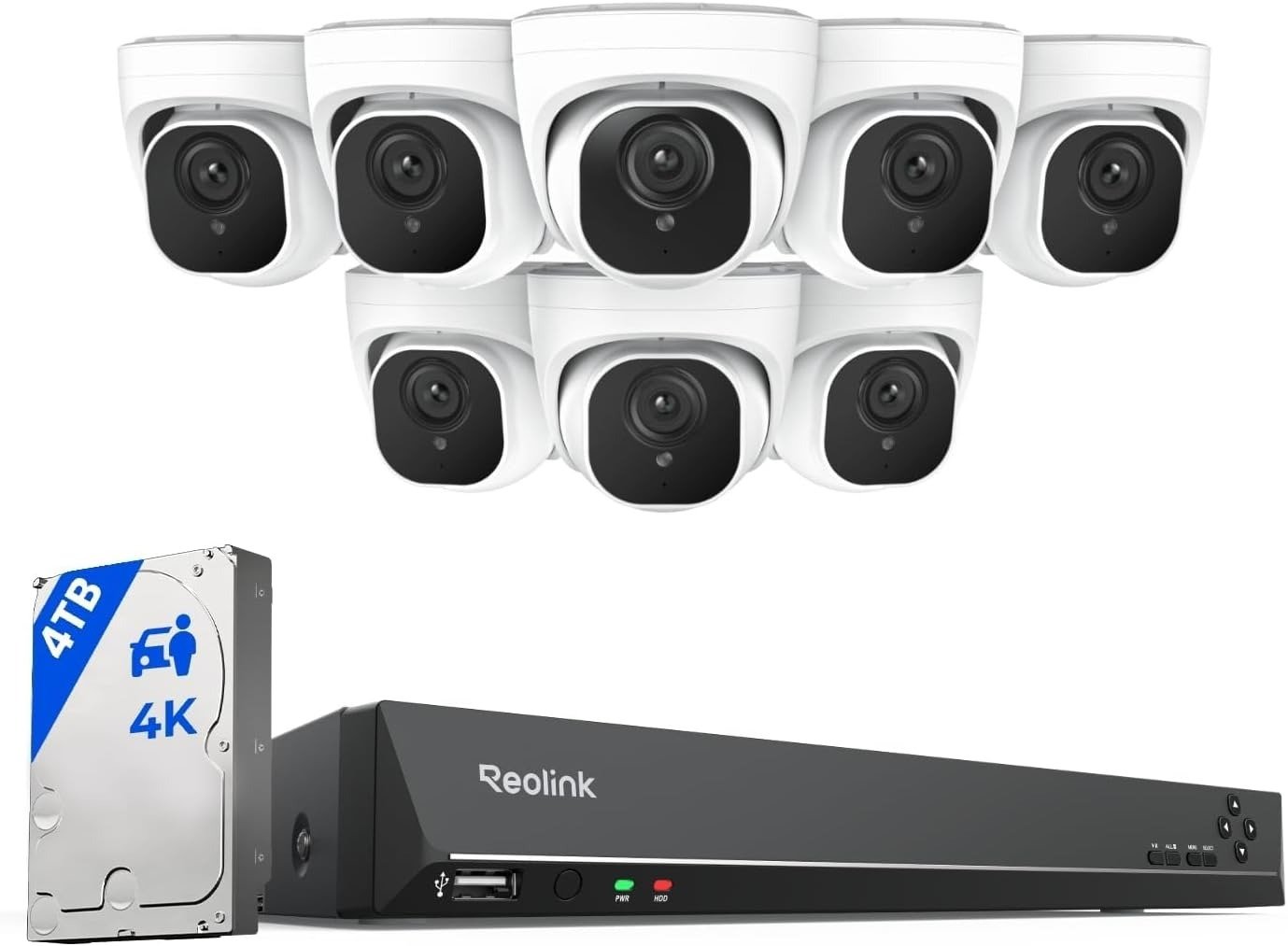
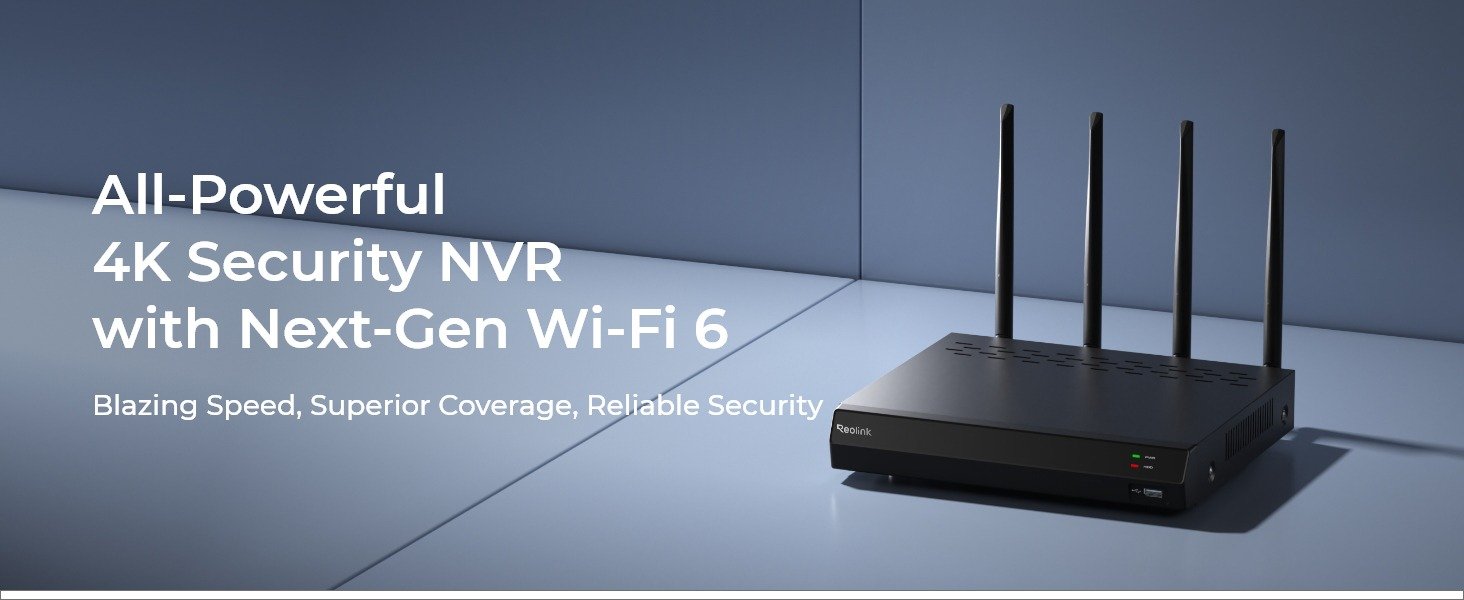
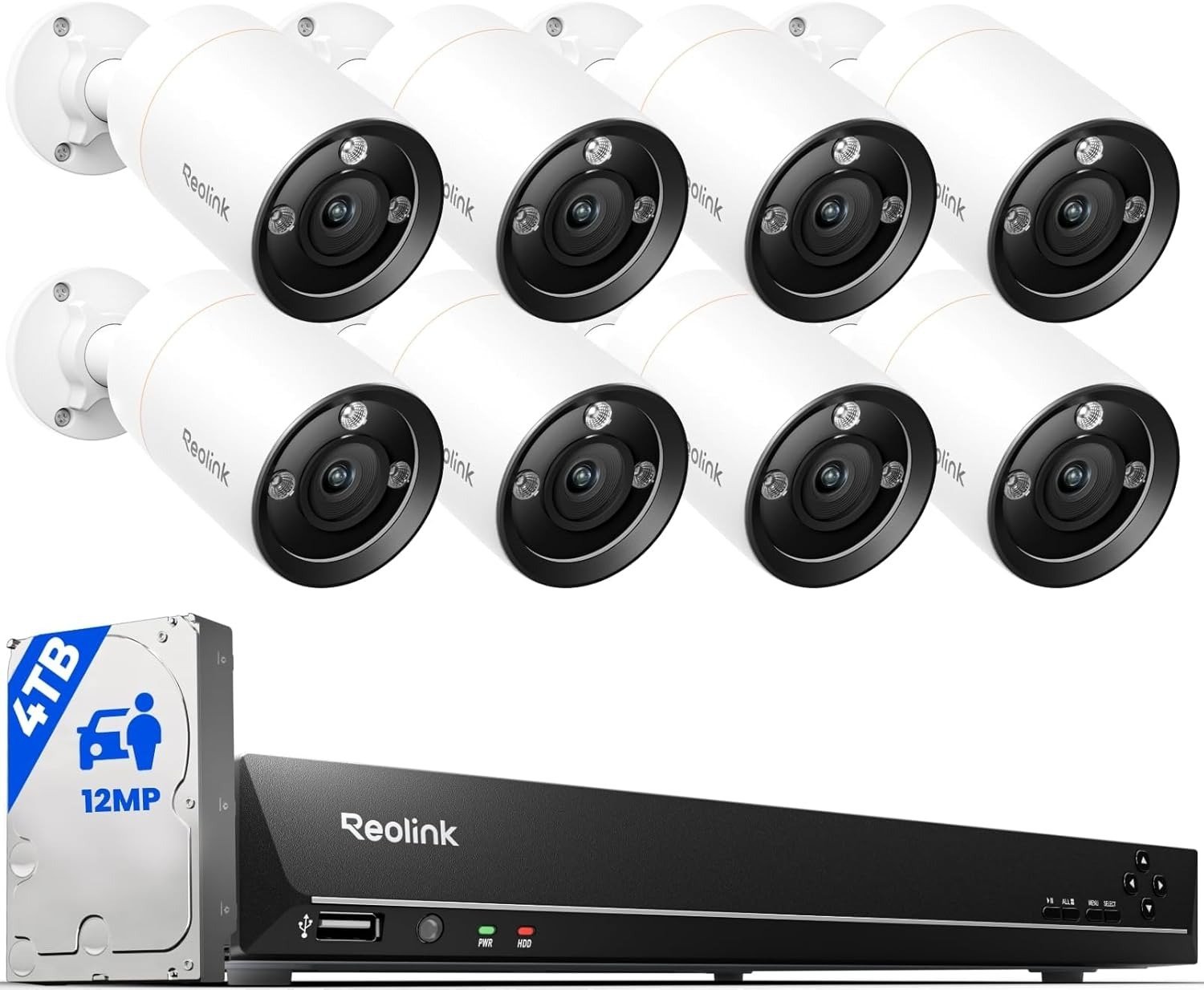
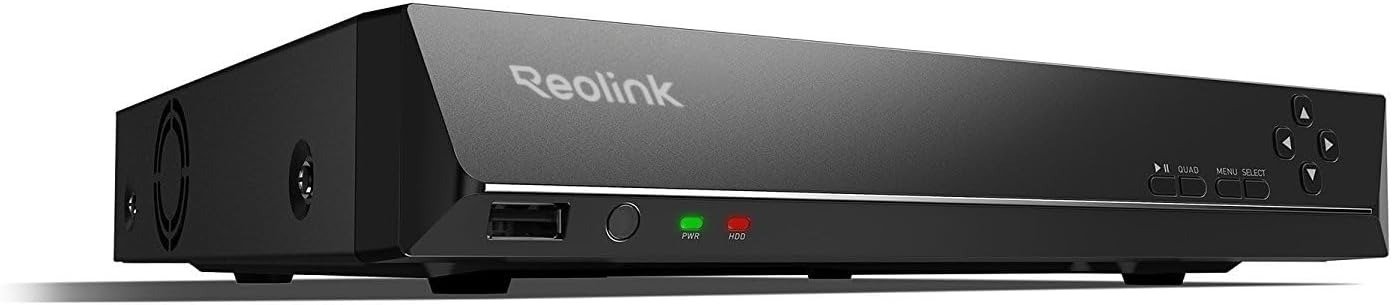
The RLN16-410 clears part of that threshold very well. It gives you a 16-port PoE NVR, a preinstalled 4TB drive, storage expansion up to 16TB, and support—on newer hardware versions—for up to 24 cameras and up to 16MP footage. On a practical level, that means this is not just a place to dump recordings. It is meant to be the operational center of a serious wired security setup.
What It Gets Right Right Away
The first thing I like here is that the core value is practical, not theatrical. PoE still matters. One cable for power and data may not sound exciting, but in the real world it cuts failure points, reduces clutter, and makes the whole installation feel cleaner and more stable. When a recorder simplifies the physical system, it earns trust faster.
The second strength is the local-storage model. A preinstalled 4TB HDD is not massive if you intend to max out every channel, but it is enough to get a real system running immediately. And because the platform can expand to 16TB through two 8TB SATA drives, the RLN16-410 gives you room to stretch beyond the starter phase. For homeowners and small-property users, that translates into something very simple: fewer compromises around retention time.
The third strength is ecosystem cohesion. If you are already leaning toward Reolink cameras, the RLN16-410 makes immediate sense. It centralizes live view, playback, and recording in a way that feels more organized than juggling SD cards, scattered settings, or pieced-together storage workarounds. That is the kind of improvement you feel over time, not just during setup.
Where the Real Decision Starts
This is the point most casual buyers miss.
The RLN16-410 is not one uniform experience. The actual answer changes depending on the hardware version.
That matters more than it sounds.
Older RLN16-410 hardware versions such as H3MB02 and H3MB06 come with an older UI, no smart person/vehicle detection support at the NVR level, no battery-camera support, smaller single-drive limits, and a higher chance of friction with newer cameras. Newer hardware versions such as N6MB01 are materially stronger: newer interface behavior, smart detection support, broader compatibility, and larger drive support.
The product name stays the same. The ownership experience does not.
And psychologically, that changes everything. People do not buy an NVR because they love recorders. They buy it because they want the rest of the system to become calmer, more predictable, and less mentally demanding. The moment future camera additions become a compatibility puzzle, the recorder stops feeling like security infrastructure and starts feeling like maintenance debt.
What Owners Tend to Appreciate
The positive feedback pattern is easy to understand. People who already live inside the Reolink ecosystem tend to like the same things: centralized local recording, a cleaner system structure, and the feeling that the NVR acts as the anchor instead of the weak point.
That lines up with how I read the product. Nobody buys a recorder for thrills. They buy it because they want footage to be there when it matters and because they do not want surveillance to turn into a hobby they have to babysit.
When the RLN16-410 is used the way it was clearly meant to be used—as the heart of a Reolink-heavy wired installation—it makes a lot of sense.
What Creates Friction
The complaints also follow a pattern, and that makes them useful.
The first issue is setup and direct-console dependency. Certain tasks can feel more tied to an HDMI-connected monitor than some buyers expect, and that adds friction at exactly the wrong moment. If you are expecting a fully polished remote-first admin experience from day one, this can feel dated.
The second issue is fan noise. This comes up too often to ignore. The 16-channel model is not the kind of box I would want sitting in a quiet bedroom or next to a desk where I work all day. Infrastructure noise is easy to dismiss until you actually live with it.
The third issue is network behavior when cameras are plugged directly into the NVR’s PoE ports. That topology can isolate cameras behind the recorder instead of making them openly visible on the broader local network. For some buyers, that is perfectly fine. For others—especially people who want more direct device access or more flexible integrations—it can feel restrictive.
The fourth issue is the one I consider most important: future compatibility ambiguity. If you cannot confirm the hardware version, you are not really evaluating one recorder. You are evaluating a range of possible experiences under one model name.
The Hidden Cost Most Buyers Feel Later
The hidden cost is not the upfront price. It is the false assumption that “RLN16-410” automatically means the same level of long-term flexibility no matter when or how you buy it.
It does not.
If I am building a Reolink-only wired system and I know I am getting a newer hardware revision, this recorder is easy to understand. It is a focused local-first NVR that can stabilize a larger property without depending on cloud subscriptions.
If I am buying secondhand, inheriting an older installation, or planning to add newer cameras over time without verifying hardware details, I become much more cautious. In that situation, the biggest risk is not failure today. It is quiet incompatibility tomorrow.
Compatibility Split 3.0
| Buyer Type | Fit Level | Why |
|---|---|---|
| Reolink-only wired camera buyer who wants local 24/7 recording | Strong fit | PoE simplicity, central recording, local storage model, ecosystem cohesion |
| Homeowner wanting one box to anchor a larger 8–16 camera property | Strong fit | 16 PoE ports, expandable storage, clear recorder role |
| Buyer planning quiet placement in an office or bedroom | Weak fit | Repeated owner complaints about audible fan noise |
| Buyer who wants maximum direct network access to each camera | Mixed fit | Direct-to-NVR topology can isolate cameras from the main network |
| Buyer using an older RLN16-410 or shopping secondhand | Risky fit | Older hardware versions lose newer compatibility and AI-related functionality |
| Buyer wanting the most flexible long-term expansion path | Mixed to weak fit | Hardware-version fragmentation complicates future-proofing |
My Network-Article Verdict
What stayed with me after looking at the RLN16-410 is this: it is not a recorder I would call universally “best.” It is a recorder that becomes very convincing when the job matches its boundaries.
If you want a local-first Reolink-centered wired system, value continuous recording over cloud dependency, and can verify you are buying a newer hardware version, the RLN16-410 crosses the Surveillance Stability Threshold and starts to feel like real infrastructure.
If those conditions are not true—especially if you value silence, flexibility, and future-proof expansion without any compatibility homework—the same recorder becomes harder to justify.
The question that should decide your next step
If what you need is a recorder that keeps the entire system calm as the installation grows, read the decision breakdown here: [DECISION_LINK]
Short Product-Page Summary
The Reolink RLN16-410 makes the most sense when you stop thinking about it as a generic 16-channel NVR and start looking at it as a local-first system anchor. It gives you 16 PoE ports, a preinstalled 4TB drive, expansion up to 16TB, and—on newer hardware versions—support for up to 24 cameras and up to 16MP footage. In the right setup, that creates exactly what most people want from surveillance: less uncertainty, fewer moving parts, and one stable place to manage recording and playback.
The catch is that the hardware version changes the real-world value more than the product name suggests. Older revisions can mean an older interface, no smart person/vehicle detection support at the NVR level, smaller drive support, and weaker compatibility with newer cameras. That is why this recorder feels reassuring for some buyers and frustrating for others.
I would look at the RLN16-410 as a strong fit for a Reolink-only wired installation where local 24/7 recording matters more than cloud convenience. I would be much more careful if I were buying used, placing it in a quiet room, or expecting maximum long-term flexibility without checking revision details first.
Want the direct buy-or-pass answer? Read the full decision article here: [DECISION_LINK]
Transparency Note:
This analysis is not based on quick personal impressions.
It is derived from documented system behavior, verified user patterns, and the physical constraints of storage capacity.
The goal is to translate complex technical behavior into a realistic performance model that helps you make a clear decision