Reolink RLN16-410 Review: Good Recorder, Conditional Recommendation
DECISION ANALYSIS
I have learned the hard way that the best security gear is not the gear with the longest feature list. It is the gear that still feels sensible six months later, after one more camera, one more setup change, and one more real reason to pull footage.
That is exactly how I approached the Reolink RLN16-410.
My Decision Model
For this article, I am using one model only: Threshold.
The threshold is simple:
The RLN16-410 is a strong buy only when local recording stability, camera compatibility, and daily management friction all remain on the right side of predictable.
Once one of those drops below that line, the value weakens quickly.
What Makes It Easy to Like
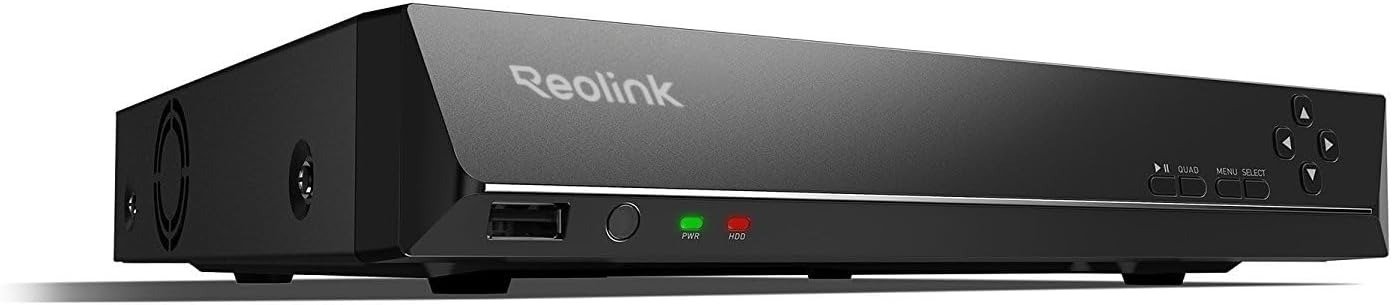
At the hardware level, the core case is solid. You are getting a 16-port PoE NVR with a preinstalled 4TB drive, expansion to 16TB, support for up to 16MP footage, and support on current hardware for up to 24 cameras.
That is a serious platform for a house, shop, workshop, or multi-entry property that wants 24/7 local recording without building the system around recurring fees.
The PoE design is also one of the most quietly persuasive parts of the product. One cable for power and data does not just simplify setup. It lowers mental friction. It reduces the feeling that the system is full of vulnerable little failure points. In security, that matters more than people admit.
And in the right ecosystem, the recorder does exactly what you want it to do: it centralizes the system.
Instead of treating each camera as its own storage island, the RLN16-410 makes the installation feel like one coordinated structure.
The Detail That Decides Everything
Here is the issue that changes the recommendation from broad to conditional:
RLN16-410 is not one fixed experience.
Older hardware versions such as H3MB02 and H3MB06 are meaningfully different from newer versions such as N6MB01. Older units can bring an older UI, no smart person/vehicle detection support at the NVR layer, no battery-camera support, smaller single-drive limits, and more friction with newer cameras.
That means the model number alone is not enough. The hardware version is part of the buying decision.
For me, that matters because this product is supposed to reduce risk, not quietly relocate it. If I am investing in a recorder to support a growing system, I do not want the future to depend on discovering that my “same model” is actually an older architecture with narrower boundaries.
The Trade-Offs I Would Weigh Before Buying
| Area | What I found | Decision impact |
|---|---|---|
| Local recording | Strong core advantage | Positive |
| PoE simplicity | Strong operational advantage | Positive |
| Storage expansion | Good, but depends on hardware revision | Positive with caveat |
| Newer-camera compatibility | Strong on newer hardware, weaker on old hardware | Major caveat |
| AI-related features | Supported on newer versions, absent on older ones | Major caveat |
| Noise | Repeated user complaints about fan noise | Negative for quiet rooms |
| Remote management flexibility | Some setup/control friction reported | Moderate negative |
| Network topology flexibility | Direct NVR PoE connection can isolate cameras | Mixed |
What the User Pattern Really Suggests
The feedback pattern is not random. That is why I trust it.
People who like the RLN16-410 tend to like it for structural reasons. It records continuously, keeps the system centralized, and feels more dependable than relying on a patchwork of camera-level storage.
People who dislike it also tend to dislike it for structural reasons. The complaints cluster around older-hardware limitations, audible fan noise, certain setup tasks feeling more console-dependent than expected, and the limitations that come with the default direct-to-NVR PoE topology.
To me, that means this is not a chaotic product. It is a boundary-sensitive one.
When the installation matches the architecture, it works. When your expectations drift outside those boundaries, the weak points become much more noticeable.
My Natural-English Decision Table
If you want the short version, here it is.
I would move toward the RLN16-410 if you are building around Reolink cameras, care more about local 24/7 recording than cloud-driven extras, want a recorder that can anchor a larger 8–16 camera property, can confirm a newer hardware version, and will place it somewhere that fan noise will not matter.
I would hesitate or walk away if you are buying used without confirming the revision, want maximum long-term flexibility across newer cameras, need a recorder for a quiet room, expect every camera to sit openly and conveniently on your LAN by default, or want a fully refined remote-first admin experience with minimal friction.
That is the split. And once I look at it that way, the decision gets much easier.
Buy It If
- You want a wired Reolink system with local 24/7 recording
- You need a central recorder for many cameras
- You can verify a newer hardware version
- You will install it away from quiet living or work spaces
If that sounds like your setup, check the current product page here: [PRODUCT_LINK]
Consider It Carefully If
- You are planning future camera upgrades and want a painless path
- You value flexibility as much as raw recording capacity
- You are not yet sure which hardware revision you will receive
Skip It If
- You are buying secondhand without revision confirmation
- You need low-noise operation in a bedroom or office
- You want generic flexibility more than a Reolink-centered local recorder
Final Verdict
My answer is not a blanket yes or no. It is conditional in a way that actually protects buyers from regret.
If I can verify that I am getting a newer hardware revision, I am building around Reolink cameras, and I want a dedicated local-first recorder that can support continuous surveillance without monthly fees, I would call the RLN16-410 a Buy.
If I cannot confirm the hardware version, I expect quiet-room acoustics, or I want a recorder that gives me maximum long-term flexibility without compatibility homework, I would move to Consider or Skip depending on how important those caveats are.
The strongest thing I can say about this product is also the fairest: when it fits, it really fits. But when it does not, the friction shows up in exactly the places that matter most.
Right before I click, that is the line I care about—whether the system will still feel calm when real life starts pressing on it. If your setup clears that threshold, this recorder is easy to live with. If it does not, the compromises will keep reminding you.
Final verdict: Buy / Consider / Skip.
Short Product-Page Summary
The Reolink RLN16-410 is a convincing local-first NVR when the setup matches its strengths.
You get 16 PoE ports, a preinstalled 4TB drive, expansion to 16TB, support for up to 16MP footage, and on current hardware versions, support for up to 24 cameras.
For a Reolink-centered wired system, that adds up to something very attractive: fewer moving parts, centralized recording, and a cleaner path to 24/7 local surveillance.
The biggest caveat is also the most important one. The hardware version changes the real answer.
Older revisions such as H3MB02 and H3MB06 can mean an older interface, no smart person/vehicle detection support at the NVR level, smaller drive support, and weaker compatibility with newer cameras. Newer versions such as N6MB01 are the safer, stronger buy.
I would buy it for a wired Reolink installation where local recording and system stability matter more than silence or broad generic flexibility.
I would be much more cautious if I were buying used, placing it in a quiet room, or expecting painless long-term expansion without checking the revision first.
If your setup clearly matches, view the product listing here: [PRODUCT_LINK]
3 reasons behind the verdict:
- The local recording, PoE structure, and expandable storage make it strong when used inside the right ecosystem.
- The hardware version meaningfully changes compatibility, features, and long-term confidence.
- Fan noise, topology limits, and setup friction make it a poor fit for some buyers even when the specs look good.
Transparency Note:
This analysis is not based on quick personal impressions.
It is derived from documented system behavior, verified user patterns, and the physical constraints of storage capacity.
The goal is to translate complex technical behavior into a realistic performance model that helps you make a clear decision