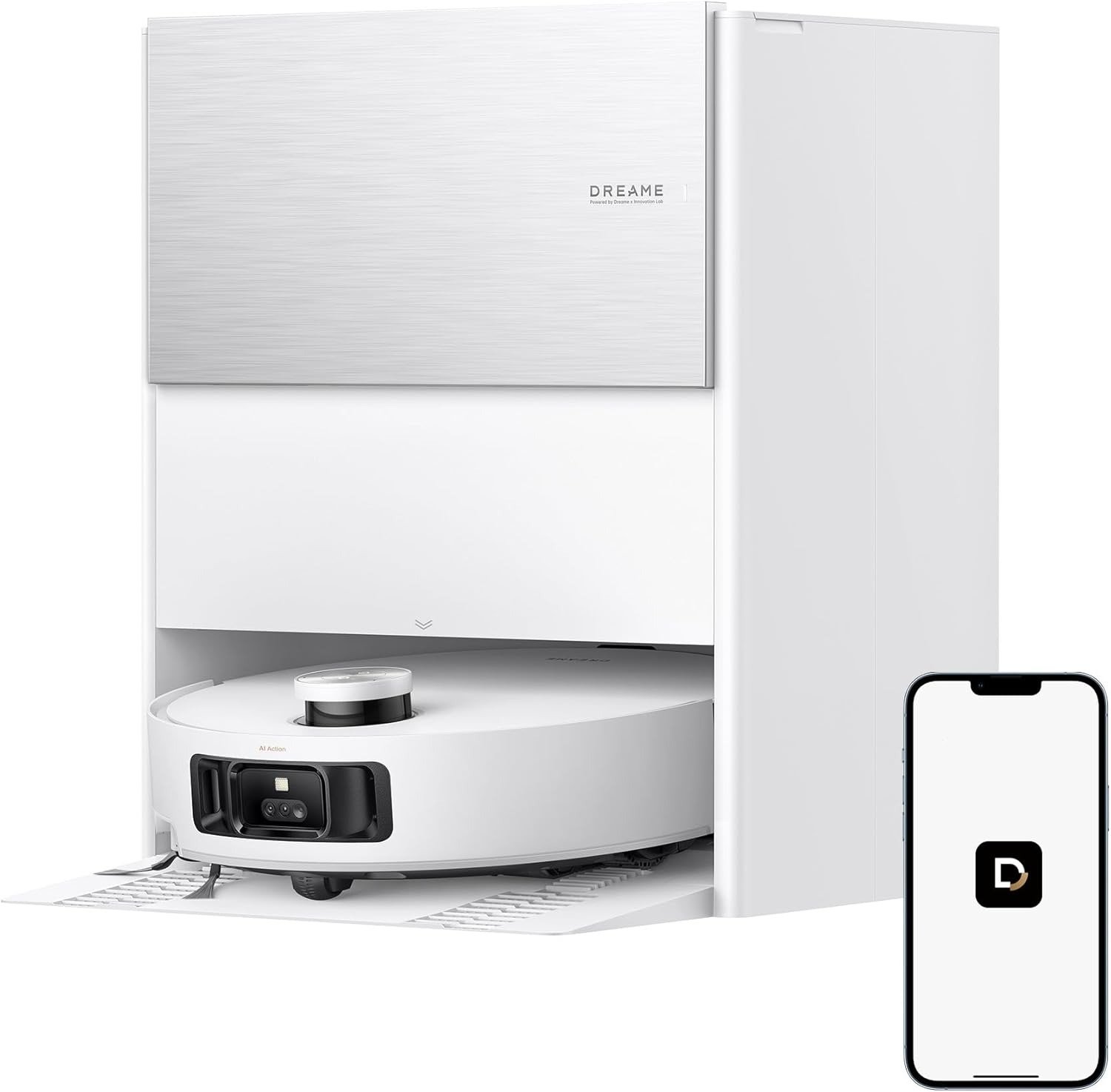
Dreame Aqua10 Roller Review: Does It Stay Above the Fresh-Mop Threshold?
DECISION ANALYSIS
The first thing I noticed when I dug into the Dreame Aqua10 was that it was not trying to win with ordinary flagship language. This machine is built around a specific weakness that has held robot mopping back for years.
Most robots start strong, then quietly lose cleaning integrity as the mop surface gets dirtier, the run gets longer, and the floor plan gets more demanding.
That is why I judged the Aqua10 with one model only: the Fresh-Mop Threshold.
Can it keep the cleaning surface fresh enough, long enough, across enough rooms and surface transitions, to maintain confidence instead of just creating a flashy first impression?
If the answer is yes, then the product deserves serious attention. If the answer is only partially yes, then even impressive specs stop meaning as much.
What the Aqua10 Gets Right Technically
The strongest part of the Aqua10 is the architecture. This is not just another premium robot with a more expensive dock and a louder spec sheet.
It uses a real-time fresh-water roller system designed to fight mid-run decline directly. The roller is refreshed while cleaning, helped by a scraper system, multiple nozzles, and a FluffRoll designed to keep the fibers effective instead of letting the contact surface degrade too early.
Then the rest of the machine builds around that same logic. You are getting 30,000Pa suction, 212°F hot-water cleaning, up to 100 days auto-emptying, obstacle handling for 240+ object types, a 6,400mAh battery, and water-tank figures listed at 4L clean water and 3.5L dirty water on some regional spec pages.
Read as a homeowner, not as a spec collector, this means one thing: the robot is clearly trying to reduce the points where performance usually starts to slip.
What the Test Results Actually Tell Me
The reason I take this machine seriously is not just because the feature list sounds advanced. It is because the measurable results line up with the design story.
The Aqua10 delivered a 280 combined mopping score against a 184 average. It also posted a 136-point stain-removal result versus a 110 average. Its obstacle score reached 21 out of 24 versus a 16.6 average.
Those are not the kind of numbers I read as cosmetic gains. They suggest a machine that holds onto effective mopping deeper into the run than most of the category.
Other performance notes reinforce that reading. The robot has been described as exceptionally strong on carpet vacuuming, effective at handling rugs around 3cm, and capable of step-clearing behavior around 4cm, depending on the geometry.
That matters because a premium mopping robot only feels premium if it can move through a real home without turning transitions into a weak point.
Where It Feels Strongest in Real Homes
When I step back from the numbers and look at how this machine fits daily life, a pattern becomes obvious.
The Aqua10 makes the most sense in homes where floors do not stay clean by accident. Pet hair, mixed surfaces, kitchen traffic, rug transitions, and repeated scheduling all create the kind of environment where mopping consistency matters more than a spec sheet headline.
That is where the machine looks convincing. Owners have described daily use, mopping four times a week, strong pet-hair pickup, excellent edge work, very low hair tangling, and enough obstacle confidence to let the robot operate with less supervision.
That is the kind of feedback I pay attention to because it reflects trust under repetition, not just first-week excitement.
And psychologically, that is the whole point of buying something at this level. You are not paying just for automation. You are paying for the feeling that the floors are being handled without you needing to re-check the result.
The Problem I Would Not Pretend Away
This is where the review stops being easy.
The Aqua10 has enough recurring water leakage discussion around some units that I would be careless to describe it as a universally safe buy.
When a robot’s entire strength is built around water management, repeated concerns in that exact area become more than an annoyance. They become part of the decision itself.
That does not automatically mean every unit is problematic. It does mean the issue has shown up often enough that I would build it into the evaluation rather than treat it as isolated noise.
At this price point, that matters. A premium robot can get away with a big dock. It can get away with a learning curve. It can even get away with a premium price tag if it delivers a clearly better floor.
What is harder to excuse is reliability uncertainty in the very system that makes the product special.
Decision Table
| Buyer Type | Fit Level | Why |
|---|---|---|
| Large hard-floor home with pets | Strong fit | Fresh-water roller mopping, strong pickup, low hair wrap, good edge behavior |
| Mixed floors with rugs you worry about | Strong fit, with caution | AutoSeal-style carpet protection is a real advantage, but ownership risk remains |
| Busy household that wants low manual upkeep | Strong fit | Auto-empty, hot wash, drying, refill functions all support hands-off use |
| Small apartment with limited dock space | Weak fit | Dock size and flagship complexity are harder to justify |
| Budget-sensitive buyer | Poor fit | Premium pricing means you are paying for advanced mopping architecture |
| Buyer who cannot tolerate reliability uncertainty | Poor fit | Leak reports are too persistent to ignore |
If the Aqua10’s fresh-water roller design sounds like the solution your floors have been missing, check the product here: [PRODUCT_LINK]
My Final Read
If I isolate cleaning design, the Dreame Aqua10 is one of the most impressive robot mops I have looked at in this class.
The machine is aimed at the right problem, and it addresses that problem with real engineering rather than empty feature inflation. Real-time roller refreshing, serious suction, edge extension, carpet protection, strong obstacle handling, and dock automation all serve one purpose: keeping the robot above the Fresh-Mop Threshold longer than a standard pad-based rival.
If I isolate ownership confidence, the answer becomes less comfortable.
The leak concern is real enough that I cannot call this a relaxed, blind-buy recommendation. That does not push it into “skip” territory for everyone. It just narrows the right buyer.
So here is where I land:
| Category | Verdict |
|---|---|
| Mopping architecture | Excellent |
| Hard-floor cleaning confidence | Excellent |
| Mixed-floor intelligence | Very strong |
| Hair and pet-home suitability | Very strong |
| Dock convenience | Very strong |
| App simplicity | Good, not great |
| Space efficiency | Average |
| Reliability confidence | Cautious |
| Blind-buy safety | Not high enough |
The strongest case for the Aqua10 is simple: if your main problem is that ordinary robot mops lose effectiveness as the run goes on, this machine offers one of the most credible technical answers I have seen.
The strongest case against it is equally simple: a premium water-based robot should feel safer than this in long-term ownership.
That is the line I would use to decide.
Final verdict: Consider.
The evidence is strong. The concept is smart. The cleaning case is real. But peace of mind is not as complete as I would want at this level.
Short Product-Page Summary
The Dreame Aqua10 Roller is one of the most technically interesting robot mops I have seen because it targets a real weakness in the category: the point where the mop stops staying fresh enough to clean consistently as the run continues.
That is why I judge it through the Fresh-Mop Threshold. If a robot can stay effective longer into the job, it is worth paying attention to.
The Aqua10 makes a strong case. It combines a real-time fresh-water roller system with 30,000Pa suction, 12 spray nozzles, a 100RPM roller, a 1,000RPM FluffRoll, 212°F hot-water cleaning, and dock automation that reduces day-to-day maintenance.
It also posted a 280 combined mopping score versus a 184 average, a 136-point stain-removal result versus a 110 average, and an obstacle score of 21 out of 24 versus a 16.6 average.
For pet homes, mixed floors, and busy households that want strong hard-floor cleaning with less manual recovery, that is compelling.
The caution is ownership confidence. Recurring water-leak complaints mean this is not the safest blind buy in the segment.
If your priority is mopping performance first and you are comfortable weighing that against some reliability uncertainty, this is a serious contender.
Final verdict: Consider.
3 Reasons Behind the Verdict
- It directly attacks mid-run mopping decline with a more serious cleaning architecture than most rivals.
- The measured performance data is strong enough to support the design claims.
- Recurring leak concerns keep it out of easy “Buy” territory despite the impressive cleaning case.
Transparency Note:
This analysis is not based on quick personal impressions.
It is derived from documented system behavior, verified user patterns, and the physical constraints of storage capacity.
The goal is to translate complex technical behavior into a realistic performance model that helps you make a clear decision
One Comment