Why Some Robot Vacuums Feel Helpful at First but Less Reliable Over Time
ANALYSIS FRAMEWORK
Most people think robot vacuum disappointment starts with weak suction. After looking closely at how this category behaves in real homes, I came away with a different conclusion. The real break point is usually a stability threshold. A robot can look capable on day one, map well in the app, and still slowly feel less useful once daily friction enters the picture—chairs shifting, pet hair building up, corners getting skipped, and maintenance becoming just annoying enough to interrupt the habit. That is the moment performance stops feeling automatic and starts feeling conditional.
The reason this matters is simple: once a cleaning tool starts asking for too much supervision, it stops behaving like background help and starts behaving like another device I have to manage.
The Real Problem Is Not Cleaning Power Alone
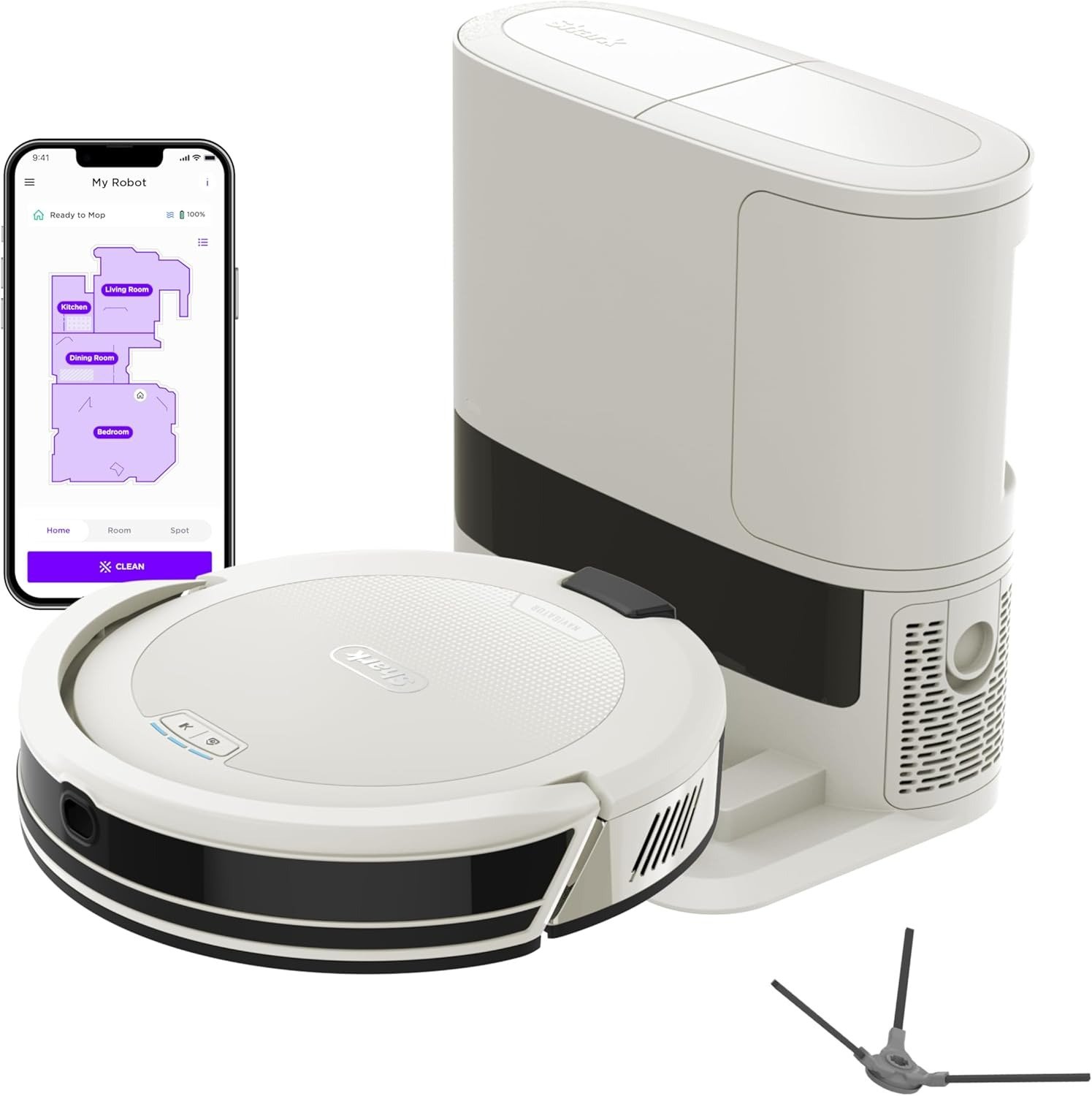
The Shark Navigator AV2110S enters this category with several things working in its favor. Shark positions it around stronger suction, row-by-row SmartPath navigation, spot LiDAR mapping, object detection, a self-cleaning brushroll, recharge-and-resume, and a bagless self-empty base that can hold up to 30 days of debris.
The unit is also slim enough for furniture clearance in many rooms, with official dimensions around 15.04 x 12.6 x 4.29 inches and a listed weight of 6.53 pounds.
On paper, that sounds like the right formula. In practice, what matters more is whether those features keep the robot above the threshold where it still feels trustworthy after the novelty wears off.
Where the Stability Threshold Actually Lives
When I studied how people describe a “good” robot vacuum experience, they were rarely talking about a dramatic transformation. They were talking about quieter wins: it gets under furniture, it returns to base, it keeps pet hair from building up, it avoids becoming a daily hassle, and it covers rooms in a pattern that feels intentional instead of random.
That is why Shark’s use of row-by-row cleaning and LiDAR-style mapping matters more than headline language alone. It changes the machine from a wandering gadget into something closer to a repeatable floor-maintenance system.
For this model, the threshold seems to sit on four operating conditions:
| Threshold Condition | What I Look For | Why It Matters |
|---|---|---|
| Navigation Stability | Cleans in a predictable row-by-row path | Makes coverage feel deliberate instead of lucky |
| Hair Control Stability | Brushroll resists wrap and keeps pet hair moving | Prevents the machine from becoming a maintenance trap |
| Emptying Stability | Base actually reduces hands-on interaction | Preserves the “hands-free” value of owning it |
| Routine Stability | Robot resumes after charging and stays useful | Keeps the machine inside a realistic daily habit |
If a robot stays above those four thresholds, I start to trust it. If it drops below them, even decent suction stops mattering.
Why This Matters More in Lived-In Homes
A clean showroom floor flatters almost any robot vacuum. A real home does not. Real homes move. Dining chairs drift. Cables appear. Pet hair accumulates in soft layers, not just visible clumps. Corners collect grit faster than people notice. That is where a robot either remains steady or reveals its limit.
What makes the AV2110S relevant is that it was clearly designed to solve not just pickup, but operational drift: the self-empty base reduces manual bin trips, the self-cleaning brushroll is aimed directly at hair-wrap friction, and the robot can return to charge and resume rather than dying halfway through the task. Those design choices are not cosmetic. They are attempts to keep the machine above the “still worth running” threshold.
What People Seem to Like Once the Robot Starts Living With Them
The most useful feedback pattern I found was not blind praise. It was relief. People tend to respond well when a robot vacuum feels less random than older entry-level models, when pet hair does not overwhelm it, and when navigation looks calm instead of chaotic.
Best Buy’s aggregate rating sits at 4.5/5 from 103 reviews, with 92% saying they would recommend it. One featured reviewer explicitly described it as a major leap over earlier Shark experiences, praising quieter operation, stronger suction, and improved smart detection.
Outside retailer reviews, discussion around the RV2110 family also points in a similar direction: users often highlight decent pet-hair handling and better movement across real floor transitions than expected. One Reddit owner of the RV2110 said pet hair posed no real issue in their home, and another highlighted the robot’s ability to climb a large transition between rooms.
That kind of reaction matters because it reveals what people are unconsciously measuring: not just pickup, but behavioral reliability.
Where the Threshold Can Still Break
No robot vacuum is exempt from trade-offs, and this is where I think the category becomes easier to understand. The AV2110S is not trying to be a flagship mop-and-vacuum system with ultra-premium dock automation. It is trying to be a more stable vacuuming robot at a more accessible tier.
That means the failure threshold is not usually about whether it can vacuum at all. It is about whether its convenience remains intact under repeated use. The clearest cautions I saw were that self-emptying can be loud, mapping is good rather than magical, and room completion speed is not class-leading. A secondary summary citing Consumer Reports notes the model performs well on pet hair, bare floors, and quiet operation during cleaning, while also pointing out that the auto-empty cycle is loud and total room-cleaning speed is slower than some premium rivals.
That is a useful split. Quiet while cleaning is not the same as quiet while emptying. Strong daily usability is not the same as premium-speed coverage. Those are exactly the differences that decide whether a model fits a home or just looks good in a listing.
The Threshold Most Buyers Miss
The threshold most people miss is this:
A robot vacuum does not earn its place by being impressive once. It earns its place by staying easy after week three.
That is why I pay more attention to bagless auto-emptying, anti-hair-wrap behavior, navigation consistency, and recharge-and-resume than to inflated comparisons on suction alone. Shark explicitly says the AV2110S uses a bagless base, avoids the need for replacement disposal bags, and is built for carpets and hard floors with anti-hair-wrap support. Those are practical ownership details, not just marketing ornaments.
If those systems hold, the robot remains in the “quietly useful” zone. If they do not, it joins the pile of devices that were exciting for ten days and inconvenient after that.
My Quiet Read on This Category
After looking at how this model is positioned and how people react to it, I do not think the most important question is, “Can this robot vacuum clean?” It clearly can. The better question is, “Under what daily conditions does it stay worth using?”
That is the right lens for this category because the decision is not between clean floors and dirty floors. It is between stable automation and maintenance creep.
If I were narrowing this down as a real purchase, I would look next at the exact homes where the Shark Navigator AV2110S stays above its usefulness threshold—and the homes where its limits show up faster.
Transparency Note:
This analysis is not based on quick personal impressions.
It is derived from documented system behavior, verified user patterns, and the physical constraints of storage capacity.
The goal is to translate complex technical behavior into a realistic performance model that helps you make a clear decision
One Comment