Shark Navigator AV2110S Review: Where the Daily-Use Threshold Really Sits
DECISION ANALYSIS
When I look at a robot vacuum seriously, I stop asking whether it has enough features and start asking something more useful: does it stay easy once it becomes part of the week?
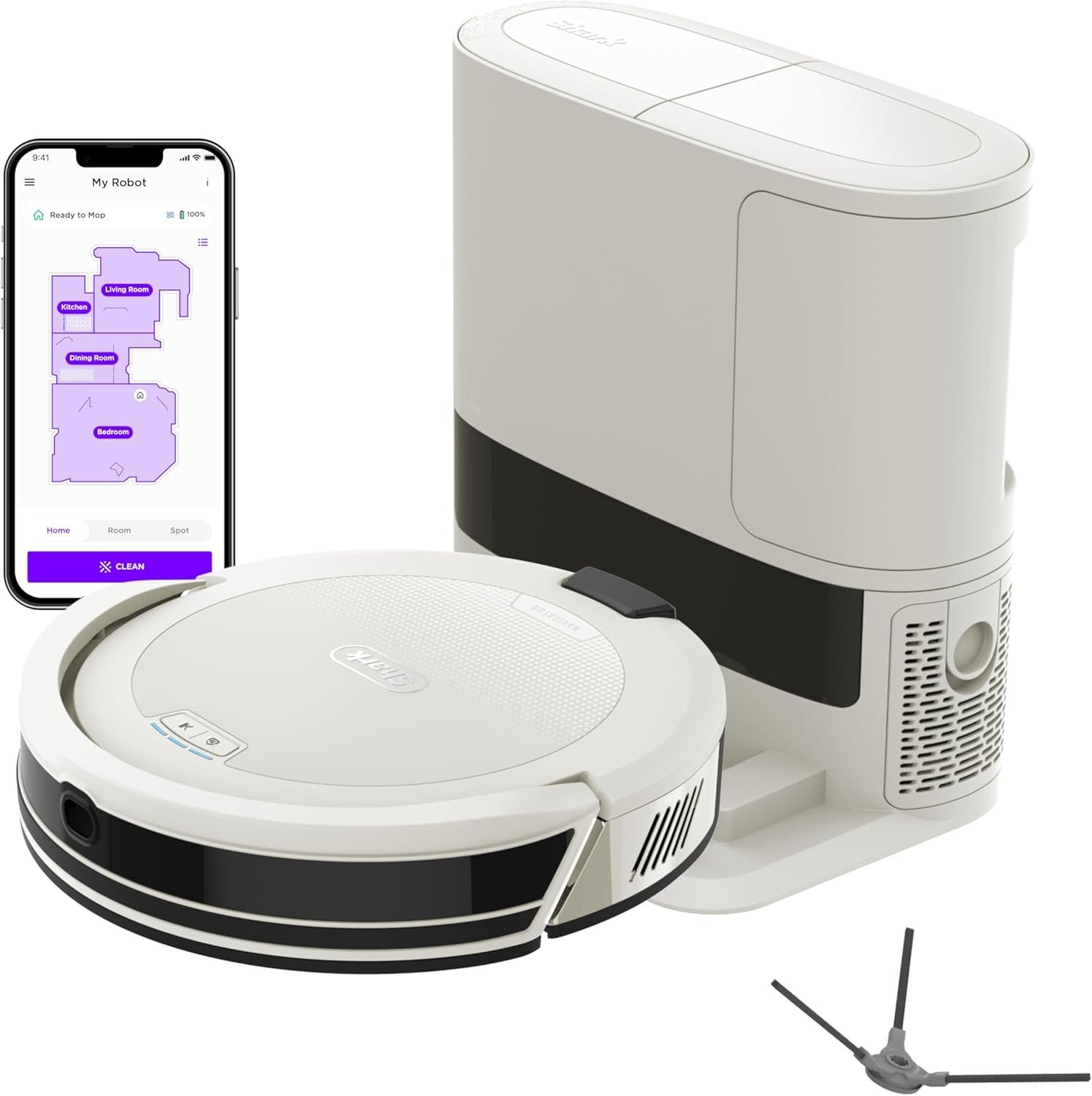
That is the frame that makes the Shark Navigator AV2110S much easier to judge. On the surface, it gives me what most people want in this price band: LiDAR-based mapping, row-by-row navigation, object detection, anti-hair-wrap brushroll design, recharge-and-resume, app control, voice control, and a bagless self-empty base rated for up to 30 days of debris. Shark also positions it as offering up to 50% more suction versus the iRobot Combo Essential and up to 1.5x more coverage than older Shark ION-style navigation.
That package tells me this is not a random-bounce beginner bot pretending to be smarter than it is. It is a structured vacuuming robot designed to reduce the small frictions that usually cause people to stop using them.
The Homes Where This Model Makes the Most Sense
This robot makes the strongest case in homes that need repeatable dry debris control more than luxury automation. I see the fit most clearly in four situations:
| Home Type | Why the AV2110S Fits |
|---|---|
| Pet-hair homes | Self-cleaning brushroll and strong user feedback around hair pickup support the fit |
| Mixed hard floors and low-to-mid pile carpet | Officially designed for both surfaces, with deliberate row-by-row cleaning |
| People who hate buying consumable bags | The self-empty base is bagless, which cuts an ongoing annoyance and cost |
| Buyers moving up from random-navigation robots | Mapping and route logic are meaningfully more disciplined |
That last point matters more than it sounds. Shark’s own language leans hard into the contrast with robots that just bounce around, and that is exactly the upgrade many owners seem to notice.
What Stood Out to Me in the Technical Profile
The AV2110S is not overloaded with premium gimmicks. It is focused.
The chassis is relatively slim, the navigation is structured, and the bagless base changes the ownership feel in a practical way. Official specs list a 12-inch cleaning path, HEPA filtration, app compatibility, room-by-room navigation, a 2000 mAh lithium-ion battery, and a compact frame around 4.6 inches high in retail specs, with Shark listing the body at roughly 4.29 inches tall.
What I like about that profile is that it tells me exactly what this robot is trying to do: move under common furniture clearances, clean in a predictable path, reduce daily bin handling, and keep hair from turning the main brush into a chore.
That is a coherent product story.
Where the Threshold Feels Strongest
The strongest threshold on this machine is maintenance tolerance.
A lot of robot vacuums look good until the first two weeks of hair, dust, and routine interruptions. Then the user discovers that “automation” still involves constant detangling, bin emptying, and restarting stuck jobs. The AV2110S is clearly built to fight that exact collapse pattern.
Shark’s official feature set points to three anti-friction mechanisms:
- Bagless self-emptying for up to 30 days
- Self-cleaning brushroll for hair control
- Recharge and resume after battery depletion
Those are not glamorous features, but in the real world they matter more than decorative app screens. They are the difference between a robot I continue using and one I quietly unplug.
What Real Buyers Seem to Confirm
The public feedback pattern around this model is actually useful because it is not one-dimensional. Best Buy’s review base shows a 4.5/5 average across 103 reviews, with 69 five-star ratings and 92% recommending it to a friend. The visible featured review describes a notable upgrade over prior Shark robot experiences, specifically calling out stronger suction, quieter behavior, and improved smart detection.
A broader secondary summary referencing Consumer Reports says the AV2110S ranks well for pet hair, bare floors, and quiet operation while cleaning. The same summary adds a caveat I consider believable and important: the self-empty process is loud, and full-room cleaning speed is not especially fast compared with more expensive premium competitors.
On Reddit, owner commentary around the RV2110 family adds texture rather than contradiction. One owner said pet hair posed no issue in their use, while another specifically praised how well the robot handled a large floor transition between kitchen and living room.
That combination gives me a pretty clear reading: the robot’s value comes less from flash and more from not becoming annoying.
The Limits I Would Not Ignore
This is where I split the category properly.
If I wanted a full-service premium floor robot with advanced mopping, more aggressive object intelligence, and a highly automated dock ecosystem, I would not pretend this is that machine. It is not trying to win the luxury arms race. It is trying to deliver a cleaner ownership curve in vacuum-only duty.
That matters because the main compromises are not hidden:
- The self-empty cycle can be loud.
- Cleaning speed is respectable rather than elite.
- Object avoidance appears helpful, but I would still not treat it as a substitute for basic floor prep in clutter-heavy rooms. Shark says it detects and avoids objects, but user praise trends toward “better” rather than “perfect.”
To me, that is an honest threshold line. In a moderately busy home, this looks useful. In a chaotic floor environment full of cables, tiny obstacles, and expectations of premium-level intelligence, the limits will show faster.
Compatibility Split 3.0
| Best Fit | Less Ideal Fit |
|---|---|
| Pet owners who want hair control without daily brush cleanup | Buyers expecting flagship-level object avoidance |
| Homes with mixed floors that benefit from row-by-row coverage | People who are sensitive to loud dock emptying noise |
| Buyers who want self-empty convenience without buying bags | Shoppers wanting an advanced mop-and-vac combo |
| Users upgrading from older random-path robots | Homes with constant floor clutter and zero prep tolerance |
This is the split I trust because it does not force the product into every scenario. It places it where its threshold stays intact.
My Verdict
If I strip away the usual noise, the Shark Navigator AV2110S looks like a robot vacuum built around one very practical promise: stay useful without becoming high-maintenance.
That promise is supported by the feature architecture, the review pattern, and the way owners talk about it. The bagless self-empty base helps ownership feel lighter. The self-cleaning brushroll supports the pet-hair case. The mapped, row-by-row navigation is a real step above entry-level randomness. And the trade-offs—mainly loud emptying and non-premium speed—are tolerable as long as I buy it for what it is, not for what a $900 flagship tries to be.
For me, the decision comes down to this:
Once a robot vacuum crosses the threshold where I trust it to handle ordinary mess without creating extra work, it starts to deserve floor space. The AV2110S looks like it can cross that threshold in the right home.
If I were placing the final link, I would place it on the sentence above because that is the point where curiosity naturally turns into action without pressure.
Transparency Note:
This analysis is not based on quick personal impressions.
It is derived from documented system behavior, verified user patterns, and the physical constraints of storage capacity.
The goal is to translate complex technical behavior into a realistic performance model that helps you make a clear decision
One Comment