Why Home Security Usually Fails After the First Week
ANALYSIS FRAMEWORK
The pattern I keep seeing with home security is not total failure. It is drift.
The system looks strong on day one, the cameras are sharp, the app works, and the installation feels complete.
Then daily life starts.
Cars park in slightly different places, packages get dropped closer to the wall, people move across the edge of frame instead of through the center, and a setup that felt secure begins missing detail at the exact moments that matter.
That is the real problem: not image quality by itself, but coverage stability over time.
The Real Issue Is Coverage Variance, Not Just Camera Resolution
A lot of buyers fixate on 4K because it is easy to understand.
I understand the instinct. Sharper footage feels like stronger security.
But in practice, a sharp camera that holds the wrong angle is still a weak camera.
What matters more is whether the system can keep the subject inside usable view when behavior changes across the day.
Pan and tilt coverage, motion tracking, detection zoning, and reliable 24/7 local recording matter because they reduce surveillance variance rather than merely improving still-image detail.
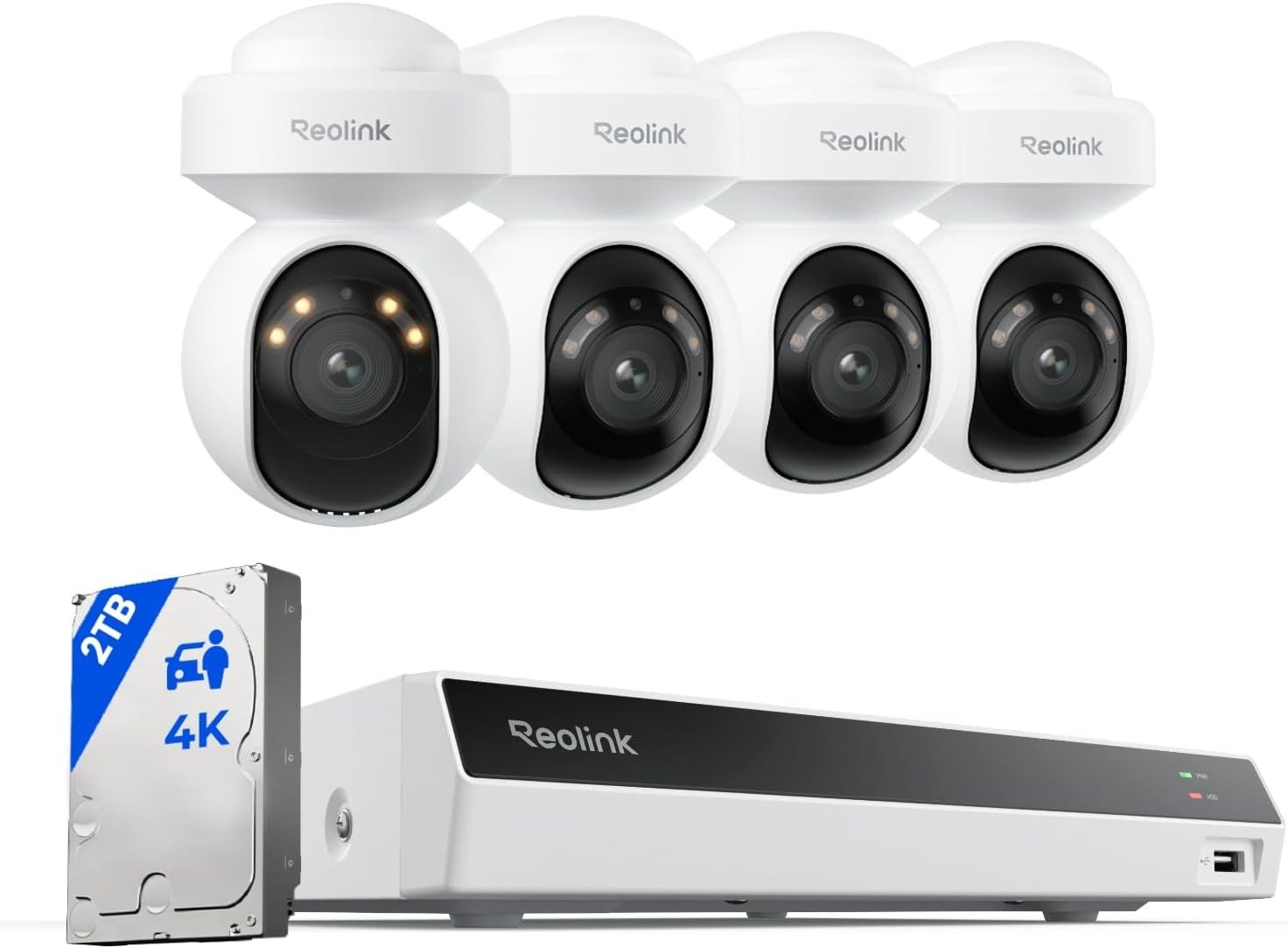
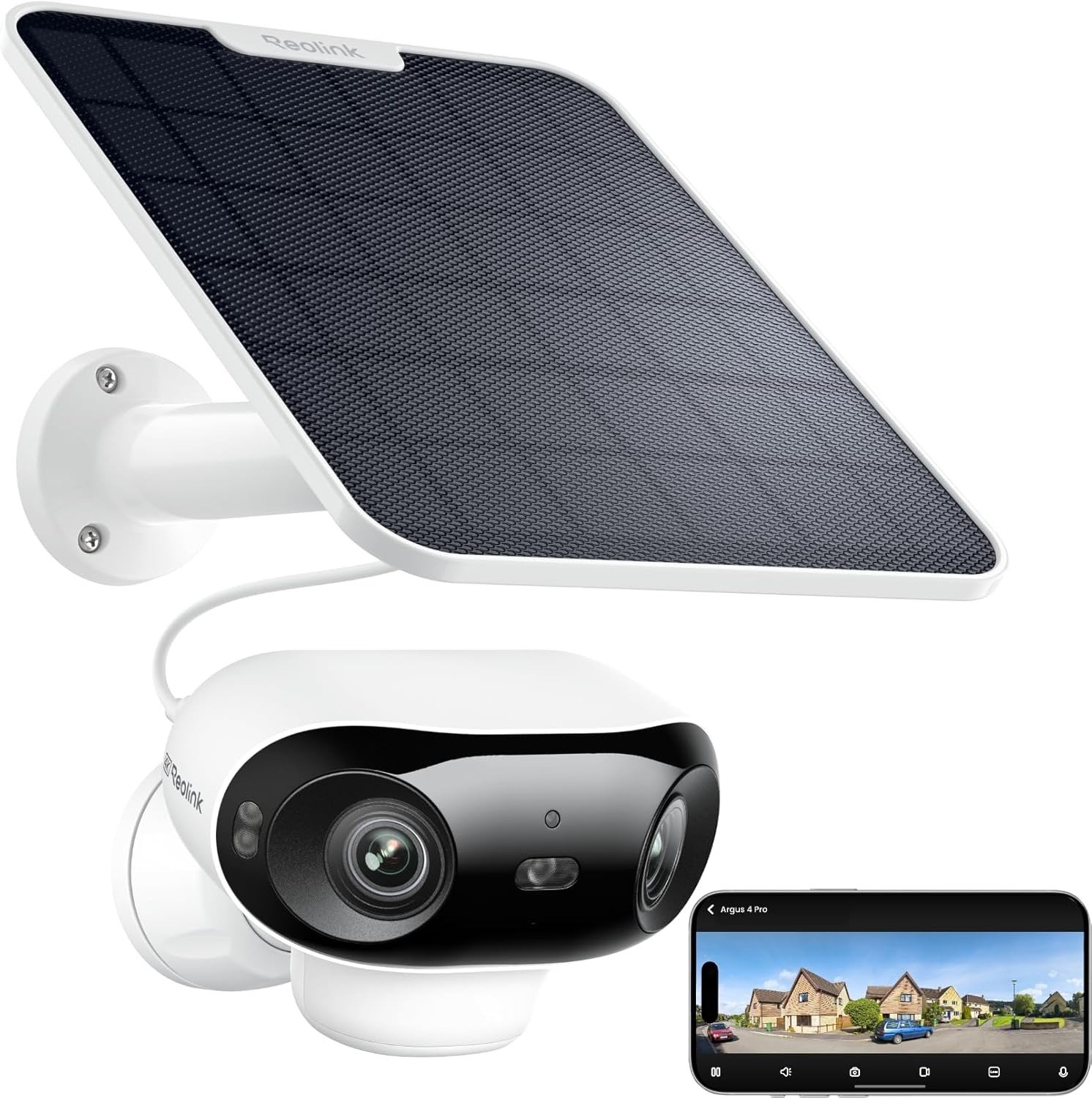
Reolink’s own published specs for this kit emphasize 355° pan, 50° tilt, auto tracking, person/vehicle/animal detection, detection zones, and continuous recording because those are the features that stabilize coverage, not just decorate it.
When Performance Starts to Drift
What causes the drift is usually behavioral time, not hardware failure.
In daylight, almost any decent setup looks competent.
The weakness appears later: at the edge of the driveway, in low light, during side-entry movement, or when a subject crosses quickly through a corner instead of walking directly toward the lens.
The system either keeps up with that change or it does not.
With this Reolink kit, the technical case for stability is reasonably strong on paper: 8MP/3840×2160 video at up to 25fps, F1.2 optics, infrared night vision rated to about 12 meters, adjustable spotlights for color night vision, H.265/H.264 compression, and local recording through the bundled 8-channel NVR with a preinstalled 2TB drive.
That combination is built to reduce nighttime detail loss and storage pressure rather than rely on short motion clips alone.
What People Actually Respond To
The psychological split is predictable.
People who come from cheap Wi-Fi cameras usually respond well to a wired local NVR system because the setup feels more permanent, less disposable, and less dependent on flaky signal conditions.
In user discussions around this specific model, I saw buyers describing it as a “solid little system,” praising the night vision and spotlight-assisted image quality, and reporting useful detail out to roughly 15–20 meters in daytime and around 10–12 meters at night in black-and-white mode.
That kind of reaction tells me the system creates confidence when the buyer’s pain point is weak Wi-Fi, inconsistent alerting, or shallow night detail.
Where Friction Still Shows Up
The negative reactions are just as useful.
The sharpest frustration I found was not about image quality but about expectation mismatch.
One owner on Reddit was angry that the RLK8-800PT4 did not include patrol mode, even though it does support auto tracking.
That complaint matters because it reveals the real compatibility split: some buyers want responsive event tracking, while others want continuous sweeping behavior.
Those are not the same thing.
If a person expects a camera to cruise on a preset route all day, auto tracking will not satisfy that expectation.
So the right question is not “Is this camera advanced?” but “Does its motion logic match the behavior I actually want?”
The Compatibility Split That Actually Matters
From the pattern of specs and owner reactions, I would divide buyers into two groups.
Group one wants stable wired coverage, local storage, intelligent filtering for people/vehicles/animals, and enough pan/tilt flexibility to reduce blind spots without turning the system into a hobby.
Group two wants patrol behavior, heavier PTZ-style control, or a more experimental feature set than a practical home NVR kit usually delivers.
This product appears built for the first group, not the second.
It supports two-way audio, IP65 weather resistance, Google Assistant, motion/person/vehicle/animal alerts, up to 20 user accounts, and microSD support per camera, but its strength is controlled everyday monitoring rather than theatrical camera movement.
The Quiet Resolution
That is why I do not think the best security question is, “How sharp is the footage?”
The better question is, “How much variance does the system remove once real life starts pushing against it?”
If you want the deeper answer for this specific kit and whether its tracking, night performance, and local recording are enough for a real property setup, this is the point where I would send the reader to the decision layer.
Transparency Note:
This analysis is not based on quick personal impressions.
It is derived from documented system behavior, verified user patterns, and the physical constraints of storage capacity.
The goal is to translate complex technical behavior into a realistic performance model that helps you make a clear decision

One Comment