Why Wired Security Starts Feeling Better Before It Starts Looking Better
ANALYSIS FRAMEWORK
The first thing I noticed was not image quality. It was emotional noise.
With a wired PoE system like this, the difference showed up earlier than that: fewer weak points, fewer charging habits, fewer dropouts to second-guess, and a steadier sense that the system would still be working when I was not thinking about it.
That is the real threshold most people miss. Security does not become convincing when the picture looks sharp. It becomes convincing when the setup stops asking for attention.
The Stability Threshold Is Reached When Power, Video, and Recording Stop Competing With Each Other
What made this category click for me was the architecture.
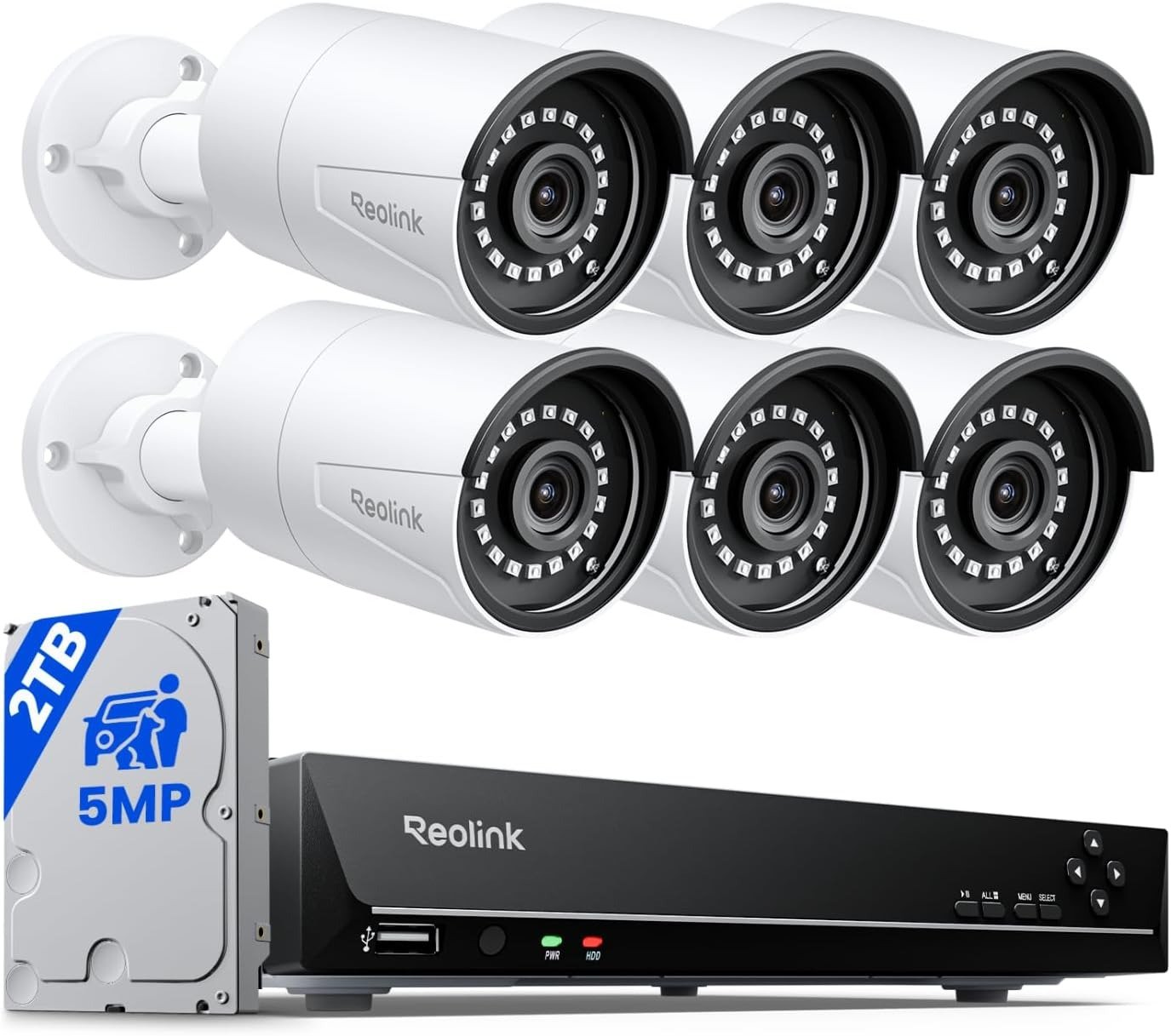
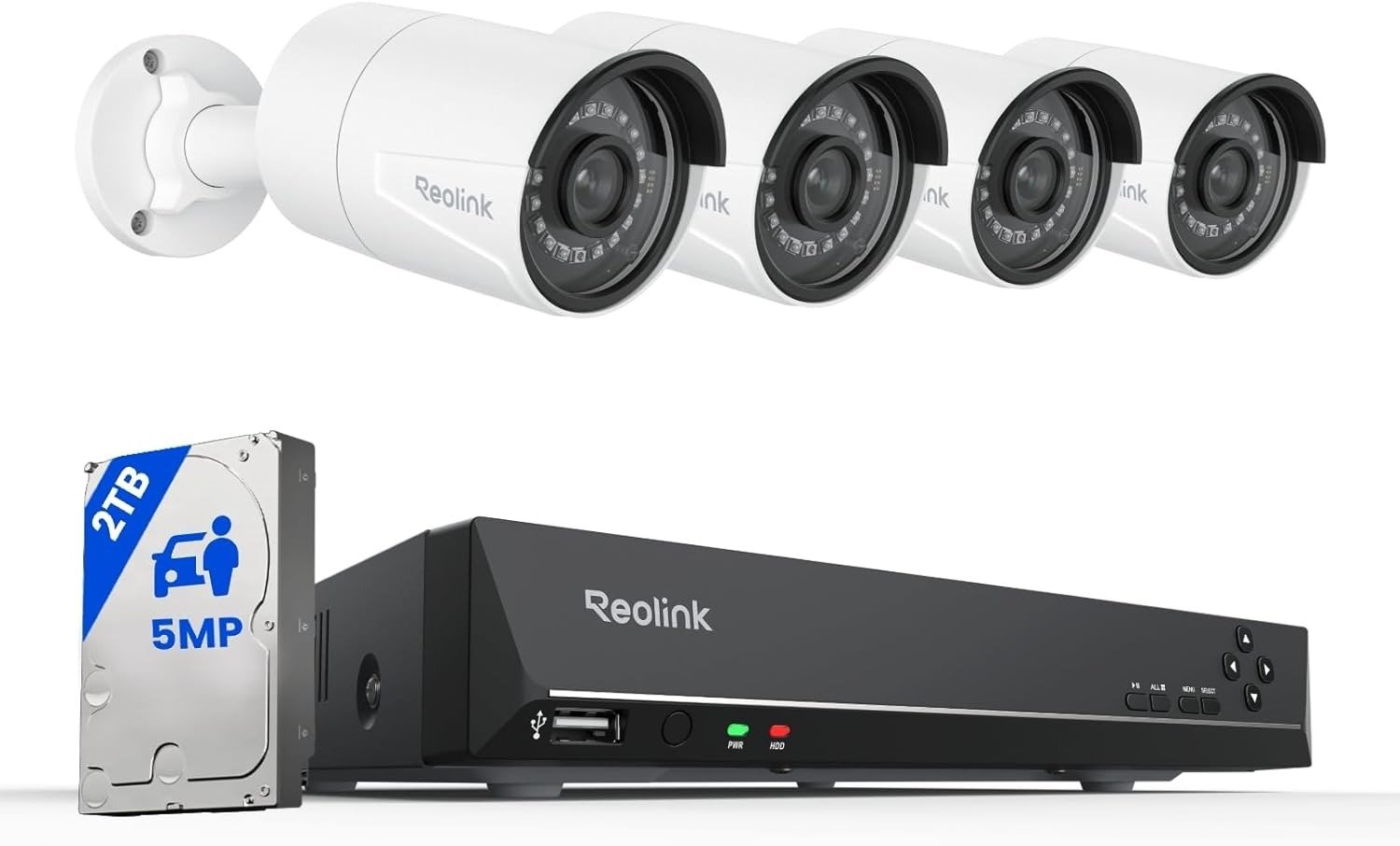
Each camera runs over a single Ethernet cable for both power and data. The NVR records locally around the clock, and the kit comes with six wired 5MP cameras, an 8-channel recorder, and a built-in 2TB drive.
In practice, that means I am not depending on six separate wall plugs, six Wi-Fi connections, or six batteries staying honest at the same time.
The system also supports continuous local recording even offline, and the storage can be expanded up to 16TB, which matters once a security system stops being a gadget and starts acting like infrastructure.
What Actually Changes Once a Camera System Crosses That Threshold
Once the system crossed from “installed” to “trusted,” the daily experience changed in a very specific way.
I stopped checking whether it was alive. The cameras record at 5MP up to 25fps, use infrared night vision rated up to 100 feet, include built-in microphones for ambient audio capture, and offer person, vehicle, and animal detection with motion zones and app alerts.
None of that sounds dramatic on paper, but together it reduces the small uncertainty loops that make weak systems feel tiring: Was that a person or just motion? Will the footage be there later? Can I review it quickly?
The answer became more predictable, and that predictability is the real product here.
When Performance Starts to Decline
The weak point is not hidden, and I actually like that.
This is where drift begins: not when the cameras fail, but when the user expects more than the baseline architecture is built to deliver. The included cameras are 5MP with an 80° viewing angle and black-and-white IR night vision, which is good for broad coverage and identification in normal residential use.
But it is not the same as stepping into a newer 4K tier or color night vision tier.
I also found a consistent community pattern around Reolink kits: the hardware is widely seen as a solid value entry into wired surveillance, but power users often point out that direct-to-NVR setups can limit access to some camera-side features until firmware support catches up, and the default hard drive can feel short if you want long retention across many cameras.
Who Feels The Benefit Fastest
I would put the benefit into three clean groups:
| Compatibility Split | What I felt in real use |
|---|---|
| Low-friction homeowner | The biggest relief was getting one-cable installation and stable 24/7 local recording instead of babysitting a fragile setup. |
| Alert-fatigued user | Person/vehicle/animal filtering and motion zones reduced the sense that every notification was meaningless. |
| Control-first buyer | Local NVR recording, expandable storage, desktop/mobile access, and offline capture made the system feel owned rather than rented. |
That split fits the product because the value is not raw spectacle.
It is reduction of operating friction. The more a person hates battery cycles, subscription pressure, and cloud dependence, the faster this kind of system makes sense psychologically.
The Quiet Conclusion
After sitting with it, my takeaway was simple: the appeal of a wired security system is not that it feels more advanced.
It is that it feels less negotiable. Once the system crosses the threshold where recording, power delivery, and alert logic stop wobbling, the whole category starts making emotional sense.
That is the point where security becomes quieter, and quiet is usually the most convincing proof that the structure is working.
Transparency Note:
This analysis is not based on quick personal impressions.
It is derived from documented system behavior, verified user patterns, and the physical constraints of storage capacity.
The goal is to translate complex technical behavior into a realistic performance model that helps you make a clear decision
One Comment