The Hidden Variance Problem: When “Smart” Cleaning Drifts in Real Homes
ANALYSIS FRAMEWORK
I used to think robot vacuums fail for one simple reason: weak suction. Then I watched a pattern repeat across real homes—the drift rarely starts at suction. It starts when the environment quietly changes the machine’s behavior.
A robot vacuum can look flawless on day one and feel unreliable by week three—without being “broken.” What changes is the variance window: the range where it cleans predictably before daily life squeezes that range down.
This is why high-end robots add extreme features—retractable sensor towers, obstacle recognition, auto-empty docks, anti-tangle brush systems, and even threshold-climbing hardware—because the real enemy is not dirt; it’s drift under repeated behavioral load.
The First Drift Trigger: Thresholds and Tracks That Don’t Look Like Obstacles
In real houses, the robot doesn’t meet “one floor.” It meets transitions:
- sliding door tracks
- double-layer thresholds
- thick rugs meeting tile edges
- small lips that cause repeated bumper hits
Here’s what surprised me: the failure mode isn’t “it can’t climb”—it’s what happens when it tries repeatedly. Repeated micro-collisions create a behavioral loop: reroutes, mapping hesitation, edge abandonment, and more frequent dock returns.
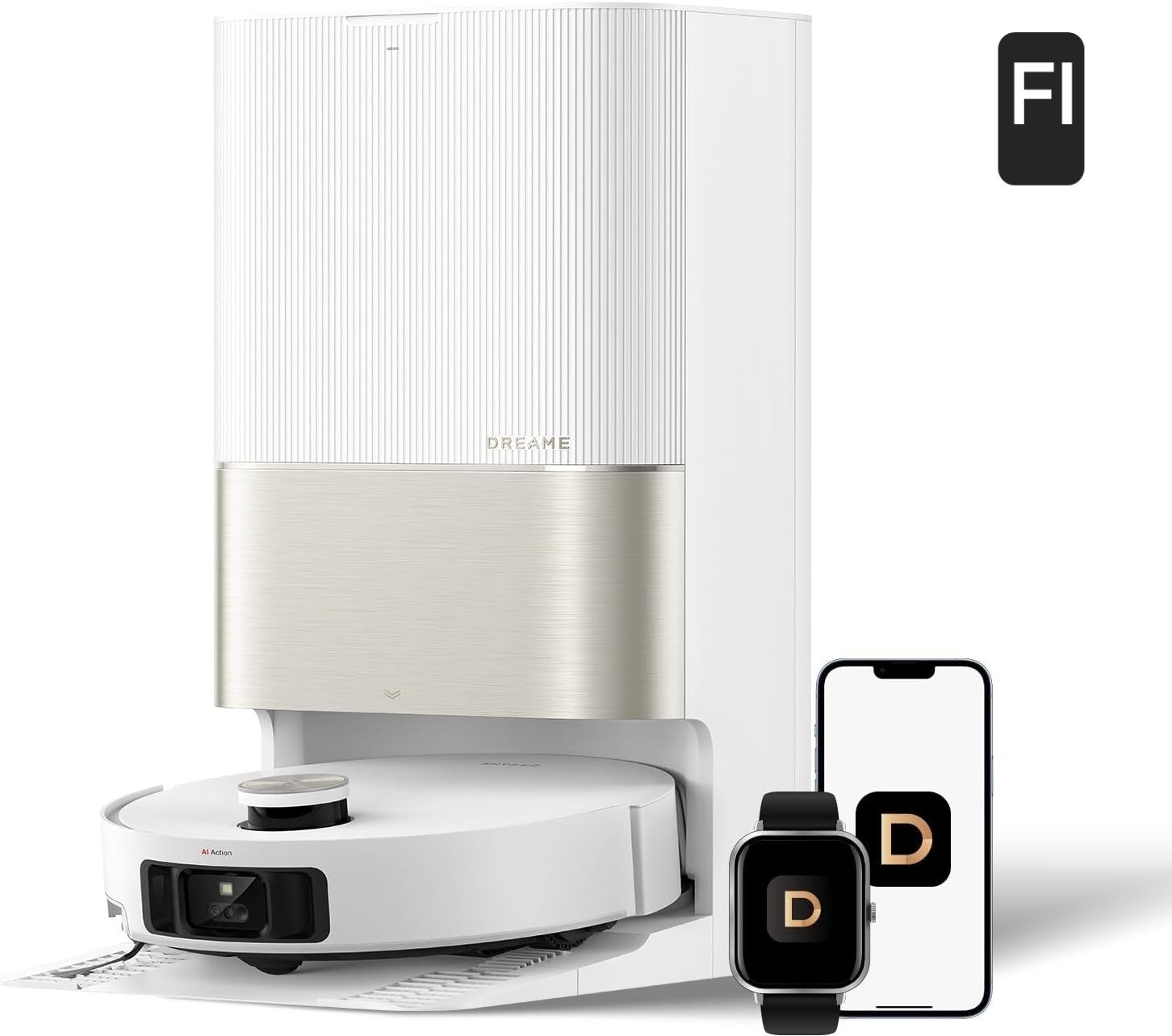
That’s why machines like the Dreame X50 Ultra emphasize threshold handling (retractable legs) rather than just navigation marketing. The product listing and Dreame’s own page highlight clearing up to 2.36 in / 6 cm and doing it with shock-absorption to reduce harsh impacts.
The Quiet Killer: Hair Load That Turns “Good Suction” into Inconsistent Pickup
Hair is not dirt. Hair is a mechanical load.
If your home has long hair or pet hair, the robot’s performance can look random because tangling creates a cascading effect:
- airflow restriction
- pickup drop on hard floors
- edge misses become visible
- more frequent “help me” moments (manual brush cleaning)
This is why “detangling” isn’t a luxury feature—it’s a variance-control feature. The X50 Ultra’s DuoBrush positioning is explicitly designed around reducing tangles and handling long hair (marketed up to 11.8 in). Whether that claim holds perfectly in every home is not the point—the point is: the manufacturer is optimizing for drift prevention, not just peak performance.
Edge & Corner Cleaning: Where Humans Notice Failure First
People don’t emotionally judge a robot vacuum by the center of the room.
They judge it by:
- the baseboards
- the corners
- the strip under the cabinet toe-kick
- the “crumb line” that stays after mopping
That’s why reviewers who like the X50 Ultra often praise edge cleaning and the extend/reach mechanisms, because it reduces the most visible form of inconsistency (the “why is that still there?” moment).
The Dock Is Not a Convenience Feature; It’s a Stability System
Auto-empty + self-cleaning docks don’t just reduce labor. They reduce maintenance variance.
But the dock introduces its own drift risks:
- noise spikes during emptying (a common complaint in high-end docks)
- dirty water / clean water tank routines becoming the new “weekly chore”
- mop washing/drying performance affecting odor control
In practice, the dock is a trade: you stop touching dust daily, but you start managing water + hygiene cycles. Reviews often love the hands-free idea, while still noting the dock can be loud at certain moments.
Navigation Reality: The Home Is Messier Than Any Demo
Even strong obstacle avoidance has failure classes:
- cables in low light
- thin paper
- pet toys that move
- clutter edges that change day to day
Some reviews of the X50 Ultra class of robots note it can still struggle with small items like wires/paper in real-world clutter, even if mapping is generally excellent.
This is important psychologically: buyers don’t get angry when a robot misses once. They get angry when they can’t predict when it will miss.
Predictability is the real product.
The Buyer Psychology: What People Are Actually Paying For
When someone spends flagship money on a robot vacuum + mop, they’re not buying suction.
They’re buying this promise:
“I can stop thinking about floors.”
So dissatisfaction often comes from cognitive interruption:
“It got stuck again.”
“It skipped that room again.”
“Why is the edge still dirty?”
“Why does it need help so often?”
Flagship features (threshold handling, low-profile navigation, anti-tangle brush systems, higher suction, smarter object recognition) exist to reduce these interruptions—because each interruption reopens the buyer’s decision regret loop.
The One Question This Network Article Must Answer
Before picking any specific model, I use one diagnostic question:
What is the main drift source in your home?
- thresholds/tracks?
- hair load?
- edge visibility?
- clutter/cables?
- mixed floors + rugs?
Because once you identify that, you stop shopping by brand hype and start shopping by variance control.
If you want the compatibility verdict and the single-model “sting” (Decision Article rules: Threshold/Variance + Drift + Split + one product link),
**This analysis is based on aggregated user feedback, verified buyer reviews, and technical documentation. It is designed to provide structured clarity rather than personal opinion**
One Comment