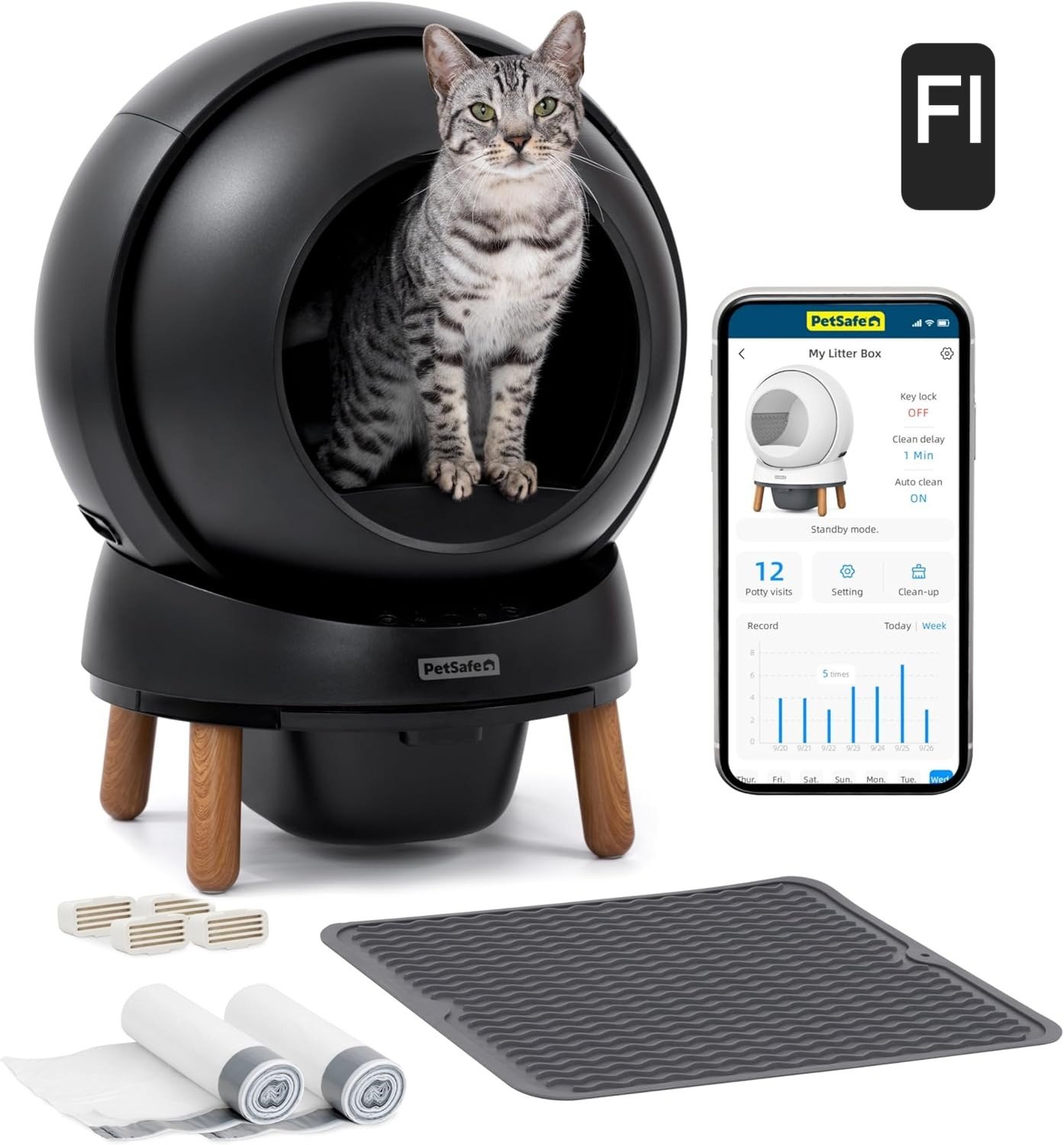
I Thought Automatic Litter Would End My Stress — Why Did It Create a New One?
ANALYSIS FRAMEWORK
The first night I imagined not scooping again, I felt relief.
No more bending.
No more checking the box before guests arrive.
No more silent panic — “Does my apartment
smell?”
But then a sharper question hit me:
Why do some self-cleaning litter boxes dissolve stress… while others quietly replace it?
When I analyzed real-world testing and owner experiences around the PetSafe ScoopFree SmartSpin, I realized the answer wasn’t automation.
It was stability.
And stability breaks at one very specific threshold.
Executive Signal Layer (Key Takeaways)
If your cat hesitates at a raised entry height, then adoption friction increases even if the machine is quiet.
When odor control depends on a sealed waste drawer, then stress drops — unless emptying crosses your household’s waste threshold.
If reliability wobbles even briefly, then behavioral trust erodes faster than mechanical parts.
Unless the cleaning cycle feels predictable to the cat, then “smart” becomes suspicious.
If health tracking matters to you, then consistency matters more than features.
“I broke this down into a simple conditional buying filter before I made my final decision.”
The Variable Nobody Mentions: Behavioral Trust
When I stopped looking at specs and started imagining daily life, something changed.
The real question wasn’t:
“Does it clean?”
It was:
Will my cat trust it tomorrow the same way it does today?
The SmartSpin rotates internally and separates clumps into a sealed waste drawer. On paper, that sounds elegant. In reality, elegance only matters if nothing interrupts routine.
Cats don’t negotiate with machines.
If a cleaning cycle feels sudden…
If the motion doesn’t pause when expected…
If the entry feels too high…
Trust fractures quietly.
And once trust fractures, the litter box becomes a risk zone instead of a safe zone.
That’s where stress begins.
Under Load: What Changes After Week Two?
Week one feels impressive.
Week two reveals truth.
Multi-cat homes increase waste frequency.
Busy schedules delay emptying.
Large clumps test internal rotation flow.
The sealed drawer design is strong in theory because it isolates odor rather than masking it. That’s powerful in apartments. I understand why people feel immediate relief.
But relief depends on timing.
If the drawer fills faster than expected and I delay maintenance, odor returns — and suddenly I’m checking it again.
Why?
Because automation reduces effort — but it does not eliminate responsibility.
Expert note:
Automation works best when your real-life routine fits inside its maintenance rhythm.
Failure Progression: How Small Instability Becomes Big Regret
This is the part most buyers skip.
Not catastrophic failure.
Gradual instability.
First: a slight hesitation.
Then: a cycle that feels delayed.
Then: one morning it doesn’t behave exactly as expected.
That’s all it takes.
Because litter behavior is fragile.
If my cat walks in and something feels unpredictable, it may walk out and choose a different surface next time.
And then I don’t just have a broken device.
I have a behavioral reset problem.
Why does that matter?
Because behavior repair costs more than hardware replacement.
The Height Threshold Most People Ignore
I kept coming back to one physical detail:
Entry height.
It seems minor.
Until you imagine:
A cautious cat.
A senior cat.
A heavier cat adjusting posture.
Suddenly that height becomes a biomechanical filter.
If the step feels unnatural, the entire promise collapses.
Automation must feel effortless not only to me — but to the animal.
If that threshold isn’t respected, friction accumulates invisibly.
Conditional Verdict: When “Hands-Free” Actually Stays Hands-Free
Here is where I landed after stripping away hype.
If your main stress trigger is odor in a confined living space, and your cat adapts easily to elevated entry systems, then this style of sealed, rotating automation aligns with your pain point.
If your tolerance for mechanical unpredictability is low, or your cat is sensitive to movement patterns, then reliability history matters more than innovation.
If health tracking and usage logging give you peace of mind, then consistency of operation becomes your primary metric — not features.
And if you are buying because you simply hate scooping, ask yourself one final question:
Why will this system remain stable in month three — not just day three?
That answer determines everything.
One Comment