The Day I Trusted an Automatic Litter Box — And Realized the Risk Wasn’t What I Thought
ANALYSIS FRAMEWORK
I didn’t buy it because I love gadgets.
I bought it because I was tired.
Tired of scooping.
Tired of that faint smell that never quite leaves the room.
Tired of pretending that “daily maintenance”
doesn’t slowly eat at you.
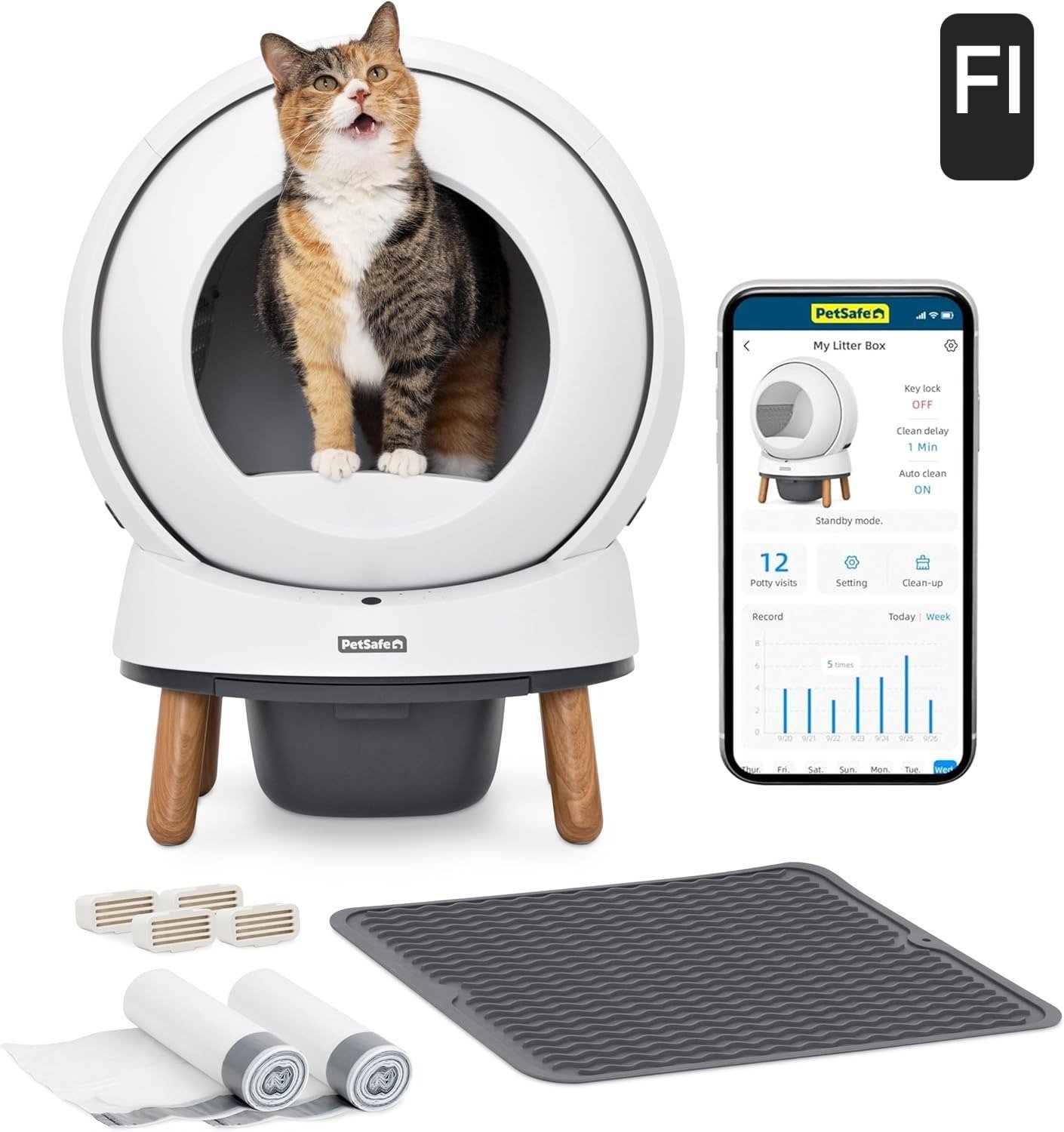
So when I looked at the PetSafe ScoopFree SmartSpin, I didn’t see a machine.
I saw relief.
But here’s the question I didn’t ask at first:
Why does “automatic” sometimes feel less stable than manual?
That question changed everything.
Executive Signal Layer (Key Takeaways)
If your cat is highly sensitive to surface cleanliness, then a rotating drum system can feel different than a flat scoop design once residue begins to redistribute.
If odor control is your main pain point, then performance depends on drawer sealing and maintenance intervals more than automation itself.
If you travel often or leave the box unattended for long stretches, then sensor reliability becomes your real stability threshold.
If your cat resists environmental change, then transition strategy matters more than the feature list.
If your goal is zero effort, then you must define what “zero” actually means in a living system.
No verdict yet.
Just variables.
The Hidden Variable Nobody Talks About — Surface Stability
When I first saw the SmartSpin rotate, I thought:
“Clean is clean.”
But it’s not that simple.
A rotating drum doesn’t remove waste the way a rake does.
It redistributes litter mass while separating clumps into a lower drawer.
That means one subtle thing:
Your cat interacts with a dynamic surface, not a static bed.
Why does that matter?
Because cats don’t judge cleanliness the way we do.
They judge:
- texture under paw
- smell concentration at nose level
- footing stability
- sidewall contact
If rotation moves trace residue along interior surfaces, your cat notices long before you do.
This is not a flaw.
It’s a threshold.
If your cat’s tolerance margin is wide, you win.
If it’s narrow, hesitation begins.
And hesitation is where behavioral shifts start.
Failure Progression — How a Small Delay Becomes a Big Problem
Let me tell you what actually worries me.
Not odor.
Not noise.
Delay.
If a sensor misreads.
If dust interferes.
If a cleaning cycle pauses.
Nothing dramatic happens immediately.
But here’s the cascade:
- Cleaning is skipped once.
- Waste accumulates slightly.
- Your cat senses the difference.
- Confidence drops.
- The floor becomes Plan B.
Why does this happen?
Because automatic systems compress time.
Manual systems spread responsibility daily.
With automation, stability must stay above threshold consistently — not occasionally.
This is where SmartSpin becomes either brilliant or stressful.
It depends on reliability under your conditions.
The Psychological Shift — Relief vs. Control
When I first used it, I felt relief.
No daily scooping.
No bending.
No staring at clumps before coffee.
But after a few days, something else appeared:
Control anxiety.
When you scoop manually, you see everything.
With automation, you trust unseen cycles.
Why does that matter?
Because trust replaces habit.
The app tracking.
The usage logs.
The weight monitoring.
They don’t just add features.
They replace visual reassurance with digital reassurance.
If you like data, you’ll love that.
If you like certainty through physical inspection, you’ll feel detached.
Neither is right or wrong.
It’s a personality alignment question.
Boundary Conditions — Where This System Shifts
Let’s define real boundaries.
Large or long-haired cats increase litter displacement.
Very soft clumping litter can smear instead of isolate.
High humidity environments alter clump integrity.
Multiple cats accelerate drawer fill rate.
Once any of these cross your stability threshold, cleaning performance feels different.
Not broken.
Different.
And “different” is what triggers doubt.
Why does doubt matter?
Because cats respond to micro-hesitations in routine.
What Actually Improves Stability
Here’s what I learned through testing mindset — not hype:
- Use litter with firm clumping structure.
- Keep sensors clean.
- Don’t wait until the drawer is visibly full.
- Introduce gradually — never remove the old box on day one.
- Observe behavior shifts before they become habits.
Automation works best when treated like a system, not a shortcut.
That’s the expert advice nobody markets.
Conditional Closing — Not a Verdict, A Filter
If your primary pain is daily scooping fatigue, and your cat adapts well to environmental shifts, this system can feel liberating.
If your primary fear is behavioral regression, and your cat is extremely sensitive to surface variation, then reliability margin matters more than convenience.
So ask yourself:
Why do you want automation?
Is it time?
Odor?
Aesthetics?
Or emotional relief?
The answer determines the direction.
Not the product.
**This analysis is based on aggregated user feedback, verified buyer reviews, and technical documentation. It is designed to provide structured clarity rather than personal opinion**



One Comment